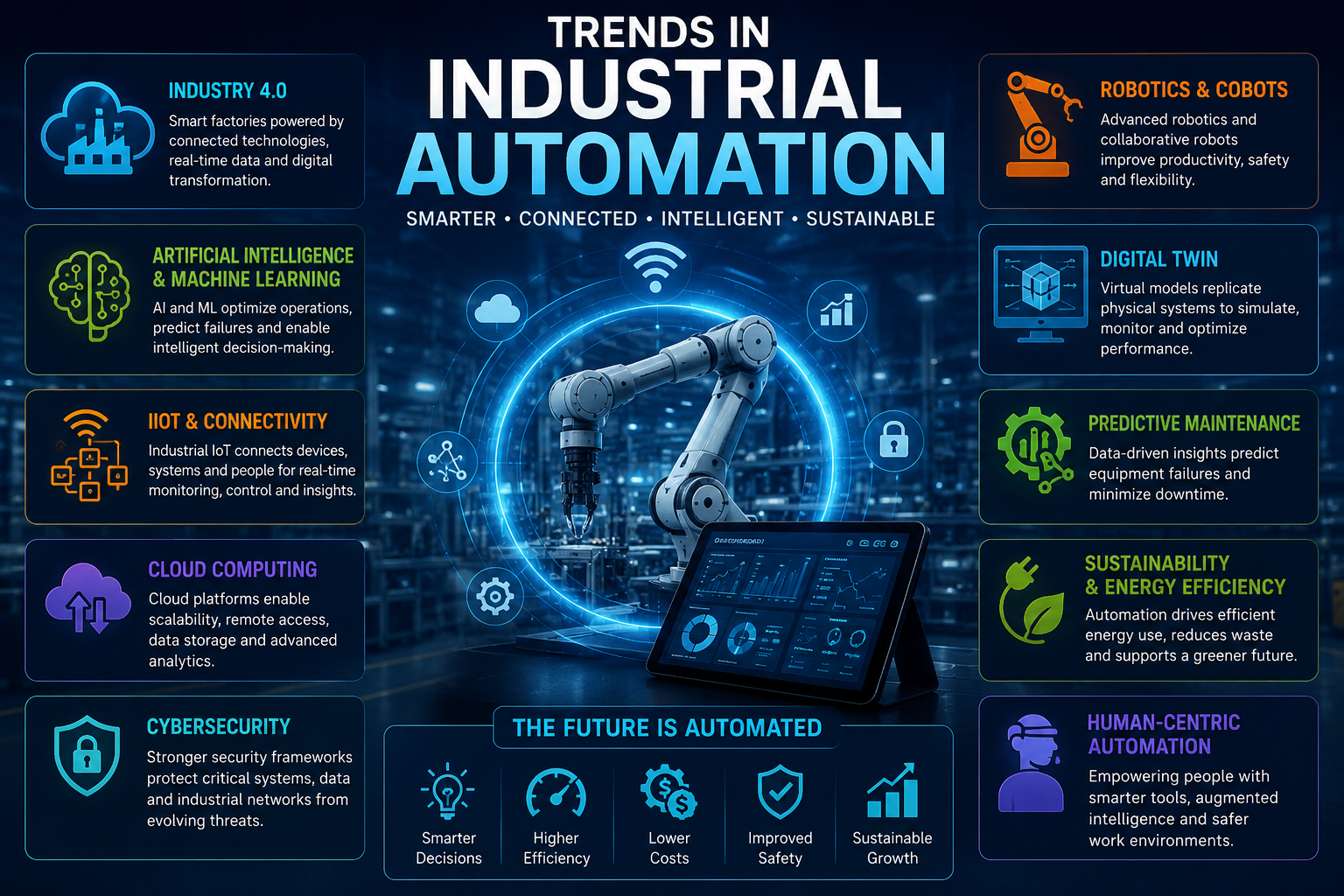
A modern factory can feel like a living system. Robots lift parts, sensors listen for trouble, cameras spot flaws, and software turns every movement into useful data.
The most important trends in industrial automation go beyond repeating the same task faster. Plants are becoming more intelligent, flexible, connected, energy-aware, and secure. The priority is choosing improvements that solve real production problems before investing in the next shiny tool.
Table of Contents
The Biggest Trends in Industrial Automation Today
Smart manufacturing links operations that once ran in separate lanes. A machine controller handles motion, a vision system checks the work, edge software interprets signals, and a planning platform uses the results to schedule the next shift.
That broader approach matches the basic idea behind Industry 4.0 technologies, where automation, connected devices, and data analysis support better decisions on the plant floor. The strongest projects connect people, equipment, and business goals instead of adding isolated dashboards.
AI and machine learning move closer to the machines
Edge AI runs analysis near the equipment that creates the data. Instead of sending every vibration reading or camera image to a distant cloud service, an industrial PC or smart camera can identify a pattern locally.
That speed matters when a tool is drifting out of tolerance or a conveyor needs an immediate response. Edge models support anomaly detection, predictive maintenance, and visual inspection while reducing network delays. Cloud platforms still matter because they store long-term history, compare plant performance, and support planning.
Current coverage of industrial technology trends for 2026 also points to physical AI and domain-specific industrial models. Their value depends on clean data and a clear operating limit, not a generic chatbot attached to production data.
Cobots, robots, and mobile robots expand capacity
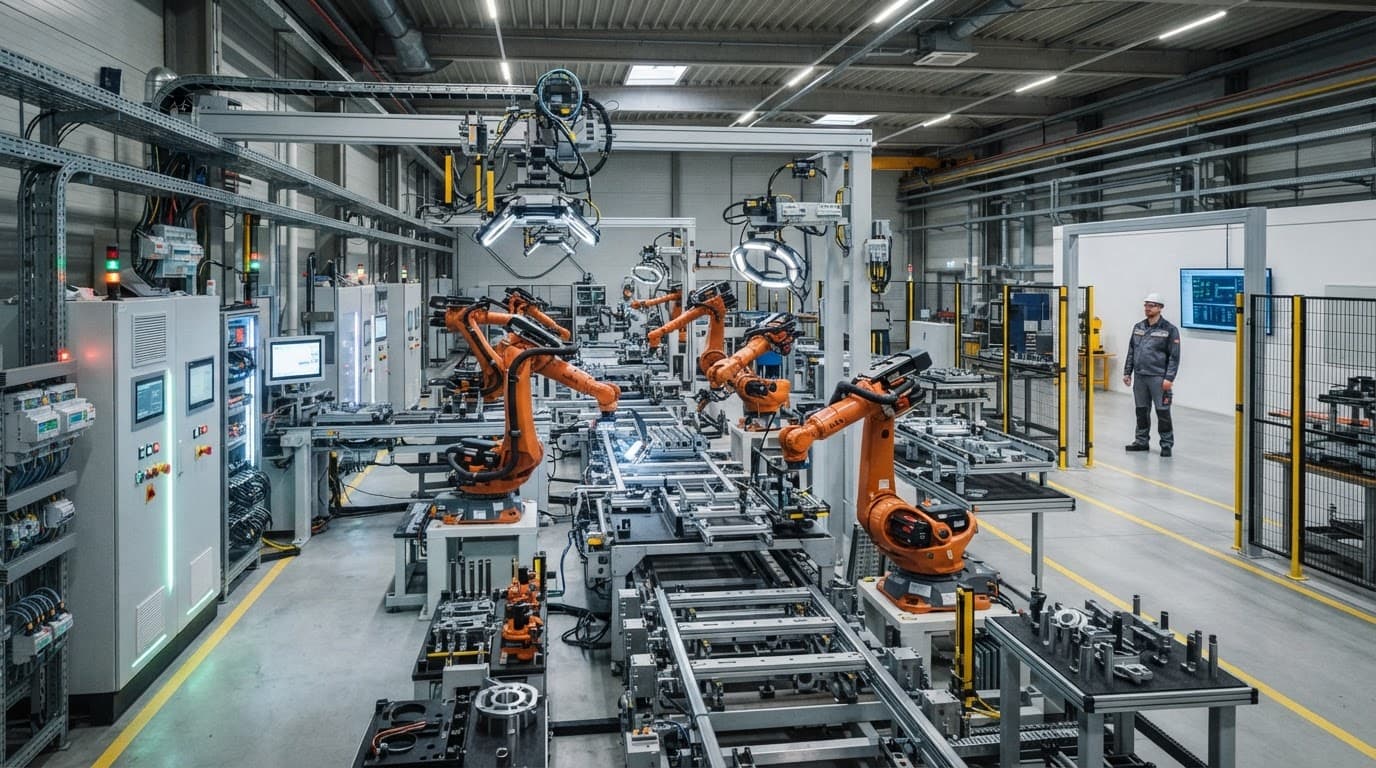
Collaborative robots, or cobots, now handle repetitive assembly, machine tending, palletizing, welding, and inspection tasks. They can work near people when the cell has proper risk assessment, safeguarding, speed limits, and tooling.
Autonomous mobile robots move bins, parts, and finished goods through warehouses and production areas. That reduces wasted travel and helps teams cope with material-handling labor gaps. Mitsubishi Electric, ABB, FANUC, Siemens, and regional integrators all offer robotic ecosystems, but the best fit depends on payload, cycle time, floor conditions, and service support.
Digital twins and machine vision turn data into action
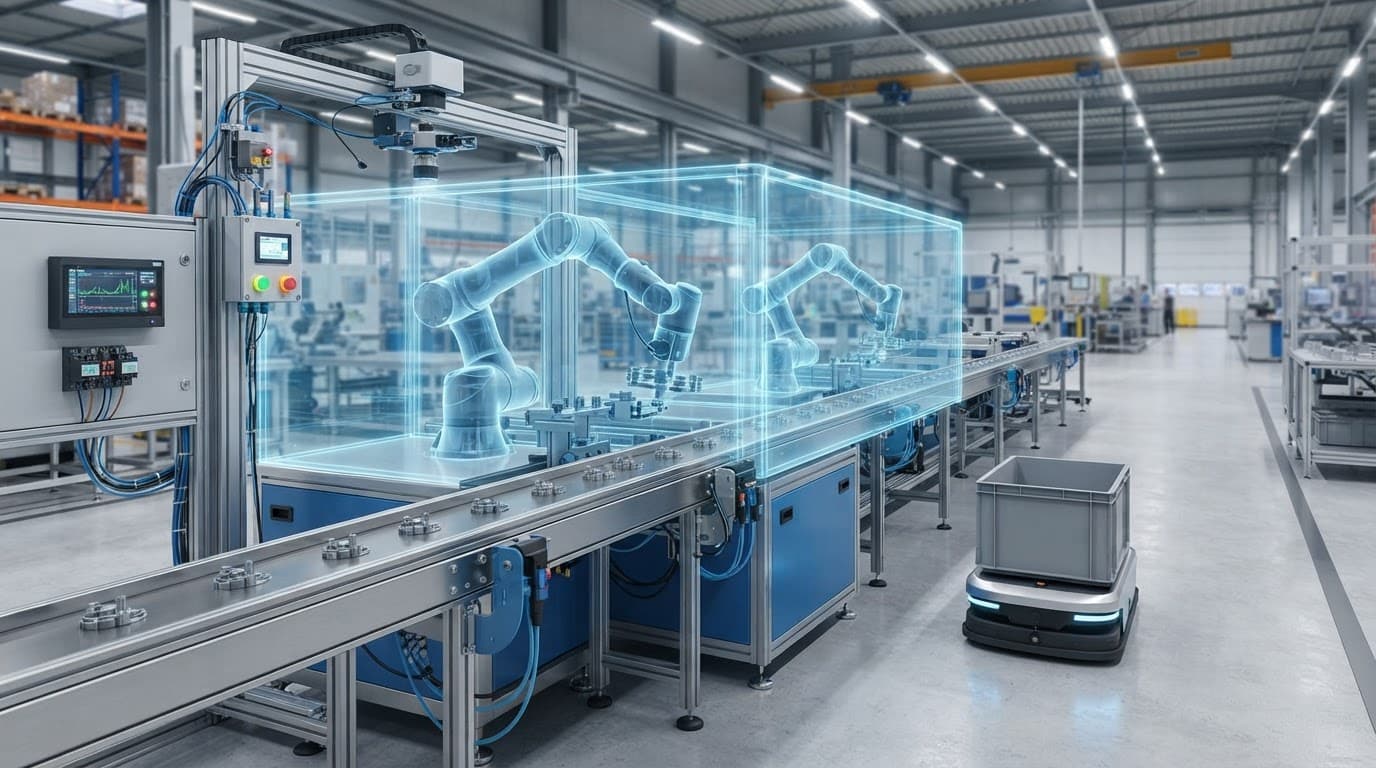
A digital twin is a working virtual model of an asset, cell, or entire production line. Teams can test a layout, simulate throughput, validate robot paths, and plan maintenance before changing the physical line.
Machine vision adds eyes to that model. Cameras inspect electronic assemblies, measure components, guide robot picking, sort products, and catch packaging defects. Research on AI-powered digital twins in the Industrial IoT shows why the combination is useful for efficiency and sustainability. A twin becomes far more credible when live sensor and production data continually update it.
How IIoT, Cloud Platforms, and Smart Controls Connect the Factory
Industrial IoT creates a data path that begins with sensors and controllers, moves through gateways and SCADA systems, and reaches historians, manufacturing execution systems, and business software. Each layer has a different job.
Fast control and safety decisions belong close to the process. Higher-level systems can analyze performance across shifts, sites, and product lines. The PLC, DCS, and SCADA differences matter here because each control architecture suits different operating needs.
Connected control systems improve visibility and flexibility
Modern PLCs, programmable automation controllers, SCADA platforms, and industrial gateways can share machine status without replacing an entire plant. An older packaging line might gain new sensors, a gateway, and a dashboard while keeping its original controls in place.
Teams gain remote monitoring, recipe management, batch traceability, alarm history, and clearer downtime records. Communication choices also shape future options. A practical comparison of MQTT and OPC UA for IIoT explains why OPC UA often fits rich machine-to-machine data, while MQTT works well for lightweight cloud messaging.
Energy monitoring becomes part of automation strategy
Electricity data is production data. When a plant measures energy by line, machine, batch, or shift, it can spot idle loads, air leaks, inefficient motors, and process settings that waste power.
Automation can then react. A control system may reduce compressed-air use during idle time, flag a failing motor, or reveal that one product recipe consumes far more energy per unit. Industrial energy management with Schneider Electric shows how connected meters can work with existing SCADA and power systems rather than requiring a full replacement.
Energy data has limited value when it appears only on a monthly utility bill. It becomes useful when operators can tie it to a machine state, a product batch, or a specific shift.
Cybersecurity and Human Skills Will Shape Automation Success
Connected plants expose equipment that once sat behind closed networks. A PLC, remote-access gateway, vision camera, or maintenance laptop can become an entry point if teams don’t manage it carefully.
Security protects more than confidential information. In operational technology, a bad change can stop a line, damage equipment, or create a safety issue. That is why cybersecurity and skills development belong in the first project plan, not the final checklist.
OT cybersecurity protects connected production systems
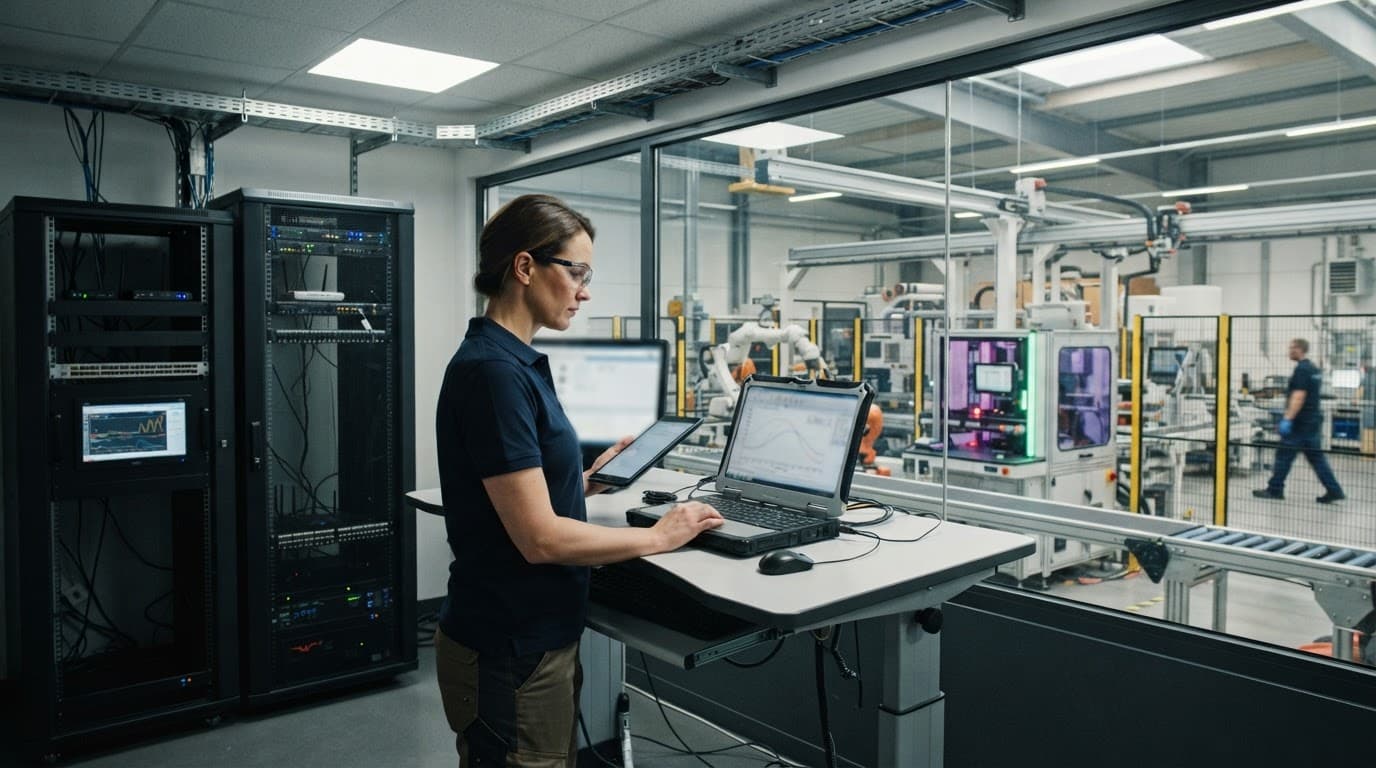
A practical OT security program starts with device visibility. Teams need an accurate inventory of controllers, drives, HMIs, network switches, remote connections, and software versions before they can protect them.
Next, segment networks, restrict remote access, use strong identities, maintain offline backups, and rehearse incident response. Zero Trust principles help because they require systems and users to prove access needs instead of trusting a device merely because it sits on the plant network.
Older equipment needs extra care. Some legacy controllers can’t accept routine patches, so compensating controls such as network isolation and strict access rules become essential. Industry 4.0 manufacturing systems depend on this discipline because connected assets cannot deliver reliable data when their networks are exposed.
The automation workforce is becoming more technical
Automation changes job tasks more often than it removes entire jobs. Operators need confidence with digital work instructions and alarms. Maintenance technicians need sensor, network, and diagnostic skills. Engineers increasingly work across PLC logic, robotics, machine vision, data, and cybersecurity.
Cross-training brings those roles together. An operator may identify a recurring stoppage, a technician can validate the sensor signal, and an engineer can adjust the control logic. That shared understanding prevents data projects from becoming disconnected reports that nobody uses.
What These Industrial Automation Trends Mean for Business Leaders
The most useful trends in industrial automation begin with a stubborn business problem. Maybe a line loses hours to unplanned downtime. Maybe defects appear after an expensive assembly step. Perhaps changeovers are slow, energy consumption is rising, or material movement consumes too much labor.
A new robot or AI platform won’t fix every issue. First, define the baseline, financial impact, constraints, and owner of the problem. Then choose technology that can improve a measurable result.
Major suppliers such as Siemens, ABB, Schneider Electric, Rockwell Automation, Mitsubishi Electric, Honeywell, and Delta Electronics offer broad ecosystems. Yet a familiar vendor isn’t always the automatic choice. Existing equipment, integration expertise, local service, cybersecurity requirements, and total cost of ownership should guide the decision.
For example, a plant with several controller brands may benefit more from evaluating industrial IoT platform vendors than from committing early to a single proprietary data layer. Open standards can reduce friction when the pilot expands across sites.
A Practical Roadmap for Adopting New Technology
A focused pilot gives leaders evidence before a large rollout. It also reveals integration problems while the scope is manageable.
- Audit current machines, data sources, network connections, and pain points.
- Select one high-value use case, such as vision inspection on a defect-prone station.
- Define success metrics before installation, including downtime, first-pass yield, energy per unit, or changeover time.
- Connect equipment safely, with ownership rules for data, access, and backups.
- Test the solution under real operating conditions, then train the people who will use and maintain it.
- Scale only after the pilot proves its return and the team can support it.
The best industrial automation trend for a plant is often the one that removes a daily source of frustration. A small vision project that prevents costly rework can outperform a factory-wide platform that produces data without action.
Risks to Avoid Before Scaling Across the Plant
Many automation projects stumble because teams purchase disconnected tools. A cloud dashboard, a robot, and a sensor package can each work well alone while failing to exchange useful data together.
Avoid starting with technology instead of a business goal. Also account for older machines, integration labor, network capacity, spare parts, and training time. These details determine whether a pilot becomes a dependable production system.
Data collection needs a defined use. If no one can explain who reviews a signal, how quickly they act, and what decision it changes, that signal probably doesn’t belong in the first phase. The same applies to security, which cannot wait until a system is already connected.
Conclusion
The clearest pattern in trends in industrial automation is connected intelligence with a practical purpose. Edge AI, robotics, machine vision, digital twins, IIoT, energy monitoring, cybersecurity, and workforce skills work best as parts of one operating system.
Businesses don’t need every technology at once. Start with the production problem that costs the most, choose tools that fit the existing plant, measure the result, and build from proven gains.




1 thought on “Trends in industrial automation”
Comments are closed.