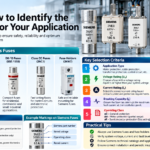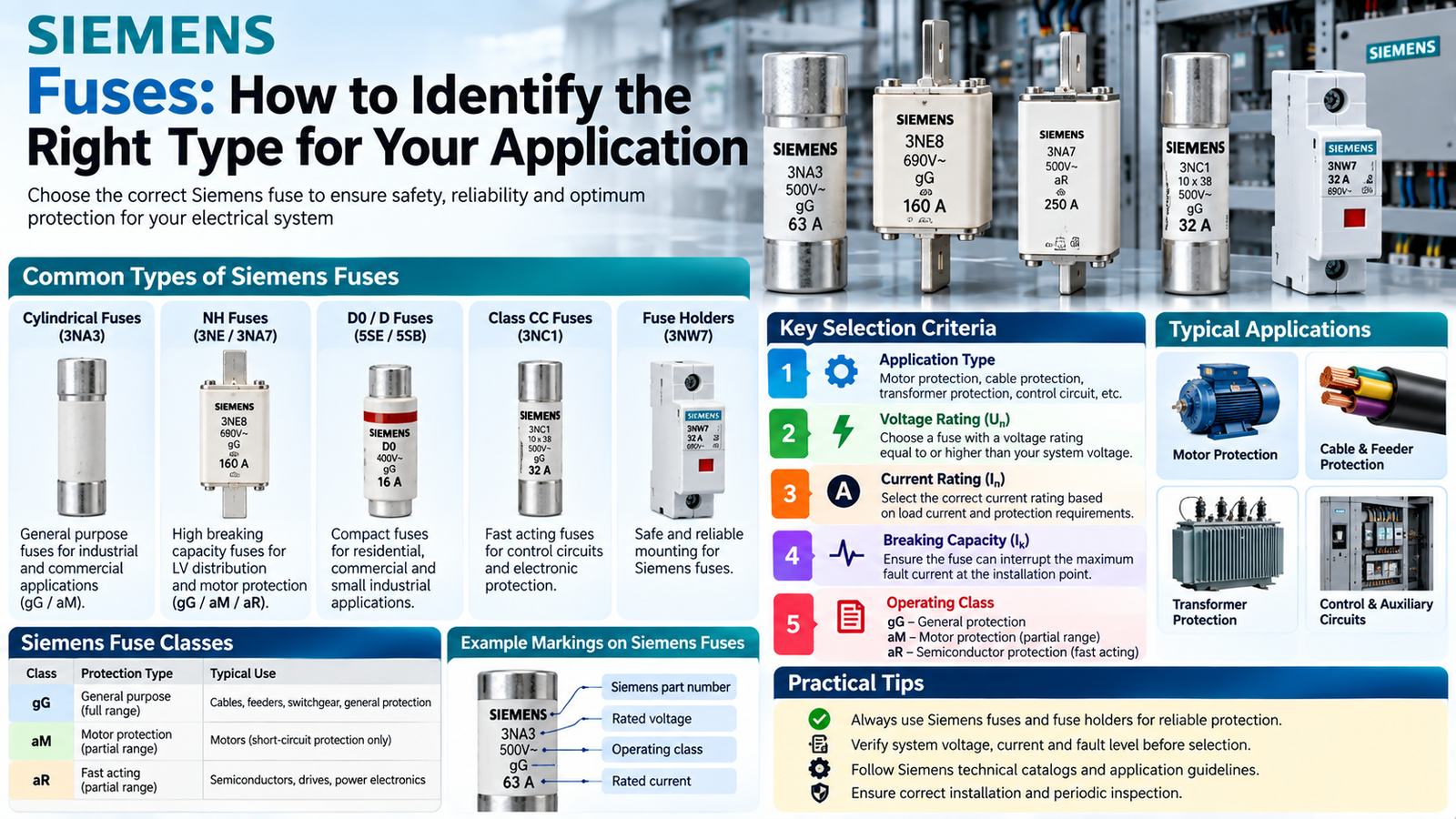
Choosing a fuse for a Siemens panel, drive, or other electrical circuit starts with identifying the part the equipment actually requires. Siemens sells several fuse families, including SENTRON and SITOR, but a fuse installed in Siemens equipment isn’t automatically Siemens-branded.
The right replacement depends on more than amperage or physical fit. This guide explains how to identify fuse types and catalog markings, check the ratings and application, and approach replacement safely. For broader context, see how LV switchgear circuit breakers and fuses fit into electrical protection systems.
Table of Contents
Which Siemens fuses are used in industrial and building systems?
Siemens fuse families cover different protection needs. SITOR links are designed for power electronics, while the 3NW BS-type range covers industrial and building applications. Siemens also offers SENTRON fuse systems, which include fuse links and related components. Product ranges and availability can vary by market, so check current Siemens documentation for your region and the exact part number.
SITOR fuses protect semiconductors and power electronics
SITOR is Siemens’ semiconductor fuse-link family. These links help protect sensitive power components, including converters and drives, where short-circuit protection must match the equipment manufacturer’s requirements. For an example of how semiconductor fuses can be specified with drive protection, see VFD breaker and fuse protection requirements.
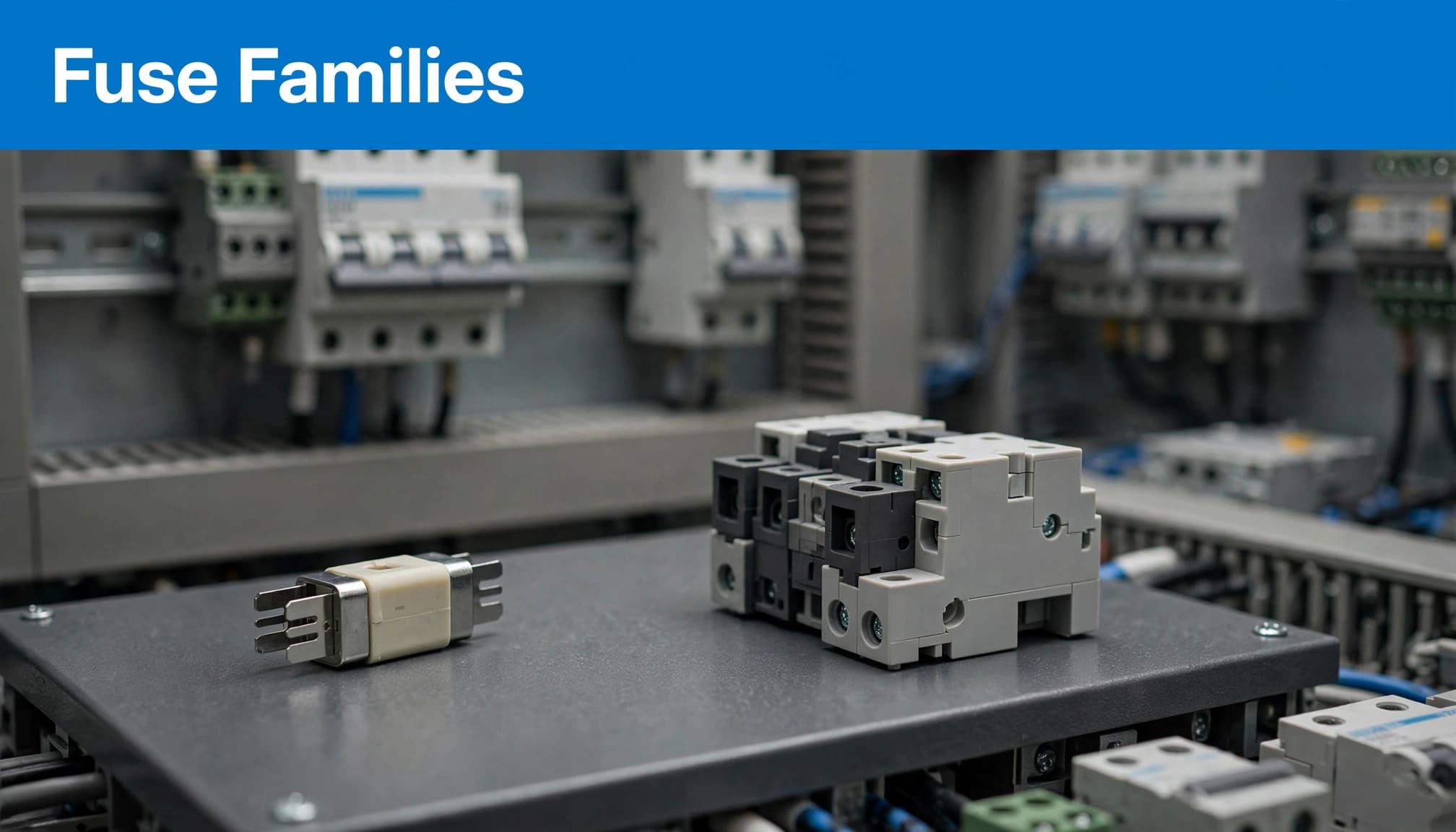
Siemens listings include SITOR links marked gS, gR, and aR, with NH sizes such as NH00, NH1, and NH3. These markings identify particular designs and applications. They aren’t enough on their own to confirm a replacement: compare the complete part number, electrical ratings, and application details in the relevant product documentation. Siemens’ SITOR fuse information describes the family and its semiconductor protection role.
3NW fuses serve building and industrial applications
Siemens’ BS-type 3NW range includes gG fuse links for industrial and building systems. The catalog lists ratings from 2 A to 800 A at 415 V AC, with a stated breaking capacity of 80 kA AC and 40 kA DC. Fixing styles include blade-tag, center-tag, and offset-tag.
These are catalog values for the cited range, not a substitute for checking the exact fuse. Confirm the part’s rated voltage, current, breaking capacity, and mounting arrangement before selecting a replacement. Siemens provides the range details in its BS-type fuse catalog.
Fuse links, bases, and fused switches do different jobs
A fuse link is the replaceable element that interrupts current during an overcurrent condition. A holder or base supports the link and connects it to the circuit. A fused switch combines a switch with fuses: the switch opens or closes the circuit, while the fuses provide overcurrent protection.
These components work together, but they aren’t interchangeable just because they look similar or share a physical size. Check the specified link type, ratings, and compatible base or switch in the equipment documentation. For a broader view of how fuses fit into an assembly, see these components of an LV switchgear lineup.
How to read Siemens fuse ratings and catalog numbers
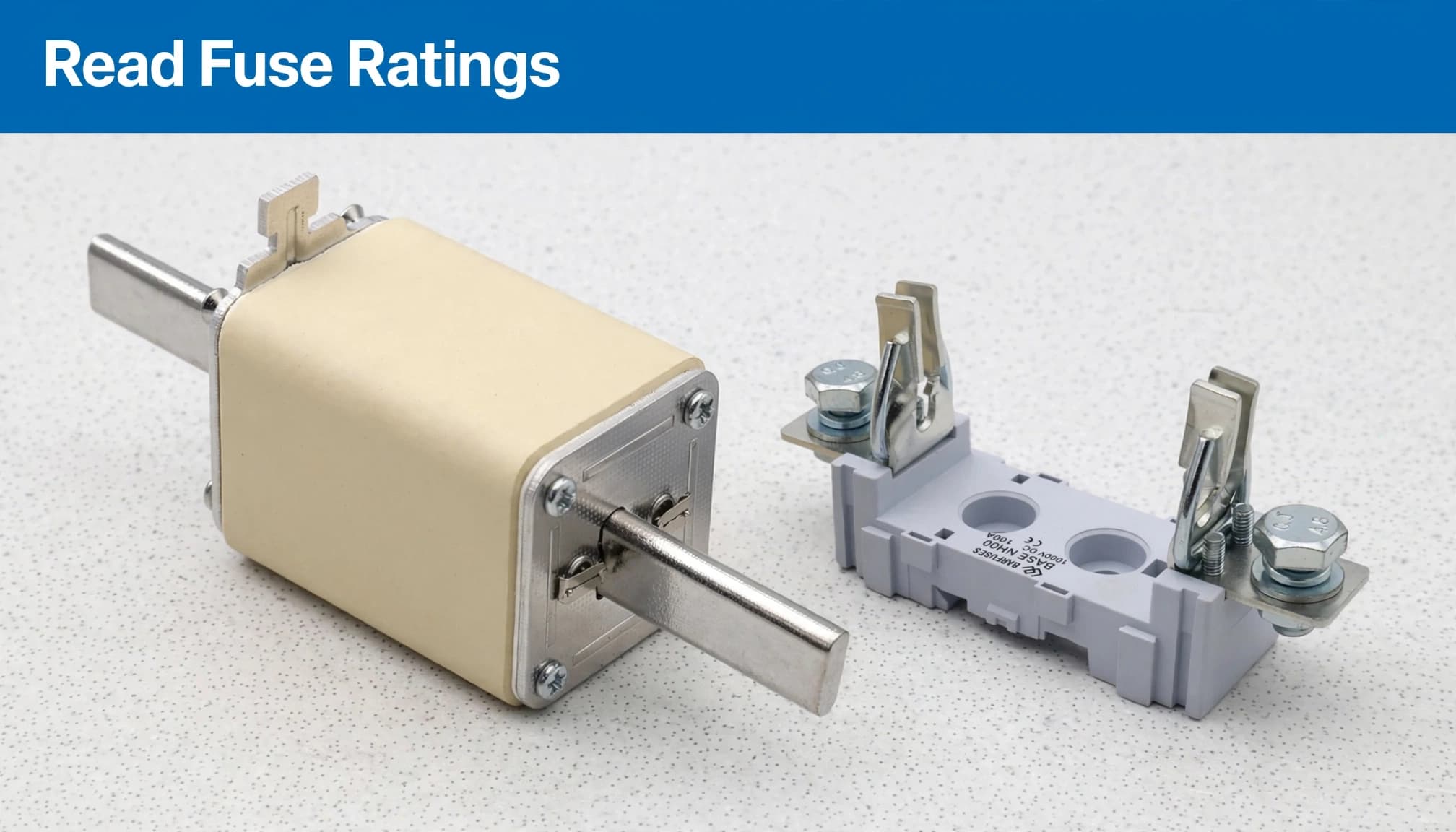
Siemens fuse markings describe both performance and compatibility. Read the electrical ratings, operating class, fuse system, and contact style together, then confirm the complete catalog number in Siemens documentation. A quick visual match can miss an important difference.
Check current, voltage, fuse class, and breaking capacity
The rated current, shown in amps, is the current the fuse is designed to carry under specified conditions. Choose a rating that suits the circuit and the protected equipment, following the equipment manufacturer’s specifications. A higher amp rating isn’t automatically a safe substitute.
The rated voltage is the maximum circuit voltage the fuse is designed to interrupt under specified conditions. It must not be below the circuit voltage. Check AC and DC ratings separately because a fuse may have different limits for each.
The operating class, such as gS or gR on SITOR products, describes the fuse’s application and protection characteristics. Match the class to the equipment requirements rather than treating it as an interchangeable label.
Breaking capacity is the maximum prospective fault current the fuse can safely interrupt at its specified voltage. It must meet or exceed the expected fault level at the installation point. This is separate from normal load current: a circuit may carry modest current during operation but still experience a high fault current.
Match the fuse system, size, and contact style
NH size, such as NH00 or NH1, helps identify the fuse link’s physical format and the base it can fit. Contact arrangement also matters. Siemens SITOR listings include blade contacts, slotted blade contacts, and bolt-on options.
Check the complete catalog number and connection style, not just the fuse dimensions. Two links can share an NH size yet differ in ratings, operating class, voltage limits, or mounting details. For other overcurrent devices, the response characteristics also matter; see how breaker curves and trip classes work.
Compare real SITOR examples before ordering
Siemens catalog data shows why amp rating or NH size alone can’t identify a suitable replacement:
- 3NE10210, also listed by Siemens as 3NE1021-0, is NH00, 100 A, gS, and rated 690 V AC / 250 V DC. It has blade contacts.
- 3NC84233C is NH3, 150 A, gR, and rated 690 V AC / 440 V DC. It has slotted blade contacts.
These products differ in size, current, operating class, DC voltage rating, and contact style. Confirm the exact specification for the required application before ordering. Siemens’ official 3NE1021-0 product record provides details for that fuse; check the corresponding Siemens record or datasheet for 3NC84233C as well. The complete product record takes priority over a quick visual comparison.
How to choose the right Siemens fuse for an application
Selecting a replacement starts with the equipment requirement, then moves through circuit duty and purchase verification. A Siemens panel, drive, or switchboard does not prove that the fuse inside is Siemens-branded. The part number and verified specifications are what matter.
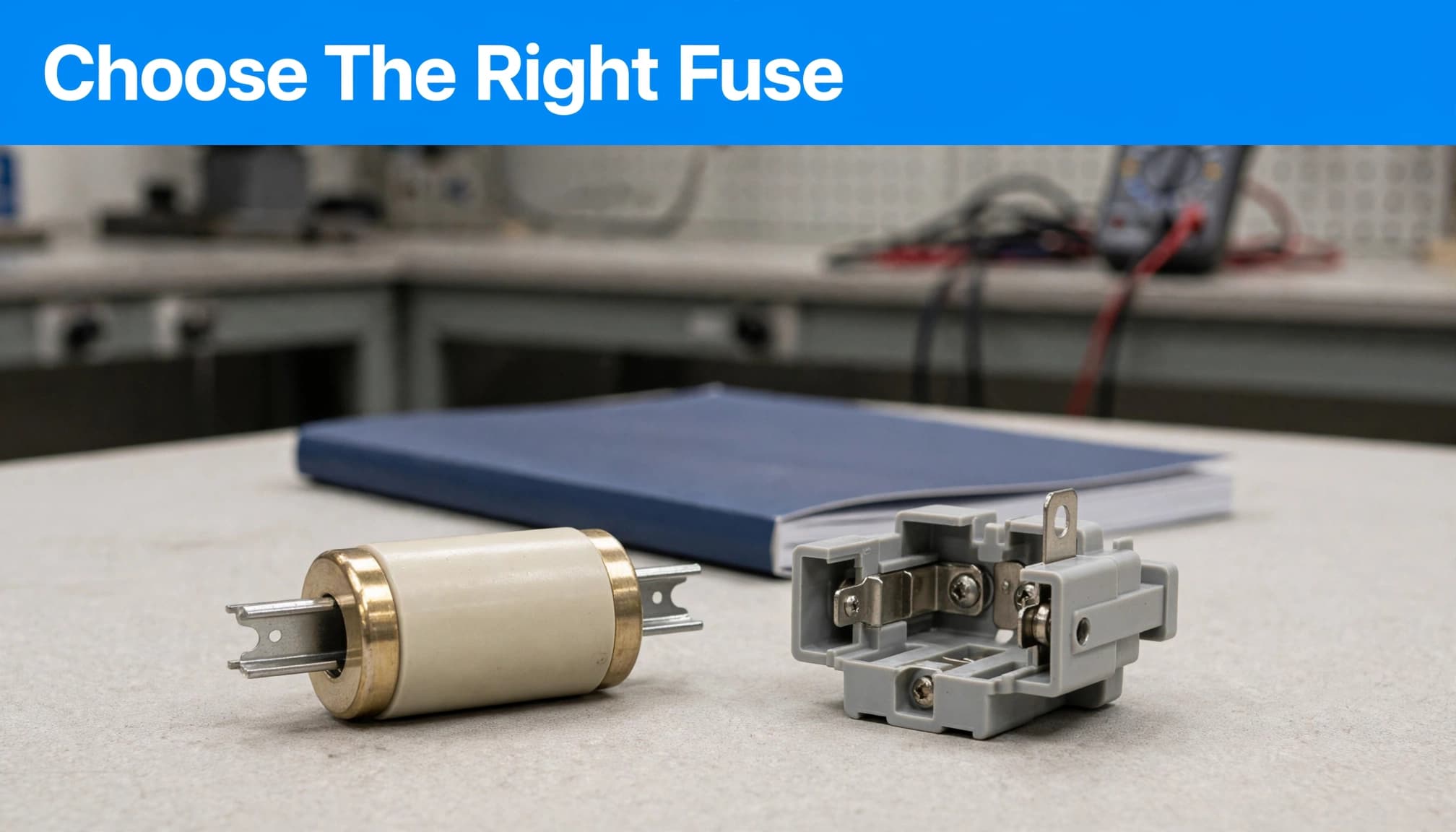
Start with the equipment manual and original fuse marking
Record the exact equipment model, the circuit location, and the original fuse part number. Check the equipment manual or wiring diagram for the manufacturer’s specified fuse type and ratings. The marking on the installed fuse can help confirm the part, but it should be read alongside the documentation.
A Siemens assembly may contain fuses from another manufacturer, so don’t select a replacement based on the cabinet brand or a visual match. If the marking is damaged or missing, have a qualified person check the equipment documents or contact the equipment manufacturer. Guessing from the fuse’s size or color can lead to the wrong part.
Confirm the circuit duty and protection needs
Before comparing fuse links, verify the load current, circuit voltage, AC or DC supply, and prospective fault current at the installation point. Then confirm whether the fuse protects semiconductor equipment, such as a converter or drive, or a general load. The application determines the required fuse class and protection characteristics.
A semiconductor fuse such as a SITOR link is not automatically interchangeable with a general-purpose fuse. Match the specified class, rated current, voltage, and breaking capacity to the equipment requirements. Siemens’ fuse systems manual explains fuse ratings and operating limits. For the wider role of circuit protection, see low-voltage breaker types and applications.
Don’t raise the fuse rating to stop nuisance trips. A larger fuse may leave wiring or equipment without the intended protection. Investigate the cause of repeated operation and verify the circuit design before replacing the fuse.
Verify the complete part number before purchasing
Compare the full Siemens catalog number with the equipment specification and the current product record. Check the fuse class, physical size, current and voltage ratings, contact arrangement, and required holder or base. A link that fits physically may still have the wrong electrical rating or operating class.
Buy through an authorized or reputable supplier, and confirm that the product documentation matches the part being offered. Siemens product data can help verify catalog details, but check the exact record for the required fuse and region. Prices and stock vary by rating, region, and supplier, so use current supplier listings rather than assuming a standard price or universal availability.
Why Siemens fuse links are not interchangeable by appearance
A Siemens fuse link can look like the right replacement and still have the wrong operating characteristics. Physical fit is only one part of selection. Check the fuse class, electrical ratings, contact arrangement, and equipment requirements before installing a replacement.
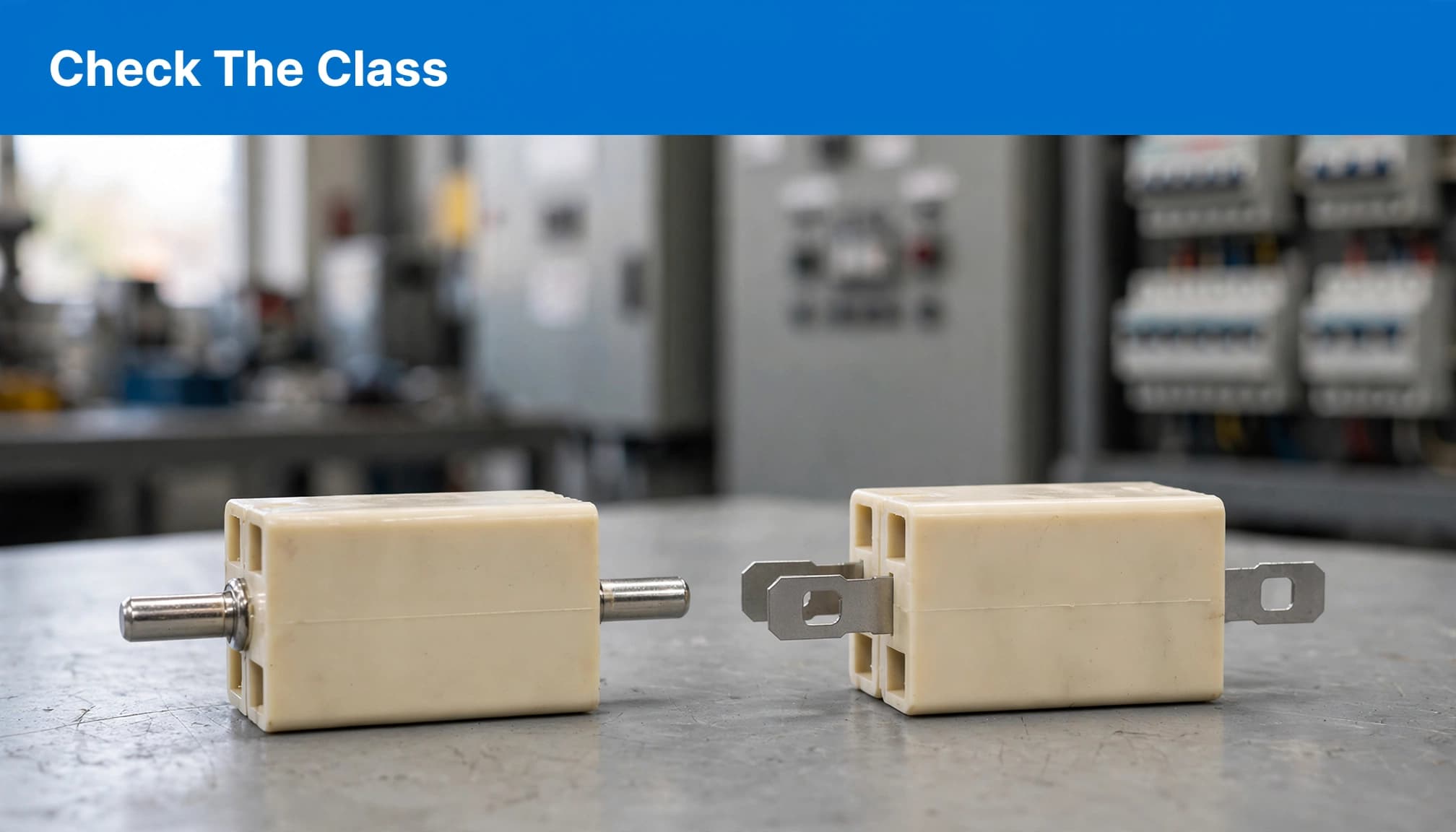
The same amp rating can hide a different fuse class
Two links with the same rated current can have different operating classes and serve different applications. Siemens 3NE and 3NC SITOR links illustrate why the series and amp rating alone aren’t enough: catalog listings include 3NE links in gS classes and 3NC links in gR or aR classes. These designations describe different protection characteristics.
The class is a key selection point, not a minor label. Match it to the protected equipment and its documentation. Siemens’ 3NE1332-0 product data sheet shows the product details to verify for an individual link. Use the exact catalog record for the replacement you’re considering.
NH size alone does not prove compatibility
An NH designation describes a physical fuse format. It doesn’t confirm that the link has the correct voltage, current, operating class, contact shape, or breaking capacity. Two links may fit the same NH holder and still differ in one or more of these requirements.
A fuse that fits the holder may still be unsuitable for the equipment. This matters with SITOR links, which can produce more heat than standard gG or aM fuses. Siemens specifies intended holders and maximum permissible current for particular link and base combinations. Check the catalog for both the fuse link and its compatible base or holder, including the required contact style and permitted current.
Repeated fuse failures call for diagnosis, not a larger fuse
When a fuse operates repeatedly, investigate the circuit or equipment before replacing it. Possible causes include an overload, a fault, or an equipment issue. The fuse rating alone can’t identify the cause.
Installing a higher-rated fuse may leave the wiring or connected equipment without its intended protection. Follow site procedures and equipment instructions, and have qualified personnel troubleshoot the circuit. Replace the link only after confirming the specified fuse type and rating.
Replace Siemens fuses safely and confirm the circuit afterward
Replacing a fuse is maintenance work, not a simple parts swap. The goal is to install the specified link, understand why the original operated, and confirm the equipment can return to service under approved site controls.
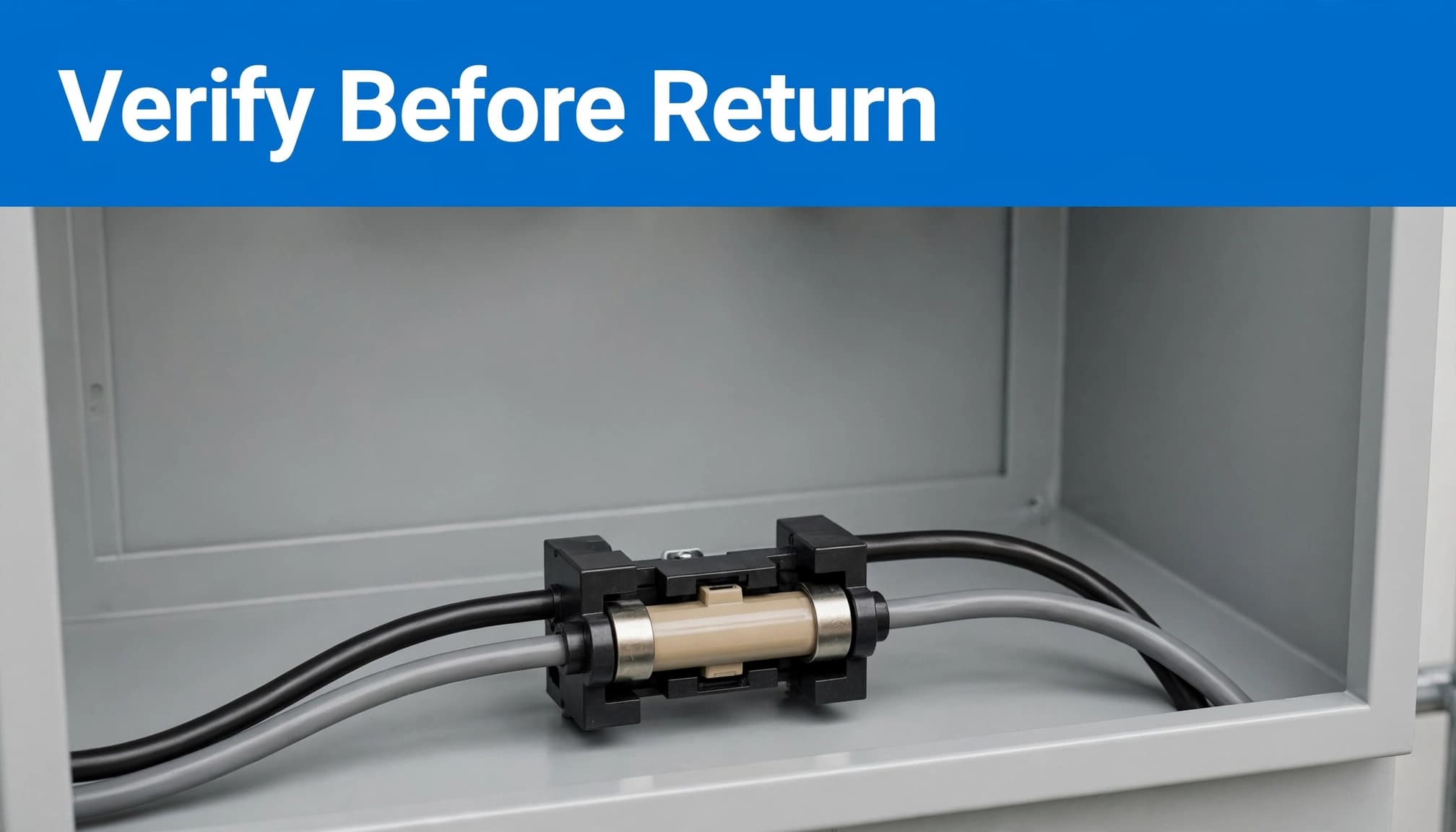
Isolate and verify according to site procedures
Fuse replacement can expose workers to dangerous voltage and arc-flash hazards. Opening a switch alone does not prove that every part of the equipment is safe. Multiple sources, backfeed, or induced voltage may still present a hazard.
Use the equipment documentation and your site’s approved isolation and verification process. OSHA requires qualified personnel to verify de-energization with test equipment where its rules apply. See OSHA’s electrical work-practice requirements. This is not a substitute for job-specific training or site procedures.
Use the specified replacement and inspect the cause
The replacement must match the required specification, including fuse class, current and voltage ratings, breaking capacity, and physical connection. Confirm the complete catalog number and compatibility with the fuse holder or equipment. A link that fits the base may still have the wrong protection characteristics.
After a fuse operates, assess the underlying cause before returning equipment to service. An overload, short circuit, or equipment fault may have triggered it. Reusing a blown fuse, bypassing protection, or installing an unverified substitute can leave the circuit or connected equipment without the intended protection. Repeated operation calls for diagnosis, not a higher-rated fuse.
Record the installed part and source documentation
A clear maintenance record makes the next replacement easier to verify. Record the fuse catalog number, circuit location, installation date, and the relevant equipment manual or wiring diagram. Keep the official datasheet or supplier record with the maintenance documentation.
This gives the next technician a reliable reference instead of requiring a guess based on appearance. Replacement work must follow the equipment manual, site safety rules, and applicable electrical codes. Qualified personnel should handle the work where required, and the circuit should be checked for correct operation using the site’s approved return-to-service process.
Conclusion
Choosing Siemens fuses starts with the exact catalog number and the application they protect. Verify the fuse class, current and voltage ratings, breaking capacity, size, and contact style. Brand, appearance, or amp rating alone can’t confirm that a replacement is suitable.
Follow the equipment documentation and site safety requirements for replacement and troubleshooting. The right fuse is the one specified for the circuit, installed and checked using approved procedures.