A humanoid robot can now appear in a car factory, a rehabilitation clinic, an art auction, or a living-room conversation. That range is exciting, but it also makes it easy to confuse a polished demonstration with a dependable product you can buy and live with.
Many claims surrounding female humanoid robots combine real research, prototype demonstrations, projected launches, and prices that vary wildly by model. The useful question isn’t whether a machine can blink or speak. It’s whether it can work safely, protect privacy, and provide value after the cameras are gone.
Table of Contents
What the “$7,999 Female Robot” Headline Really Means
The $7,999 headline needs context. The models discussed under that label include consumer companion concepts priced near $4,000, a reported $12,000 developer-oriented humanoid, and high-end androids with prices above $100,000. Those figures can describe a partial unit, a planned retail price, a research platform, or a custom-built machine.
A humanoid robot has a body shaped to operate in spaces designed for people. It may have a head, torso, arms, hands, and legs, but those features don’t tell you how capable it is. Appearance, movement, conversation, and autonomy are separate tests.
Human form has practical advantages and costs
A robot with arms and legs can potentially use stairs, reach shelves, carry tools, open doors, and work beside people without a complete redesign of the building. That is the practical appeal of humanoid engineering.
However, walking on two legs requires constant balance correction. Soft skin can add maintenance problems. Compact bodies also leave little room for batteries, cooling systems, motors, and onboard computers. A familiar shape is useful, but it is one of the hardest shapes to engineer.
Reported prices span very different products
The figures below are claims associated with the machines discussed in recent video coverage, not a verified price list.
| Robot or platform | Reported purpose | Stated price |
|---|---|---|
| X Doll Xiaody | Consumer home companion | About $4,000 |
| EngineAI PM01 | Developer and industrial platform | About $12,000 |
| RealDoll Arya | Modular companion android | $12,000 to $175,000 |
| DroidUp Moya | Premium companion robot | About $170,000 to $173,000 |
| UBTECH Walker S2 | Factory humanoid | About $160,000 |
The purchase price is only the opening cost. Repairs, battery replacement, safety equipment, software access, training, data storage, and service contracts can turn an affordable-looking robot into a costly long-term commitment.
Lifelike skin, eye contact, and fluent dialogue can create a strong impression of understanding. They do not prove consciousness, feelings, or human-level judgment.
The Human-Facing Androids Draw the Most Attention
Faces, warmth, and conversation
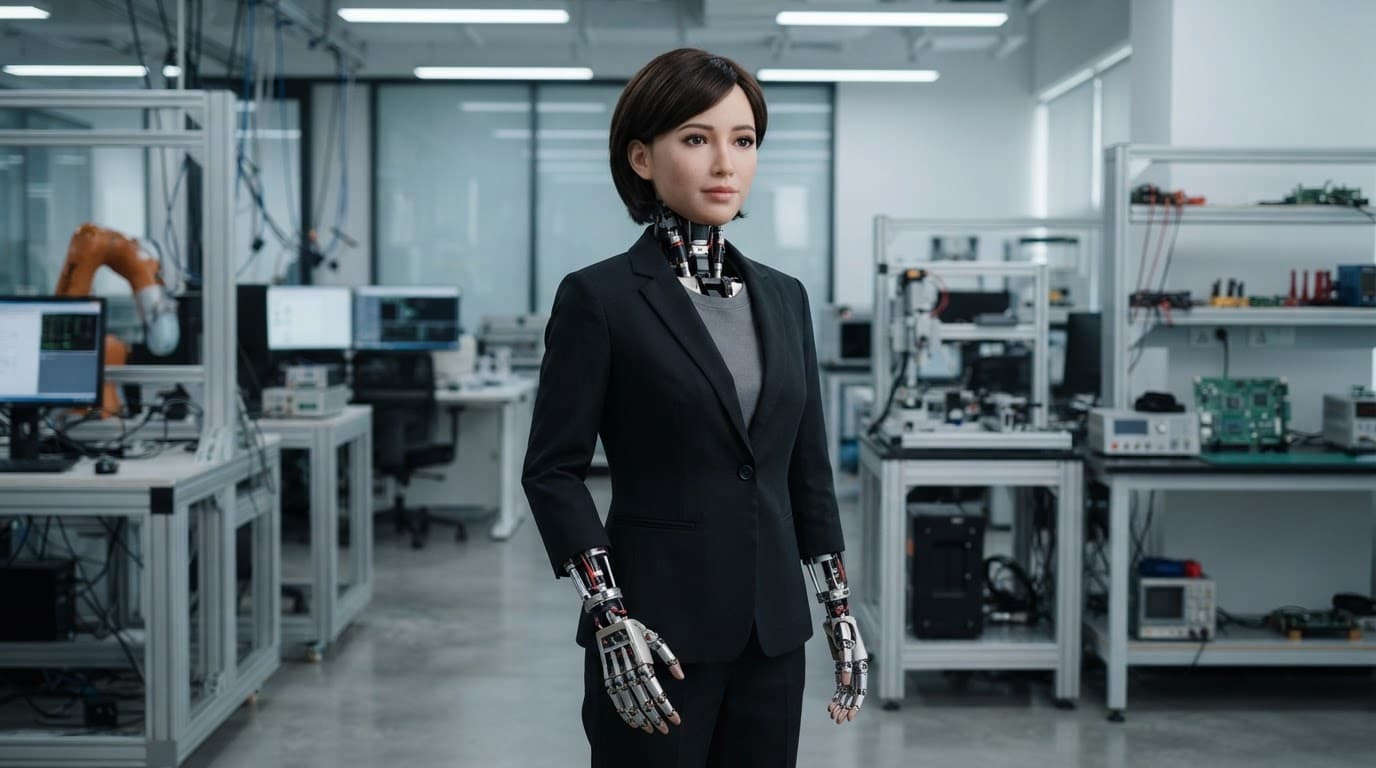
Several reported models focus almost entirely on social presence. UBTECH’s “U World U1 Ultra Female,” RealDoll Arya, the Origin Phone head form, X Robots androids, X Doll Xiaody, and DroidUp Moya are described as using silicone skin, eye tracking, lip synchronization, facial motors, and conversational software.
Some claims go further. Moya is described as having heated skin, humanlike walking, and long conversations. Arya reportedly uses swappable faces that activate different personality profiles. X Robots is associated with temperature-controlled skin, breathing-like chest movement, and facial mirroring.
Those details may make a machine feel personal. Still, a response generated by pattern matching and a language model is not evidence that the robot cares about the person speaking. Several names, specifications, and prices in these reports should be checked against current company materials before anyone treats them as purchase-ready products.
Jia Jia showed why social robotics develops in layers
Jia Jia, developed at the University of Science and Technology of China, became well-known as an early humanoid designed for public interaction. Her face, speech, lip movement, and arm gestures made her a memorable research prototype, even though her structured speech and mechanical movement made her artificial nature clear.
That distinction matters. A social robot needs perception, speech, expression, safe movement, balance, and reliable hardware. No single feature solves the whole problem. A convincing face doesn’t create safe hands, and a capable arm doesn’t create good conversation.
Ai-Da raises a different question about machine-made art
Ai-Da uses camera systems, AI software, and a robotic arm to create portraits. Her Alan Turing work, “AI God,” sold at Sotheby’s for $1,084,800 in 2024, according to reporting on the robot art auction.
The sale showed that collectors can assign real market value to work made through a robot-led process. It did not settle whether a machine is an artist in the human sense. The human team, training data, software, subject selection, and auction story all shape the finished work and its value.
China’s Humanoid Robotics Push Is About Deployment
China’s progress in robotics involves more than low-cost manufacturing. Dense electronics supply chains, motor and battery production, university research, large factories, and access to real-world test environments help companies build and test hardware quickly.
The country also has a huge industrial base where a robot can be evaluated against production targets instead of stage-show applause. For more context on that shift, see this look at AI-powered industrial robotics in China.
Factory work matters more than viral demonstrations
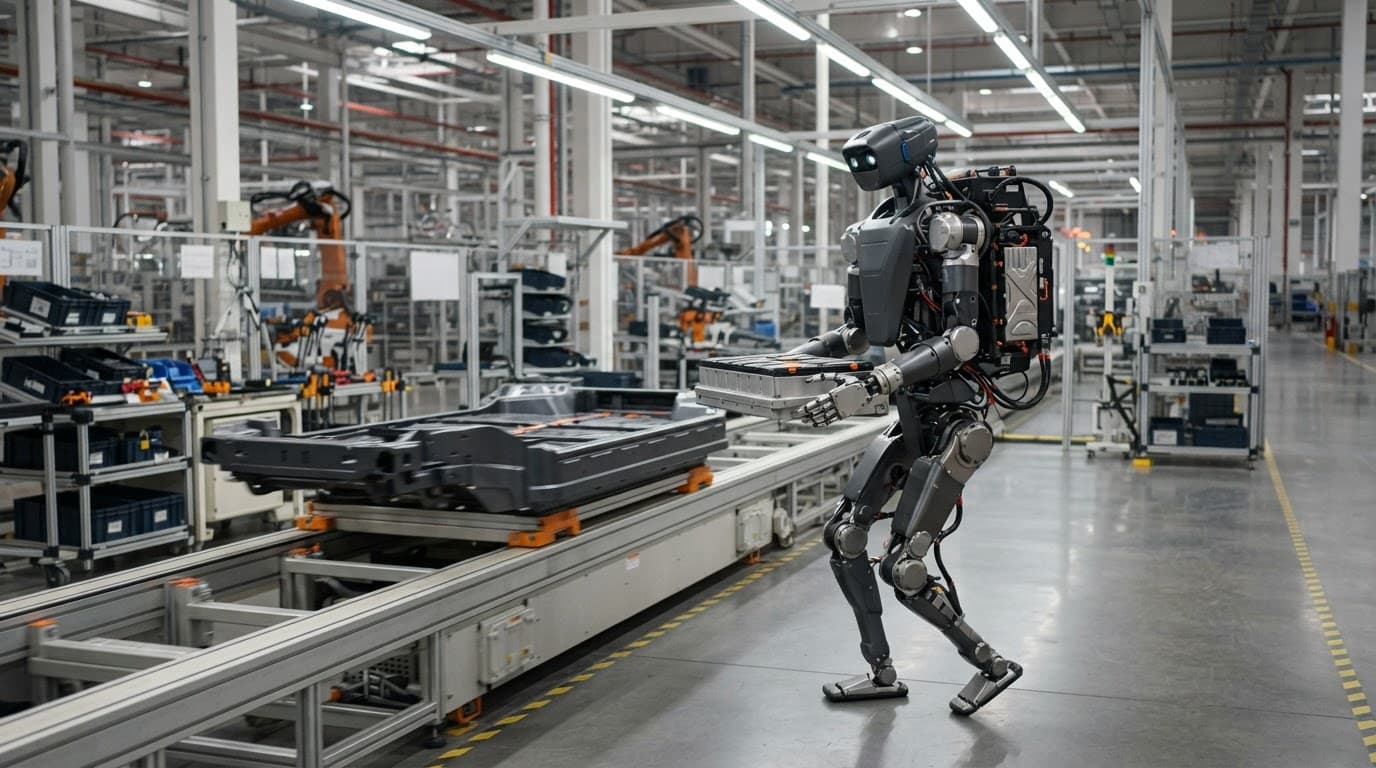
UBTECH’s Walker S2 is presented as a factory-focused humanoid for jobs such as inspection, component transport, and assembly support. Reports describe use around automotive production, plus a self-directed battery swap that takes only a few minutes.
For a factory, the deciding measures are uptime, error rates, safety, integration with existing equipment, and return on investment. A robot that performs one repetitive job safely for an entire shift can be more useful than a humanoid that dances, sings, or gives a polished interview.
Lower-cost hardware could broaden experimentation
EngineAI’s PM01 is described as a lower-priced humanoid with an unusual range of waist rotation and an open architecture for developers. The reported $12,000 price needs verification, but the larger idea is sound: lower actuator, sensor, reducer, and battery costs can help universities and small companies test new robotic applications.
A cheap robot still needs safe control systems, reliable batteries, and maintenance. It may be well suited to labs or tightly controlled work areas while remaining a poor fit for an unsupervised home.
Specialized projects may beat all-purpose humanoids
Other projects point toward narrow roles. Fourier Intelligence’s GR-1 draws on the company’s rehabilitation background and has been presented for health care and assisted movement. Xiaomi’s CyberOne has appeared as a consumer electronics humanoid concept. DroidUp’s JUBA 01 has been tied to reported academic and cultural learning experiments.
Claims about Honor’s Lightning running a half marathon, future CyberOne upgrades, and university enrollment should be treated as demonstrations or announcements until primary sources confirm them. The strongest commercial robots may be specialists that do one job well.
What AI Lets a Robot See, Hear, and Do
A humanoid body is only half the system. Cameras and microphones collect information, software identifies objects or speech, planning tools select an action, and motors carry it out. Each stage can fail.
A robot may hear a request but misunderstand the context. It may recognize a cup but misjudge its weight. It may generate a warm sentence while lacking the common sense to act safely in a cluttered room.
Mood detection isn’t empathy
Emotion-recognition tools often analyze facial movement, voice tone, posture, and conversation history. That can help with reminders, accessibility tools, customer service, language practice, and basic wellness check-ins.
Yet the system can misread a person who has a disability, speaks differently, masks distress, or comes from a culture with different social cues. A machine should never make independent mental health judgments or replace trained human care.
Motion requires hard mechanical tradeoffs
Degrees of freedom describe how many separate movements a robot can control. More joints can create smoother motion, but they also add weight, cost, heat, and failure points. Torque, force sensing, gait planning, cooling, and battery management all matter.
That is why a robot can have an expressive face yet remain unable to walk. Another machine may carry heavy parts but speak stiffly. Specialized designs often outperform a single body asked to do everything.
Privacy depends on where data goes
On-device processing can reduce the need to send camera and microphone data to a cloud server. It is especially important when a robot operates inside a bedroom, home, classroom, or care setting.
Still, buyers need clear answers about recordings, software updates, remote access, hacking protection, and data ownership. Autonomous movement means a robot can act without a person controlling every step. It does not mean the machine has independent human judgment.
Human Companions Could Help, but Boundaries Matter
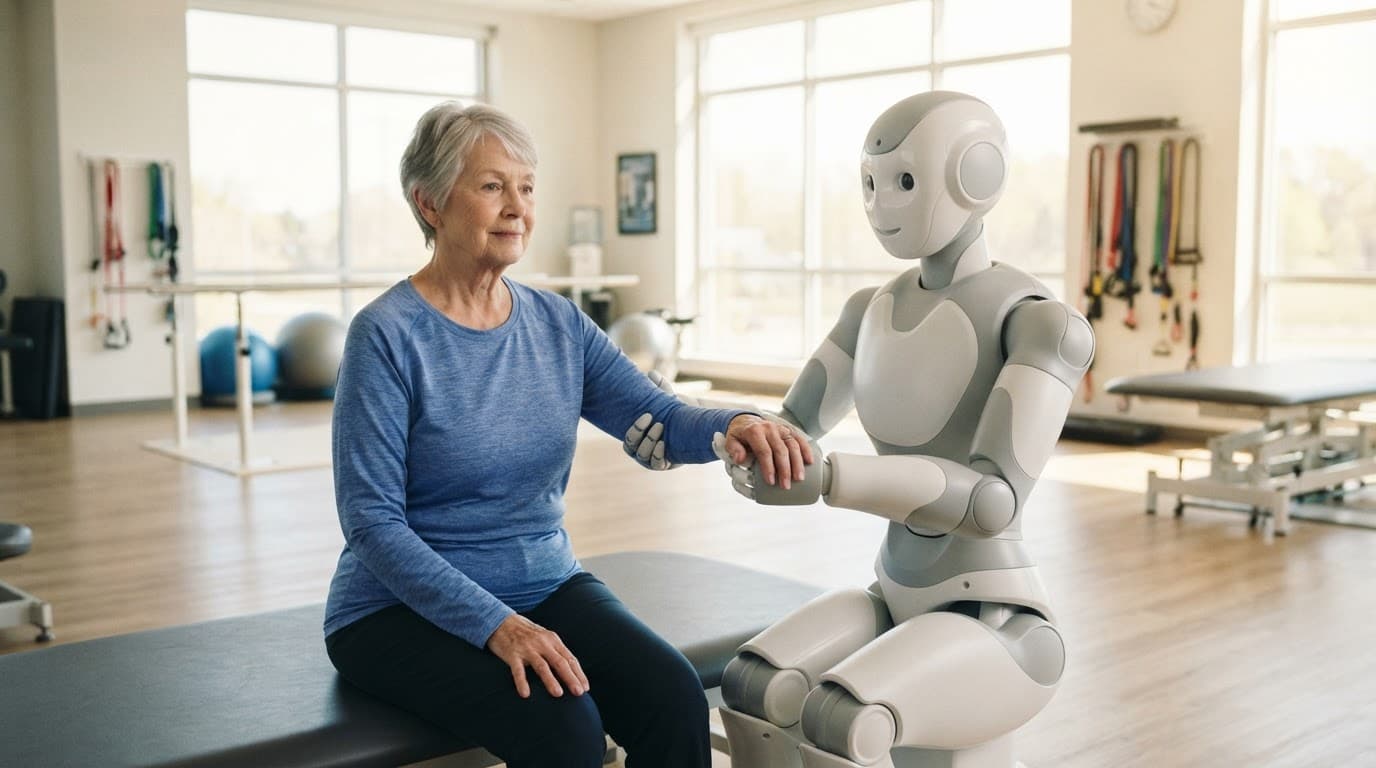
A patient, always-available robot may appeal to people who live alone, older adults, caregivers, or people with limited access to social support. It could offer reminders, simple home assistance, social rehearsal, language practice, and help with rehabilitation exercises.
Support should supplement human care
In a clinic, a humanoid might guide repetitive exercises or help staff move equipment. At home, it might provide medication reminders, emergency alerts, or a familiar conversational routine.
Those uses can be helpful when the system has clear limits. A robot cannot replace friendship, family, therapy, or informed medical judgment. Users also need to know what happens if the software fails, the company closes, or the machine gives unsafe advice.
The uncanny valley affects trust
The uncanny valley describes the discomfort some people feel when a machine looks almost human but behaves in a slightly unnatural way. Warm skin, blinking, breathing motions, and subtle smiles can make a robot feel more present. They can also make its mistakes feel more unsettling.
Humanlike female designs raise another concern. Companies should avoid designs that encourage users to mistake a product for a person or reduce women to a customizable service role. Clear disclosure matters: people should always know they are interacting with a machine.
Homes need stronger rules than show floors
Before companion robots become common, buyers and regulators need physical safety standards, strong cybersecurity, age protections, privacy limits, and clear responsibility when harm occurs. Rules should also address emotional manipulation, especially when systems are designed to build attachment or sell paid features.
A charming voice and expressive eyes should never become a substitute for informed consent.
The Near Future Is Likely More Practical Than Perfect
China’s robotics companies are pursuing realistic faces, factory labor, rehabilitation support, creative tools, and lower-cost hardware at the same time. Some of the demonstrations are impressive. Still, a dramatic launch clip or reported price is not the same as a proven, supported product.
The first humanoids that earn broad trust may be practical assistants with narrow jobs, not flawless artificial partners that pass for people. The boundary worth protecting is simple: useful machines should support human life without quietly taking control of our privacy, judgment, or relationships.