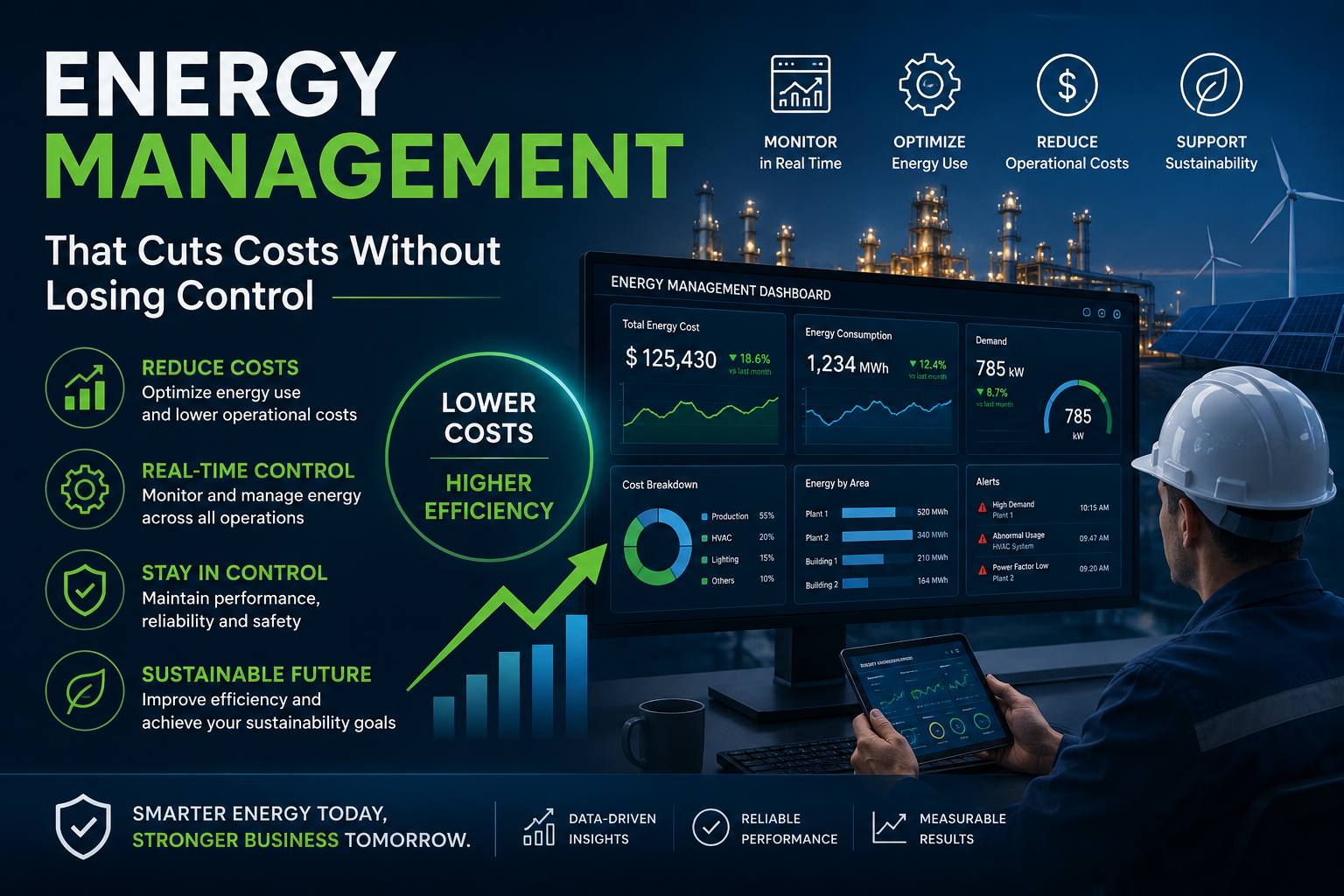
Power runs through a building or factory like water through buried pipes, often invisible until a bill spikes or a breaker trips. Energy management gives that flow a map, so teams can see where power goes and make better choices without sacrificing comfort, production, or safety.
It reaches far beyond switching off lights or buying newer equipment. A sound program connects measurement, daily operations, maintenance, purchasing, capital projects, and emissions goals.
Table of Contents
What Is Energy Management and Why Does It Matter?
Energy management is the ongoing process of measuring, controlling, and improving energy use, cost, and emissions. It gives an organization a repeatable way to decide where each kilowatt-hour delivers value and where it disappears as waste.
Energy efficiency is one outcome of that work. For example, a new chiller may use less electricity, but energy management also asks whether it runs at the right times, receives proper maintenance, and performs as expected after installation.
Better visibility helps teams catch rising demand before it becomes an expensive surprise. It can also lower operating costs, support emissions reporting, reduce exposure to peak-demand charges, and improve reliability when the grid faces strain.
The Difference Between Energy Use, Efficiency, and Performance
Energy use is the total electricity, fuel, steam, or other energy a site consumes. Efficiency describes how much useful output it gets from that energy. Energy performance combines those measures with the conditions that affect them.
A factory that makes the same number of parts with less electricity has improved efficiency. If production volume rises, its total energy use may still increase. Therefore, a fair comparison often adjusts for production, weather, occupancy, operating hours, or product mix.
Energy savings are the verified reduction against a credible reference point. They are not a guess based on a project invoice.
Where Organizations Use Energy Management
The same discipline fits many settings, although the biggest loads differ. Offices and hotels focus on HVAC, lighting, hot water, and occupancy. Hospitals must protect clinical conditions and backup power. Campuses manage many buildings with different schedules.
Manufacturing plants watch motors, compressed air, process heat, and production equipment. Refineries, utilities, and data centers need detailed electrical data because downtime can be costly. A single store can begin with a utility meter, while a national portfolio may need site-level benchmarks and centralized reporting.
How an Energy Management System Turns Data Into Decisions
An Energy Management System, often called an EnMS, combines people, policies, processes, and technology. Its operating loop is direct: set an energy policy, identify major uses, measure consumption, set targets, act, verify results, and review the outcome.
This isn’t software alone. A dashboard without an assigned reviewer is a wall decoration. The U.S. Department of Energy describes regular review as part of continual improvement for ISO 50001 programs, because measured results should shape the next decision.
Connected platforms bring electrical and operational data into the same conversation. For a practical example, Schneider Electric energy management combines monitoring, control, analytics, automation, and reporting across facilities.
Meters, Sensors, Dashboards, and Automated Controls
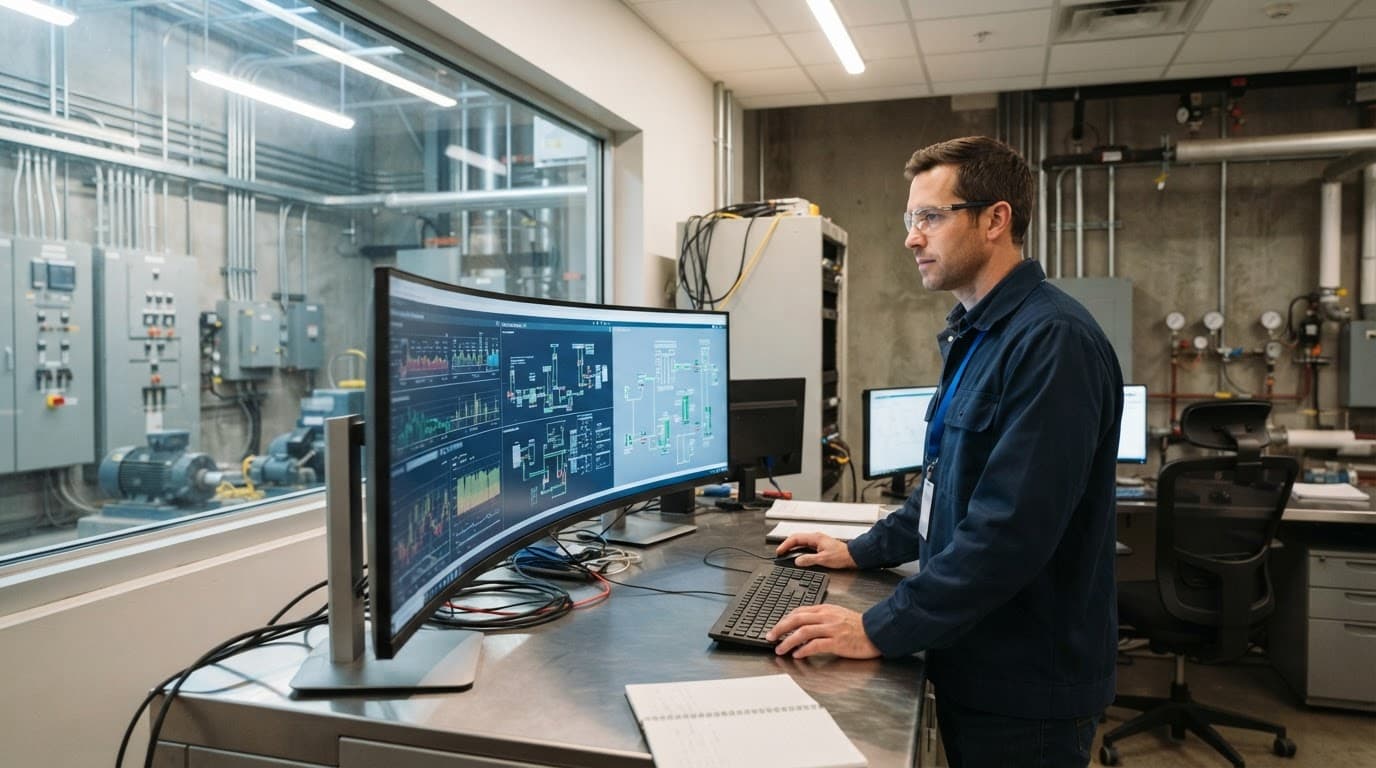
Utility meters show the site total, while submeters reveal what happens in a production line, tenant space, server room, or mechanical plant. Current sensors, occupancy sensors, temperature sensors, alarms, and building controls add useful context.
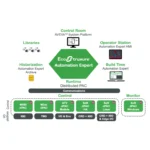
Hourly data can expose equipment running overnight, an air compressor cycling too often, or a sudden peak load. Automated controls can then adjust schedules or setpoints within safe operating limits. Power monitoring platforms such as Power Monitoring Expert software can collect data from meters, relays, and building systems.
The most valuable alarm is one tied to a named response, such as inspecting a pump, checking a schedule, or escalating an abnormal demand spike.
EnPIs, Baselines, and Measurement
Energy Performance Indicators, or EnPIs, turn raw readings into usable comparisons. A plant may track kilowatt-hours per unit produced. A warehouse may use kilowatt-hours per square foot, while a hotel may measure energy per occupied room.
An energy baseline is the reference period used to judge improvement. It must account for changes that affect use, such as severe weather, more shifts, or lower occupancy. Measurement and verification then tests whether a project produced savings after those factors are considered.
Building and Industrial Energy Management Need Different Controls
Commercial buildings usually center on comfort and occupancy. HVAC schedules, ventilation rates, lighting zones, temperature setpoints, and hot-water demand drive much of the opportunity. Building Energy Management Systems can coordinate these loads without asking occupants to work around poor conditions.
BACnet helps controllers, meters, and equipment exchange information. Facilities teams can explore BACnet systems for smart buildings when they need HVAC, lighting, and energy data to work together.
Industrial sites face a different set of pressures. Motors, pumps, boilers, furnaces, compressed-air systems, process cooling, power quality, and production schedules often dominate energy use. A motor may look efficient on paper yet waste power if a valve throttles flow downstream.
Put Production and Reliability in the Same Conversation
Industrial targets must respect throughput, quality, and safety. Maintenance staff may identify a compressed-air leak. Production leaders can confirm when equipment can shut down. Electrical teams can check whether demand peaks coincide with equipment starts.
That shared view prevents a narrow energy target from creating a larger operating problem. It also helps teams find measures that improve both output and energy performance.
Standards, Renewables, and Storage in Energy Management
ISO 50001:2018 is the main international framework for an EnMS. It guides organizations of different sizes through a continual-improvement model for energy performance, including efficiency, energy use, and consumption. The ISO 50001 overview explains how the standard follows the same management-system logic used in ISO 9001 and ISO 14001.
Supporting documents have distinct roles. ISO 50004 gives implementation guidance, ISO 50005 supports phased adoption, and ISO 50006 covers EnPIs and baselines. ISO 50003 sets requirements for certification bodies. ISO/PAS 50010:2023 adds guidance for net-zero energy in operations through an ISO 50001 EnMS.
Solar arrays, demand response, and batteries belong inside that operating plan. A battery can reduce a peak, support backup power, or absorb solar output, but its value depends on tariffs, load shape, controls, maintenance, and safety procedures.
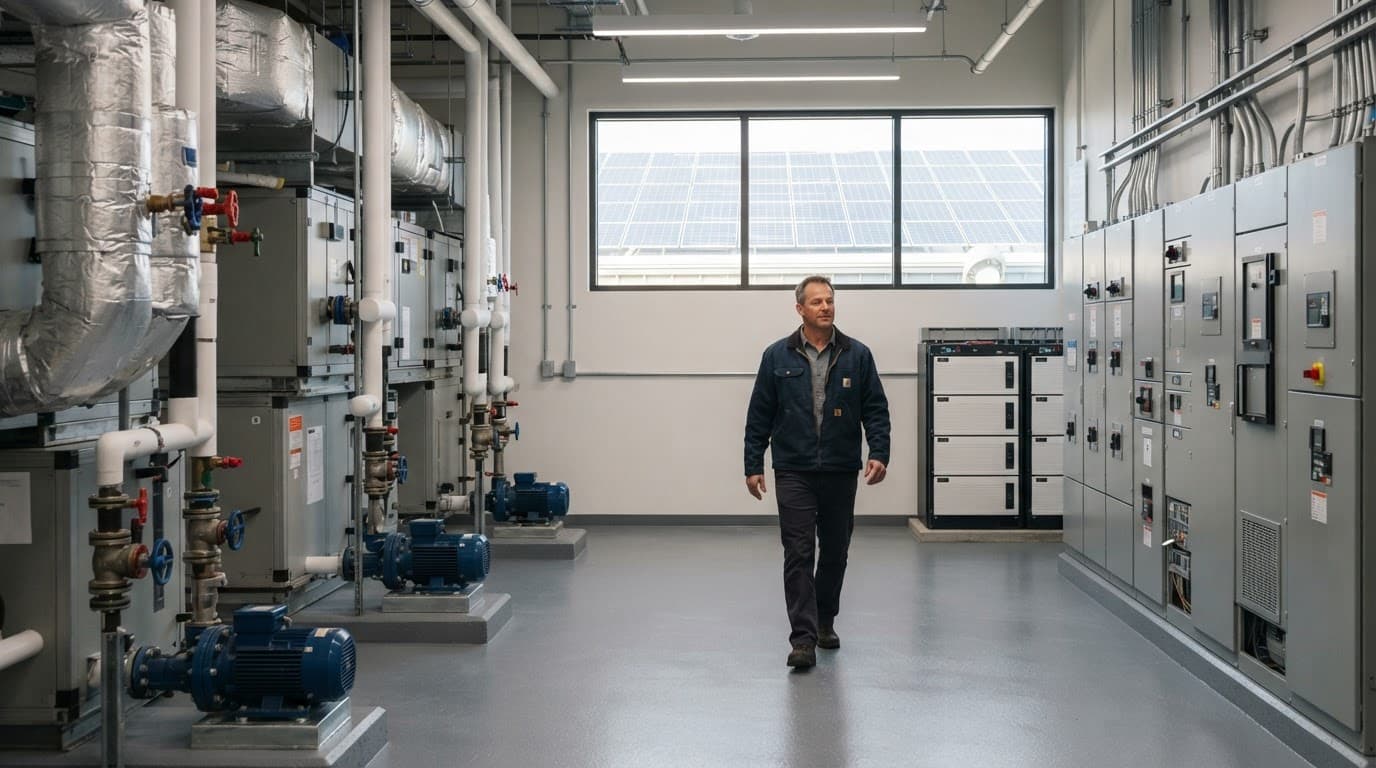
Use Renewable Energy After Reducing Waste
The practical order is clear. First, reduce avoidable demand. Next, match remaining loads with renewable generation where it fits. Then manage peak demand and consider storage when the technical and financial case holds up.
This order keeps a solar or battery project from masking avoidable consumption. It also lets teams measure whether the investment improves actual energy performance rather than only changing the source of supply.
Select Tools and Certification Support Carefully
Choose technology based on site needs, not a feature list. Check compatibility with current meters and controls, data accuracy, cybersecurity, scalability, reporting, integration needs, training requirements, maintenance support, and total cost of ownership.
Organizations pursuing certification should work with qualified certification bodies and confirm applicable accreditation requirements. For storage projects, safety requirements must shape the design early. India’s BIS lists IS 17092:2019 for electrical energy storage safety, IS 17387:2020 for battery-management-system safety and performance, plus 2025 additions in the IS 19143 electrical energy storage series.
Build an Energy Management Plan That Delivers Results
Start with a focused assessment of current energy use and utility costs. Assign an executive sponsor and an operational owner, then identify the major energy uses that deserve immediate attention.
Next, improve measurement where the data is thin. Build a baseline, select a few useful EnPIs, set realistic targets, and rank projects by impact, cost, risk, and operational effect. ISO 50005 is useful when a full program feels too large because it supports phased implementation.
Find the Biggest Opportunities First
Early gains often come from overlooked operating habits. Scheduling equipment correctly, repairing compressed-air leaks, improving shutdown procedures, adjusting setpoints, and completing deferred maintenance can require modest capital.
Larger projects may include efficient motors, variable-speed drives, HVAC upgrades, process redesign, solar power, or battery storage. Start with a pilot at one building, line, or system when staffing, budget, or data is limited. Verified results make the case for the next phase.
Verify Savings and Repeat the Cycle
A project is not complete when equipment is installed. Compare post-project performance with the adjusted baseline, then investigate gaps between expected and actual savings.
Conditions change, so targets and operating practices need regular review. Equipment ages, production shifts, and occupancy patterns move. Energy management stays useful because it treats those changes as signals to measure and act on.
Budget for Full Costs and Prevent Stalled Programs
Equipment prices tell only part of the story. A credible budget also includes meters and sensors, software, controls, engineering, integration, training, maintenance, audits, certification work, and storage safety measures.
Costs vary widely by site size, existing infrastructure, utility rates, data needs, and project scope. A lifecycle view is better than a simple purchase-price comparison because it includes support, replacement, and the operational effort needed to keep the system useful.
Avoid the Failures That Waste Good Data
Programs often stall when leadership treats energy as a facilities-only issue. They also fail when teams collect data but never act, use inconsistent baselines, or set targets without a clear owner.
Technology needs training, cybersecurity controls, maintenance planning, and integration with procurement and operations. Renewable generation and batteries also need the same attention, rather than being treated as isolated sustainability projects.
Regular reviews keep responsibility visible. Verified results protect trust when budgets tighten or performance changes.
Energy Management Starts With What You Can Measure
Energy management is an operating practice that links people, equipment, policies, data, and investment choices. It gives organizations a practical way to lower avoidable costs while protecting reliable operations.
You don’t need to transform every site at once. Measure the largest energy uses, choose a few meaningful indicators, assign ownership, and act on the clearest opportunities. That first cycle builds the evidence needed for better energy performance and credible emissions progress.