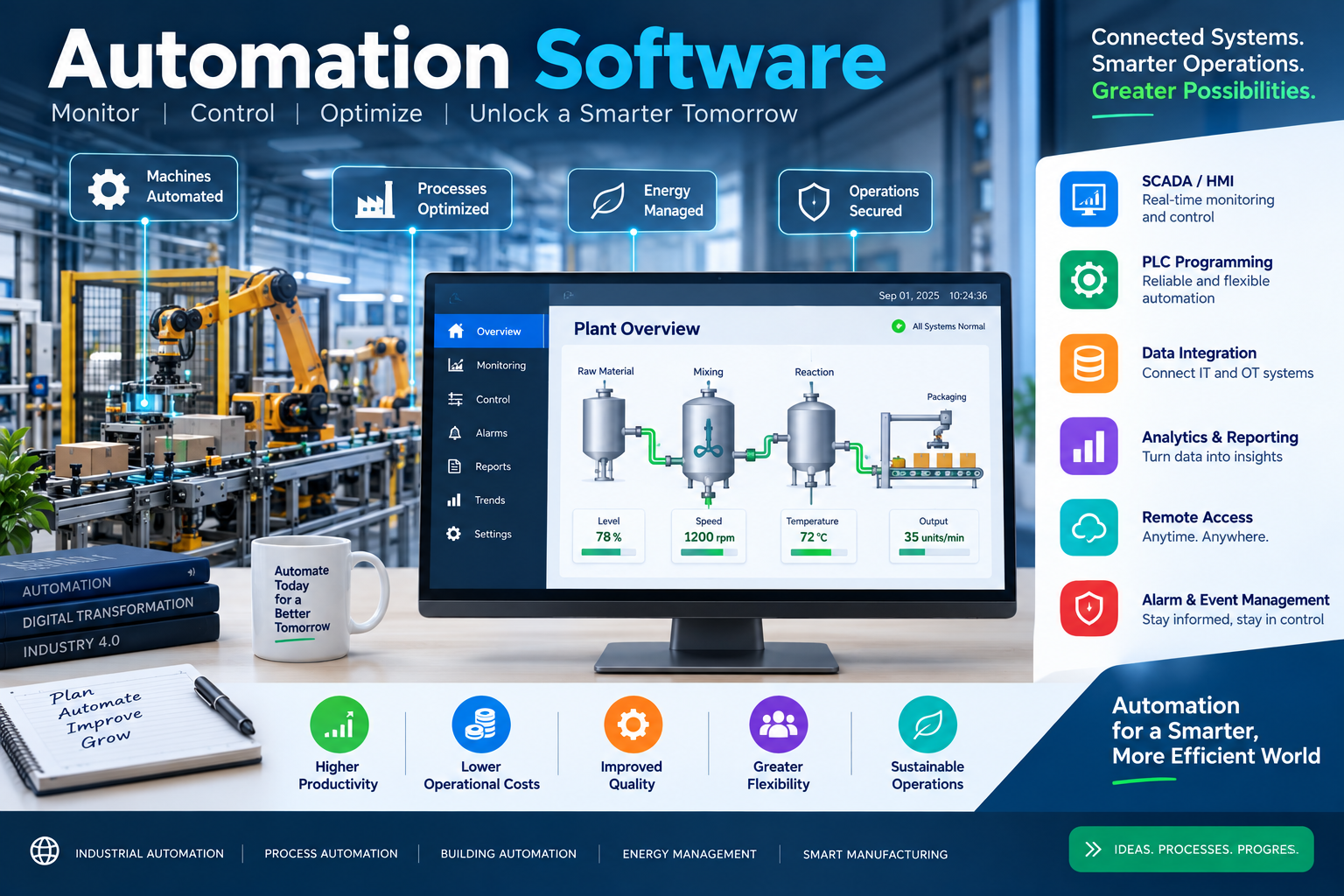
Copying lead details into a CRM, chasing approval emails, and updating three business apps by hand can consume hours that nobody planned to lose. The right automation software turns those repetitive steps into a dependable workflow, so people can spend more time on customers, decisions, and work that needs judgment.
These tools use triggers, rules, schedules, APIs, or desktop screen actions to complete repeatable tasks. They aren’t reserved for enterprise IT departments. A small sales team, finance office, or operations manager can start with one well-chosen process and see the difference quickly.
The first step is understanding which kind of automation fits the work in front of you.
Table of Contents
What Is Automation Software and How Does It Work?
Automation software runs a defined sequence of work after an event occurs. That event might be a form submission, a new spreadsheet row, a scheduled time, an incoming invoice, or a status change in a project board.
Most workflows follow the same basic pattern:
- A trigger starts the workflow.
- Conditions check whether the item meets the rules.
- Actions create, update, send, assign, or move data.
- The system records results, failures, and exceptions.
For example, a prospect completes a website form. The workflow creates a CRM contact, checks the prospect’s region, alerts the correct sales representative in Teams or Slack, and creates a follow-up task. If the email address already exists, the workflow can update the existing record instead.
Ordinary productivity apps help a person do work. Automation tools carry out the repeatable steps between apps or inside a process. Artificial intelligence is different again. AI can classify an invoice, summarize a support request, write a draft reply, or suggest a decision. However, the automation layer still needs rules about where that output goes and who approves it.
Cloud platforms run in the vendor’s environment and connect web-based services. Self-hosted options run on infrastructure you control. Hybrid products bridge cloud workflows with on-premises systems, while desktop automation works directly with software screens when an API doesn’t exist. Zapier’s automation tool overview offers a useful view of how broad the category has become.
A workflow is only reliable when it defines what happens after a failure, not only when every system responds as expected.
The Main Types of Automation Software for Modern Teams
Different categories solve different problems. Picking a tool by its app count alone often leads to brittle workflows and surprise costs.

No-Code Workflow Tools Connect Everyday Business Apps
Zapier and Make connect SaaS tools without requiring a developer for every routine task. They handle form follow-up, lead routing, CRM updates, spreadsheet syncing, calendar events, and internal notifications.
Zapier suits simple workflows that need to be built quickly and supports a wide collection of app connections. Make gives users a visual scenario builder that often feels more natural when a workflow needs branches, loops, filters, or data transformation. A recent no-code automation comparison highlights both platforms as common starting points for business teams.
The headline subscription price is only part of the cost. Zapier counts tasks, while Make uses operations or credits. A single workflow can consume multiple units when it searches, formats, routes, and updates data.
Business Process Automation Keeps Approvals and Handoffs Moving
Business process automation focuses on structured work with owners, approval rules, deadlines, and a record of what happened. Employee onboarding, purchase requests, accounts payable, service-ticket routing, policy checks, and document approvals fit this category.
Invoice handling is a clear example. A good process captures the invoice, checks purchase-order details, sends exceptions to the right person, preserves an audit trail, and prevents duplicate payment. Teams comparing AP software for invoice processing should prioritize approval controls and exception handling over flashy dashboards.
RPA Handles Desktop Tasks and Older Systems
Robotic process automation, or RPA, uses software bots to follow screen-level steps in browsers, desktop software, and older internal systems. It can copy data between applications when there is no practical API.
An attended bot helps an employee during a task. An unattended bot runs independently on a schedule or after a trigger. UiPath and Microsoft Power Automate are well-known options, but RPA needs stronger testing than a simple cloud workflow. A moved button, revised screen layout, or expired credential can stop a bot cold.
Self-Hosted and Developer-Friendly Automation Offers More Control
n8n and similar platforms appeal to technical teams that want custom code, private infrastructure, and deeper connections with internal systems. Self-hosting can help organizations manage sensitive data and keep workflows close to their own databases.
That control comes with responsibility. Your team must handle servers, updates, backups, security patches, and monitoring. For a fully managed experience, a cloud platform is usually the safer choice. This workflow automation comparison also places n8n and UiPath in their distinct self-hosted and RPA roles.
Leading Automation Software Compared by Use Case and Cost
No product wins every comparison. Prices, included limits, and contract terms change, so confirm current terms before purchasing.
| Tool | Best fit | Main cost driver |
|---|---|---|
| Zapier | Fast app-to-app workflows | Tasks |
| Make | Visual multi-step scenarios | Operations or credits |
| Power Automate | Microsoft-centered work | Users, bots, and actions |
| UiPath | Enterprise RPA | Bots and enterprise licensing |
| n8n | Self-hosted technical teams | Infrastructure or executions |
| HubSpot | CRM-centered automation | HubSpot subscription tier |
The practical takeaway is simple: measure the work each platform performs, not only the monthly sticker price.
Zapier and Make for Fast SaaS Workflow Automation
Zapier is a friendly entry point for nontechnical users. Its public pricing has listed Free at $0 per month, Professional at $19.99 per month, and Team at $69 per month on annual billing. The free tier includes 100 tasks monthly, while Professional includes 750 tasks before overages apply.
Make favors visual workflow design and complex branching. Its current pricing presentation references packages based on 10,000 credits per month, with entry pricing around $12 per month in the displayed plan set. Older comparisons may show lower introductory figures, so check billing terms carefully.
Both products can become expensive when high-volume workflows perform several actions per record. Zapier’s published pricing details make the task allowance and overage issue clear.
Power Automate for Microsoft-Centered Organizations
Microsoft Power Automate fits teams already using Microsoft 365, Teams, SharePoint, Dynamics, and Azure. It combines cloud workflows with desktop RPA, which can reduce the number of platforms employees must learn.
Microsoft lists Power Automate Premium at $15 per user per month when billed annually. Process licensing is listed around $150 per bot per month, while Hosted Process is around $215 per bot per month. Licensing varies by users, bots, action limits, hosting needs, and existing Microsoft agreements.
UiPath, n8n, and HubSpot for Specialized Needs
UiPath is built for enterprise RPA, especially where legacy systems, unattended robots, hybrid deployments, and process mining matter. Some comparisons list entry pricing near $25 per month, while larger deployments usually go through sales. Published n8n and UiPath comparisons can help frame their different deployment models.
n8n offers a free Community edition for self-hosting. Cloud plans have often started near $20 or EUR20 per month, though execution needs and hosting choices affect the real bill.
HubSpot is CRM-first automation. It works well for lead assignment, lifecycle updates, sales tasks, email triggers, and data hygiene. Its best fit is a team already committed to HubSpot as the center of its customer data.
Choose Automation Software Around Your Actual Work
Start with the systems employees already use and the process that repeatedly crosses between them. A linear SaaS task may need Zapier. Complex branching can favor Make. Microsoft-heavy offices should test Power Automate first, while desktop and legacy work may justify RPA.
Check the Connections Before You Commit
A platform’s connector list is only the beginning. Confirm that it supports the exact actions you need, not merely a logo on an integrations page.
Review APIs, webhooks, custom-code options, permissions, single sign-on, audit logs, data residency, and support. Also ask who can edit workflows and who can view sensitive records. Those details decide whether a quick pilot becomes a dependable system.
Compare the Total Cost, Not the Starter Plan
Automation vendors charge per user, task, operation, execution, bot, or enterprise agreement. Premium connectors, storage, support, implementation, training, and self-hosted infrastructure can add more cost.
Estimate monthly volume with realistic numbers. Then calculate the cost per completed transaction and compare it with the time saved. A low entry plan can rise quickly when a workflow runs thousands of times or every employee needs access.
Build a Small Pilot Before Expanding
Choose a process that is repetitive, rule-based, high-volume, and low-risk. Good early candidates include routing web leads, creating follow-up tasks, moving approved requests, or alerting a team when a key field changes.
Give Every Workflow an Owner and a Rollback Plan
Map the current process before building it. Identify the trigger, every handoff, source of truth, approval point, and exception. Test with realistic records, not a single perfect example.
Assign a business owner who knows the process and a technical owner who can manage credentials, changes, and failures. Add logs, alerts, and a clear rollback step before launch. That discipline prevents forgotten “shadow workflows” from becoming invisible business dependencies.

Keep Security and Maintenance in the Budget
Changed API fields, broken connectors, poor source data, duplicate records, and missed approvals are common failures. Automation moves bad data faster than people can correct it.
Use least-privilege access, secure credential storage, audit logs, error notifications, and regular workflow reviews. Sensitive finance, HR, healthcare, and compliance decisions also need human approval. Maintenance is part of the real price of automation software.
Where Automation Delivers the Best Return
The strongest candidates have clear rules and measurable outcomes. Look for work that creates queues, duplicate typing, delayed follow-ups, or frequent copy-and-paste errors.
Start with one process that has a visible baseline. Measure completion time, error rate, handoff delay, and manual touches before the pilot. After launch, compare the same numbers over several weeks. That evidence is more useful than a vendor demo because it reflects your systems and your team’s habits.
Conclusion
The best automation software fits the process, current systems, risk level, team skills, and total cost. Zapier is approachable for app connections, Make handles visual complexity, Power Automate fits Microsoft environments, UiPath supports enterprise RPA, n8n gives technical teams more control, and HubSpot centers automation around CRM work.
Map one repetitive workflow before comparing feature lists. Then test a small pilot with a clear success measure, a named owner, and a plan for the moments when the workflow fails.






1 thought on “Automation Software”
Comments are closed.