Automation now shapes far more than assembly lines. Factories, warehouses, energy sites, and process plants depend on connected controls to keep equipment moving, protect people, and turn production data into better decisions.
The strongest industrial automation manufacturers offer much more than PLCs. Their portfolios can include robotics, drives, safety systems, industrial software, sensors, control platforms, and long-term service. A list of top automation companies is a useful starting point, but the right choice depends on your application, installed equipment, integration needs, local support, budget, and cybersecurity requirements.
A good comparison starts with the work your plant needs the system to perform.
Table of Contents
Industrial Automation Manufacturers: What They Build and Where They Fit
Automation suppliers support a broad range of industrial environments. A packaging OEM may need compact controls, servo motion, machine vision, and safe robotic cells. A chemical plant may need a distributed control system, field instrumentation, alarm management, and safety layers that run continuously.
Some industrial automation manufacturers offer an end-to-end ecosystem. They provide controllers, visualization software, drives, field devices, engineering tools, and cloud-connected services. Others specialize in one area, such as industrial robots, sensors, machine vision, process instrumentation, or safety systems.
A broad ecosystem can simplify engineering and support. However, a specialist supplier may be the stronger choice when one part of a line demands unusual speed, accuracy, or environmental performance.

The main automation products buyers compare
PLCs and programmable automation controllers, often called PACs, execute machine logic. They sequence conveyors, read sensors, control motors, and respond to faults in predictable cycles. PACs often add more computing capacity, integrated networking, and data-handling options.
DCS platforms coordinate large, continuous processes. They are common where thousands of signals, process loops, alarms, and operator displays must work together. SCADA systems gather data, display alarms, store history, and supervise remote or distributed assets.
HMIs give operators a practical view of equipment status. MES software connects plant-floor activity with production records, quality data, scheduling, and business systems. Robots, servo motors, motion controllers, and drives handle physical movement.
Sensors, variable-frequency drives, safety controls, industrial networks, and remote I/O complete the architecture. The industrial automation and control systems overview offers a useful view of how these layers fit together.
Discrete manufacturing versus process automation
Discrete manufacturers usually prioritize fast machine control, synchronized motion, robotics, packaging, assembly, and line integration. Automotive plants, consumer goods lines, and distribution centers often need controls that can handle frequent product changes and high throughput.
Process industries have different priorities. Oil and gas, chemicals, food processing, power generation, and pharmaceuticals require continuous measurement and control of variables such as flow, pressure, temperature, and level. These facilities often place more weight on DCS capabilities, instrumentation, safety systems, asset management, and long operating lifecycles.
Several suppliers work across both areas. Still, buyers should distinguish between a vendor with strong machine-automation experience and one with a long record in complex process operations.
Leading Industrial Automation Manufacturers to Compare
There is no universal winner among automation vendors. Product availability, local integrators, installed equipment, spare-parts access, and support quality can matter as much as a brand’s overall reputation.
For process-control context, a comparison of major DCS companies commonly includes ABB, Emerson, Honeywell, Siemens, and Yokogawa. That doesn’t make every platform equal for every project. Buyers should confirm current hardware specifications, software licensing, lifecycle policies, and regional availability before committing.
Siemens, Rockwell Automation, ABB, and Schneider Electric
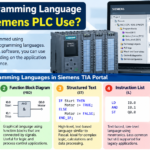
Siemens offers one of the broadest automation portfolios. Its SIMATIC S7 controllers are widely used in machine and factory automation, while WinCC supports visualization and supervisory functions. TIA Portal brings controller engineering, diagnostics, safety, and motion work into a unified environment. Siemens also maintains SIMATIC PCS 7 for distributed process control and offers digital-twin tools through its Digital Industries portfolio.
Rockwell Automation is a familiar choice in North American discrete manufacturing. Its Allen-Bradley brand covers controllers, I/O, drives, safety, and motor control. Logix controllers and FactoryTalk software are central to many installed systems. FactoryTalk Plex adds cloud-based manufacturing execution capabilities, which can appeal to plants that want stronger production and quality data connections.
ABB combines robotics, electrification, motion, process automation, and safety technologies. Its System 800xA platform is an extended automation system built for process operations, while ABB’s robots and motion products also have a major place in factory automation. ABB announced System 800xA 7.0 in February 2026.
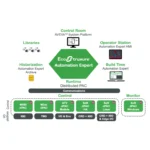
Schneider Electric connects industrial control with energy management through its EcoStruxure ecosystem. Its offerings include Modicon controllers, software, motion, and robotics. PacDrive 3 brings PLC, motion, and robotics control together, and certain LMC controller families support machines or lines with up to 130 servo or robot axes.
Mitsubishi Electric, Omron, Emerson, and Honeywell
Mitsubishi Electric is a strong consideration for compact machine control, CNC, motion, and OEM equipment. Its factory-automation range includes PLCs, HMIs, frequency inverters, servo and motion products, robots, motion controllers, and CNCs. It is especially familiar in Asian manufacturing settings, although its equipment supports plants worldwide.
Omron focuses heavily on integrated machine automation. Its product mix includes sensing, safety, motion, robotics, and control technologies. Sysmac Studio is associated with its integrated engineering approach, which can suit applications where engineers want one environment for coordinated machine components.
Emerson is often considered for process automation, instrumentation, asset management, and plant-control projects. DeltaV and PACSystems are established names buyers may encounter when comparing process and hybrid automation systems. Confirm the current product lineup and licensing model directly for any new project.
Honeywell has a long history in process control and safety. Its petrochemical offerings include field sensors, DCS technology, safety systems, and Experion PKS. Honeywell Safety Manager maintains safety separation and redundancy while providing operators with a unified operating view.
A vendor’s installed base can lower training and spare-parts risk, but it should never replace a technical fit review.
How to Compare Automation Vendors Before You Buy
Start with the plant you have, not the brand you prefer. Document existing controllers, field networks, safety devices, HMI and SCADA software, historian connections, and MES or ERP interfaces. Then define the business problem in practical terms: shorter changeovers, less downtime, more capacity, better traceability, lower energy use, or a safer process.
A control-system replacement often exposes hidden dependencies. One old PLC may communicate with a drive network, a custom database, a remote pump station, and a legacy safety relay. Mapping those links before requesting proposals prevents costly omissions.
The PLC, DCS, and SCADA rankings can help frame early comparisons, but a plant-specific scorecard should drive the final decision.
Check compatibility, integration, and local support
Review communication protocols and data access early. Common requirements include Ethernet/IP, PROFINET, Modbus TCP, OPC UA, and connections to historians, MES platforms, and cloud services. Also decide whether data should remain on-site, move to a managed cloud environment, or follow a hybrid model.
Unified engineering environments can reduce setup time. TIA Portal, FactoryTalk, EcoStruxure, System 800xA, Sysmac Studio, and DeltaV each aim to connect parts of the automation workflow. However, a tightly integrated platform can increase dependence on one supplier’s software, licensing, and trained engineers.
Local support deserves equal attention. Check distributor inventory, certified system integrators, emergency response commitments, training options, service coverage, and experience in your industry. A capable integrator who understands your process may add more value than a familiar logo alone.
Test the proposal before a major rollout
Complex projects need more than a sales demonstration. Ask vendors or integrators to prove critical functions with a small pilot, a factory acceptance test, or a simulated cell. Test alarm behavior, network recovery, reporting, motion performance, operator workflows, and access controls.
Build a written scorecard that assigns weight to the factors that affect your operation:
- Control performance and application fit should match the machine or process requirements.
- Integration should cover existing equipment, required protocols, and future data connections.
- Support should include local engineering capacity, training, parts, and service response.
- Cybersecurity and lifecycle plans should be clear before any system reaches production.
A pilot may reveal that a lower-cost controller needs more engineering time, or that a premium platform simplifies commissioning enough to justify its price.
Compare Total Cost and Lifecycle Risk
Equipment prices tell only part of the story. A final budget may include controllers, I/O, HMIs, drives, robots, panels, networking equipment, engineering, installation, testing, training, maintenance, software subscriptions, and planned downtime during changeover.
Some PLC modules cost a few hundred dollars, while more capable processors, specialty I/O, safety hardware, and communication modules can cost several thousand dollars. A plant-wide project can cost far more once software and integration are included. Treat every figure as project-specific, not as a quote.
Look beyond the first purchase order
A system that is inexpensive to buy can become expensive to own. Proprietary programming tools, annual software fees, limited spare-parts options, and scarce local expertise can raise lifecycle costs.
Compare how easily each platform scales. Can the controller add I/O? Can the software accommodate another production line or site? Are replacement parts readily available? Does the vendor publish a lifecycle roadmap that gives the plant time to plan upgrades?
Price vendor lock-in honestly
Vendor lock-in isn’t automatically harmful. A single ecosystem can simplify diagnostics, spare-parts management, training, and accountability. Yet the plant should know where that dependence exists.
Ask who owns production data, how reports leave the platform, whether documented APIs are available, and what happens if licensing changes. An engineering reference for PLC, SCADA, and DCS selection can help teams identify the practical questions that affect long-term flexibility.
The Future of Industrial Automation: Connected, Secure, and Easier to Scale
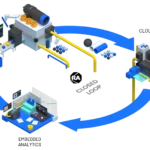
Industry 4.0 has changed the criteria for selecting controls. Plants increasingly connect automation data to energy monitoring, remote support, predictive maintenance, quality analytics, digital twins, and multi-site reporting.
That connection should solve a present operating problem first. A new sensor network that spots recurring pump failures can pay off. A dashboard that nobody uses becomes another maintenance task. Choose systems that add useful data without forcing a complete replacement of equipment that still works.
Schneider Electric motion control and robotics illustrates how coordinated motion, robotics, controllers, and software can support connected machine automation.

Build cybersecurity into the control system
Connected operational technology creates more entry points through remote access, plant networks, cloud services, vendor connections, and links to business systems. Industrial security needs design decisions before commissioning, not after an incident.
Ask every supplier about authentication, role-based access, network segmentation, asset visibility, backup recovery, patch policies, vulnerability notices, and incident-response support. A useful industrial control and SCADA security reference also highlights why OT logging and monitoring matter.
Cybersecurity is shared work. The manufacturer provides product capabilities and advisories. Integrators configure the system. Plant teams manage accounts, backups, procedures, and physical access. Software providers must also protect connected services.
Choose a platform that can grow with the plant
Modular hardware, open communication standards, documented APIs, scalable licenses, and remote monitoring can extend a system’s useful life. Strong data ownership also gives plants more freedom to add analytics tools or connect other sites later.
Consider future production lines, workforce training, energy targets, robotics plans, and the need for consistent support across locations. The best industrial automation manufacturer is the one that fits the plant’s application, people, budget, and long-term operating plan.
Conclusion
Siemens, Rockwell Automation, ABB, Schneider Electric, Mitsubishi Electric, Omron, Emerson, and Honeywell bring different strengths to industrial projects. The strongest decision comes from comparing control architecture, application experience, integration, support, cybersecurity, lifecycle cost, and room to expand.
Define the plant’s requirements, build a weighted vendor scorecard, speak with qualified integrators, and test the proposed system before approving a major investment. Fit matters more than brand familiarity.