A robot that can move a box along the same path all day is useful. A robot that can spot a shifted box, choose a new route, and keep working safely is something else entirely.
That difference is where robotics and AI meet. Robotics gives machines a body that can move and act, while artificial intelligence helps them interpret what they see, adapt to changing conditions, and make decisions within set limits.
For businesses, the promise isn’t a science-fiction workforce. It’s more practical: safer operations, better throughput, and help with jobs that are difficult to staff. The shift begins with understanding how intelligent robots differ from the fixed machines already on many factory floors.
Table of Contents
AI Is Giving Robots More Freedom to Adapt
For decades, industrial robots excelled at repeatable work in carefully controlled spaces. A factory might program a robotic arm to weld the same seam, lift the same part, or place the same item on a conveyor thousands of times.
That model still matters. However, it asks the business to shape the environment around the machine. Parts must arrive in the right position, tools must be predictable, and changes often require engineers to rewrite the robot’s instructions.
AI expands what the robot can handle. Cameras, force sensors, depth sensors, and software models can help a machine recognize an object, judge its position, or respond when something isn’t where it should be. A vision-guided robot sorting mixed items in a bin has a far harder job than an arm that repeats one motion on a fixed assembly line.
Physical AI only becomes useful when it performs reliably in the physical world, where objects shift, surfaces vary, and people work nearby.
ABB Robotics describes this as a move toward more autonomous systems that combine robots, autonomous mobile robots, and software across industrial settings. Its broader robotics portfolio reflects how the category now includes more than stationary factory arms.
A Robot Needs More Than an AI Model
AI can improve perception and decision-making, but it doesn’t replace the physical engineering underneath. A capable robot needs sturdy hardware, dependable controls, and clear safety boundaries.
The sense, decide, act loop
An intelligent robot runs through a continuous loop:
- Sensors collect information about its surroundings, such as camera images, force readings, location data, or proximity signals.
- Software interprets that information and selects an action within the robot’s programming and safety limits.
- Motors and actuators carry out the movement.
- Sensors check the result, then the process repeats.
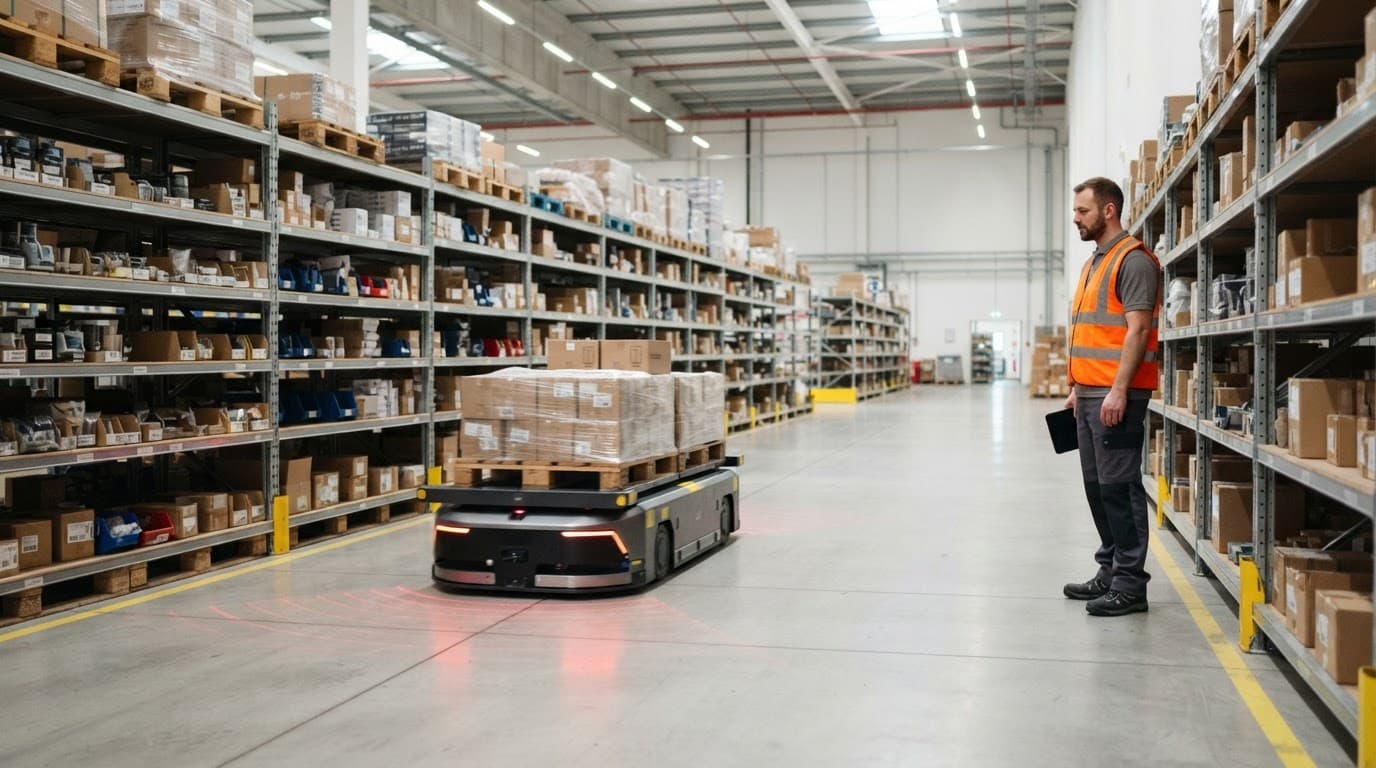
A warehouse robot, for example, may detect a person or pallet blocking its route. It can stop, calculate another path, and continue toward its destination. That sounds simple, yet every part of the loop must work quickly and accurately.
Why dependability matters more than a good demo
A robot may perform well in a controlled demonstration and still struggle during a long production shift. Factory floors have dust, glare, worn parts, vibration, changing inventory, and unexpected human activity.
That is why industrial buyers care about serviceability, uptime, safety, and cost as much as raw AI capability. A system must be easy to maintain and predictable enough for people to trust it with daily work.
For more context on how data-driven systems can adapt to production changes, see this overview of machine learning in industrial automation.
Europe Has an Industrial Foundation to Build On
China, the United States, Europe, and fast-growing markets such as India all bring different strengths to robotics. China has moved quickly, supported by a large manufacturing base, intense competition, and strong demand from end users. Interest around Chinese robot maker Unitree has also drawn attention to the pace of investment in the region.
Europe’s advantage is its long-standing base in industrial engineering, mechatronics, manufacturing equipment, and original equipment manufacturers. That experience matters when a robot must meet production targets every day, not merely perform a task once.
Engineering experience can shorten the path to deployment
A useful robot must fit into real operations. It needs to work around existing machinery, comply with safety rules, withstand maintenance cycles, and produce an acceptable return on investment.
Europe’s manufacturers have deep knowledge of these details. The challenge is speed. Faster experimentation, clearer industrial policy, and a stronger sense of urgency could help European companies turn that knowledge into larger deployments.
China’s progress shows how quickly adoption can build when manufacturers, suppliers, and customers move in the same direction. The growth of AI-powered industrial robotics in China offers a closer look at that market’s emphasis on connected factories, machine vision, and automation at scale.
Robots Are Moving Beyond Fixed Factory Tasks
Intelligent robotics is expanding because AI allows machines to work in environments that aren’t perfectly arranged. Instead of one robot type serving every task, businesses will likely use many forms, each built for a particular job.
ABB already offers roughly 150 robot form factors, a reminder that the right machine for a laboratory may look nothing like the right machine for a loading dock.
Factory robots and cobots
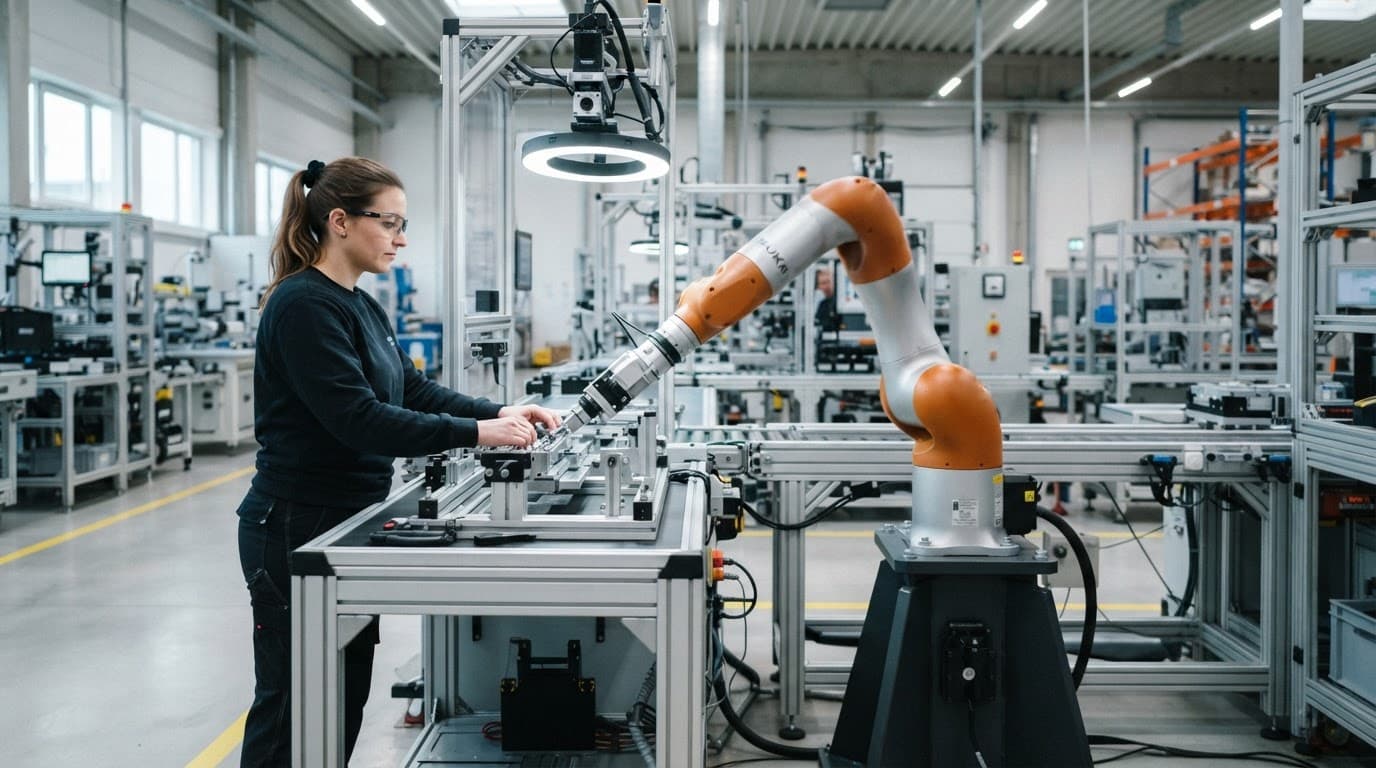
Robotic arms remain central to welding, assembly, packaging, inspection, and material handling. Machine vision can check whether a part is present, correctly aligned, or visibly damaged before the product moves further down the line.
Collaborative robots, often called cobots, are designed to work closer to people. Still, “collaborative” doesn’t mean risk-free. Employers need a task-specific safety assessment, appropriate guarding where needed, and clear procedures for stops and handoffs.
Logistics, life sciences, food service, and agriculture
In logistics, autonomous mobile robots can carry materials through a warehouse while workers focus on picking, packing, exception handling, and supervision. Labs can use automation for repetitive handling steps, while food-service equipment can take on narrow tasks in structured kitchens.
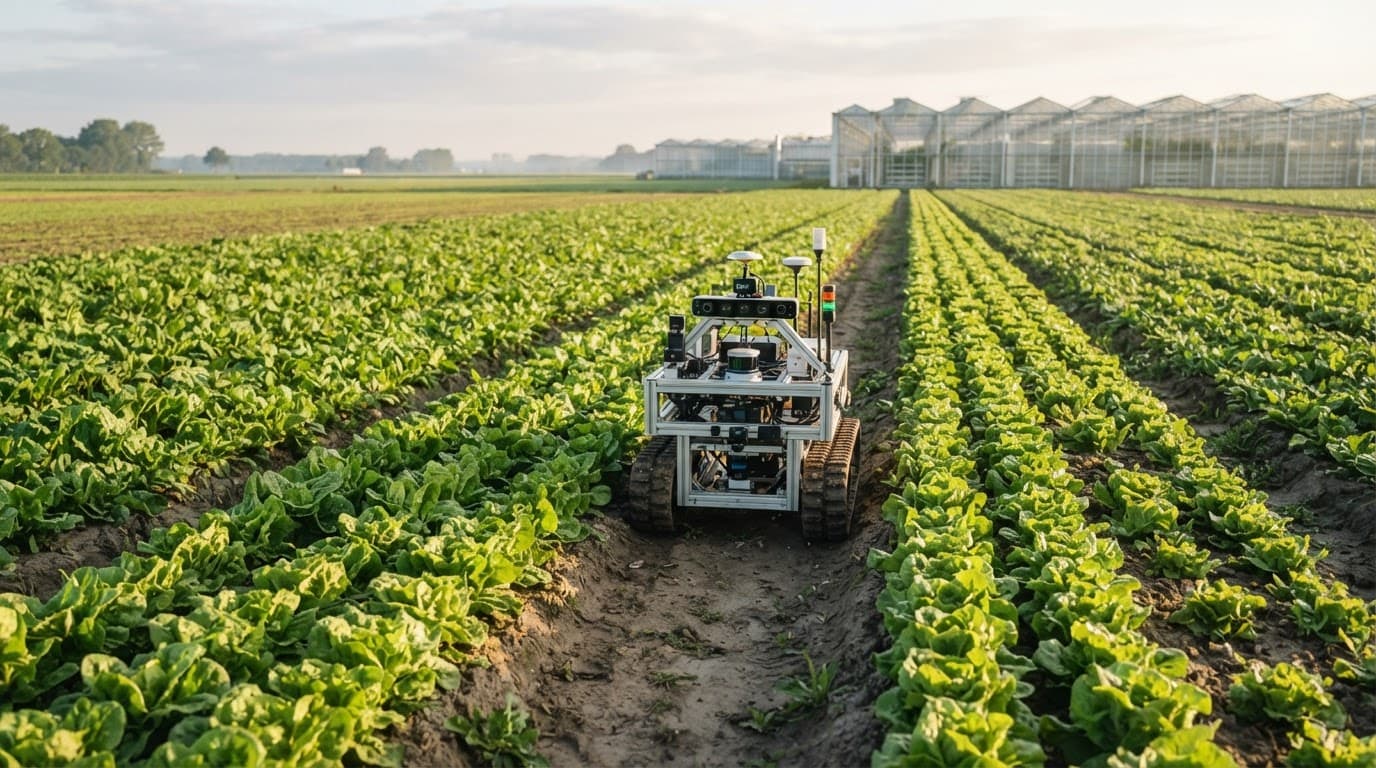
Agricultural robots and drones can inspect crops, monitor plant health, or handle targeted work between rows. Yet outdoor deployment is difficult because weather, uneven ground, poor connectivity, and changing light all affect sensors and navigation.
Hospitals and service settings
In hospitals, robots can support material transport, sanitation, rehabilitation, and parts of clinical workflows. They assist trained staff rather than replace clinical judgment. The same principle applies to service robots in hotels, retail spaces, or public buildings: clear routes and bounded tasks produce the most dependable results.
Labor Shortages Are Driving the Case for Automation
Concerns about job replacement are reasonable, especially when AI and machines are discussed together. Yet the immediate pressure in many industries is a shortage of workers for physically demanding, repetitive, or hazardous tasks.
Robotics has been part of industry for about half a century. The strongest business case often comes from helping an operation continue when it can’t fill open roles, rather than removing a job that someone wants to keep.
When automation improves productivity, companies can become more competitive and invest in growth. That can create different work, including roles for technicians, integrators, maintenance teams, robot trainers, safety specialists, and production managers.
The transition isn’t automatic or painless. A company that buys robots without training its workforce or redesigning workflows can create frustration instead of gains. Workers usually know where a process jams, which parts vary, and what a machine will encounter at 2 a.m. Their input belongs in the design and testing process.
Simulation Helps Train Robots Before They Reach the Floor
Training an AI model for robotics is harder than training a text model. Language models can learn from vast stores of online writing, while robots need data about motion, surfaces, lighting, objects, collisions, and physical cause and effect.
One answer is to train robots through simulation. Engineers can build a virtual version of a workcell, test movements, create varied scenarios, and refine an AI model before it operates around real equipment and people.
ABB’s RobotStudio Suite provides offline programming and simulation using a virtual controller. ABB has also announced work with NVIDIA to integrate Omniverse libraries into RobotStudio for industrial physical AI at scale.
Simulation can reduce engineering time and help teams test situations that would be slow, costly, or unsafe to recreate repeatedly on a live production line. However, a virtual environment never removes the need for real-world validation. Lighting, material surfaces, sensor calibration, and wear can all create a gap between a simulation and an operating facility.
What Businesses Should Test Before Scaling an AI Robot
The best robotics projects begin with a specific operating problem. “We need AI” is not a use case. “We need to move loaded carts between these two locations every 10 minutes” is one.
Before committing to a large deployment, leaders should define the conditions a system must handle:
- Measure the current cycle time, error rate, labor demand, injury risk, and cost of the existing process.
- Document the real environment, including space limits, object variation, lighting, network coverage, and nearby human activity.
- Ask vendors for evidence from customer sites with work conditions similar to yours.
- Confirm how updates work, who owns operational data, how fast support responds, and whether replacement parts are readily available.
- Run a limited pilot beside the current process, then expand only after the system meets clear safety and performance targets.
A pilot also reveals what the business needs to change around the robot. A mobile robot may require clearer floor routes. A vision system may need better lighting. A cobot may need new fixtures so it can handle parts consistently.
Safety, Privacy, and Accountability Need Clear Rules
AI-powered robots can fail in unfamiliar conditions. A camera may misread a reflective surface. A model may classify an unusual item incorrectly. A mobile robot may encounter a blocked aisle it hasn’t seen before.
Organizations need emergency stops, restricted operating zones, human override controls, secure software updates, and incident records. Teams should also define who has authority to pause the system and what happens when the robot encounters an exception.
Privacy deserves equal attention. Cameras and microphones in factories, hospitals, homes, or public spaces can capture sensitive information. Before deployment, organizations should decide what data they collect, who can access it, how long they retain it, and how they report security incidents.
The Near-Term Future Is Flexible, Not Fully General
The next phase of robotics will bring more natural language controls, improved computer vision, better fleet coordination, and models trained through simulation. Robots will likely become easier to teach new tasks, especially in facilities that already have strong data, stable processes, and skilled technical staff.
Still, flexibility has limits. A robot that can understand a spoken instruction may still need carefully defined work areas, tested tools, and human approval for unusual situations. The most reliable systems will combine AI’s ability to recognize patterns with traditional controls that keep motion safe and repeatable.
ABB’s proposed acquisition by SoftBank is another sign of investor interest in this convergence of AI and industrial machinery. ABB Robotics has said the transaction remains on track to close by year-end, subject to the process described by the companies.
Practical Progress Beats Robotics Hype
Robotics gives AI a way to act on the physical world. AI gives robots greater awareness and flexibility, but the hardware, safeguards, and people around the machine still decide whether a deployment succeeds.
The strongest projects solve one clear problem first. They measure results, involve workers early, test for failure cases, and expand only when the system proves itself in real conditions.
Useful robotics and AI start with dependable work, not dramatic promises.