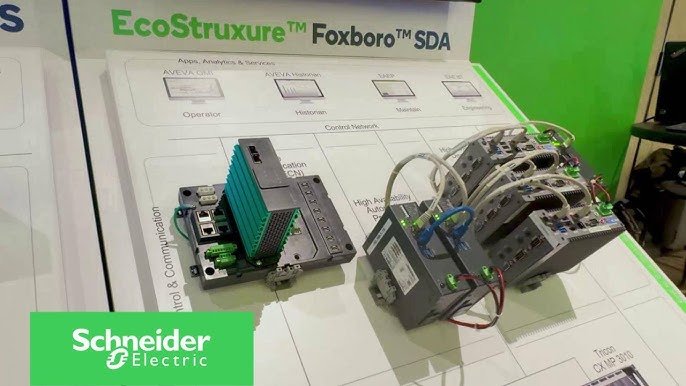
In a process plant, a control-system change can’t feel like a gamble. Operators need dependable response at the edge, engineers need room to modernize, and the business needs operational data that can move where it is useful.
EcoStruxure Foxboro SDA is Schneider Electric’s answer to that tension. It brings the reliability associated with Foxboro distributed control systems into an open, software-defined architecture designed for hybrid and process industries.
The result is a path toward more flexible control without treating modernization as a complete rebuild.
Table of Contents
Why traditional control systems can slow modernization
Process and hybrid operations depend on control, monitoring, and compliance working together. When control systems use tightly coupled proprietary hardware and software, however, every change can become harder to plan, test, and deploy.
A plant may still run reliably, yet struggle to connect newer analytics, edge computing, or IT systems without adding complexity. Hardware-specific engineering can also limit where an application runs and how easily teams can adapt it to new operational requirements.
In a software-defined approach, the control application is no longer permanently tied to one physical controller. That separation creates more options for modernization while retaining the need for high availability.
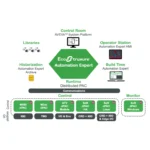
Foxboro SDA is intended to address this gap. Schneider Electric describes it as the industry’s first open, software-defined distributed control system, combining Foxboro DCS technology with EcoStruxure Automation Expert. The company’s Foxboro SDA product overview outlines this software-first direction for process control.
For a broader view of where a DCS fits among plant systems, see this comparison of PLC, DCS, and SCADA architectures.
What Foxboro SDA brings to industrial control
Foxboro SDA is built for industrial environments where uptime, response time, and operational consistency matter. Rather than replacing the role of a DCS, it changes how the control environment can be configured and deployed.
Schneider Electric combines trusted Foxboro reliability with the openness and flexibility of EcoStruxure Automation Expert. According to Schneider Electric’s Automation Expert product information, the platform supports plant automation across discrete, hybrid, and continuous industrial processes.
A distributed control system with software at the center
A conventional control system often binds its software closely to a specific hardware stack. Foxboro SDA takes a different approach by making software a more portable part of the system architecture.
That means the same build and runtime environment can operate across edge devices, industrial servers, or fit-for-purpose controllers. A control application has more deployment options, while the architecture remains designed around industrial requirements.
This approach supports the broader move toward open software-defined automation, where shared interfaces and portable software components reduce dependence on a single fixed hardware choice.
Decoupling software from hardware expands options
Software-defined automation separates the application logic from the device that executes it. In practical terms, this gives engineering teams more freedom to choose an appropriate compute or control location without redesigning the entire application around one controller model.
Foxboro SDA uses interoperable, fit-for-purpose configurations while maintaining high availability. “Fit for purpose” matters because a process facility does not need the same computing arrangement everywhere. Some functions require fast local response at the operational edge. Others benefit from industrial servers or software services that combine data across a wider area.
One environment across different deployment targets
The ability to use the same build and runtime across devices can make system design more consistent. Instead of treating edge equipment, servers, and controllers as disconnected engineering domains, teams can work within a common architecture.
That does not remove the need for disciplined engineering. Control functions still need to match the operational risk, response-time requirements, and availability needs of each area. However, it can reduce the friction of placing applications where they make the most sense.
EcoStruxure Automation Expert is the software foundation behind Foxboro SDA. Its role in distributed, portable industrial control is discussed in this EcoStruxure Automation Expert overview.
The three layers of the Foxboro SDA architecture
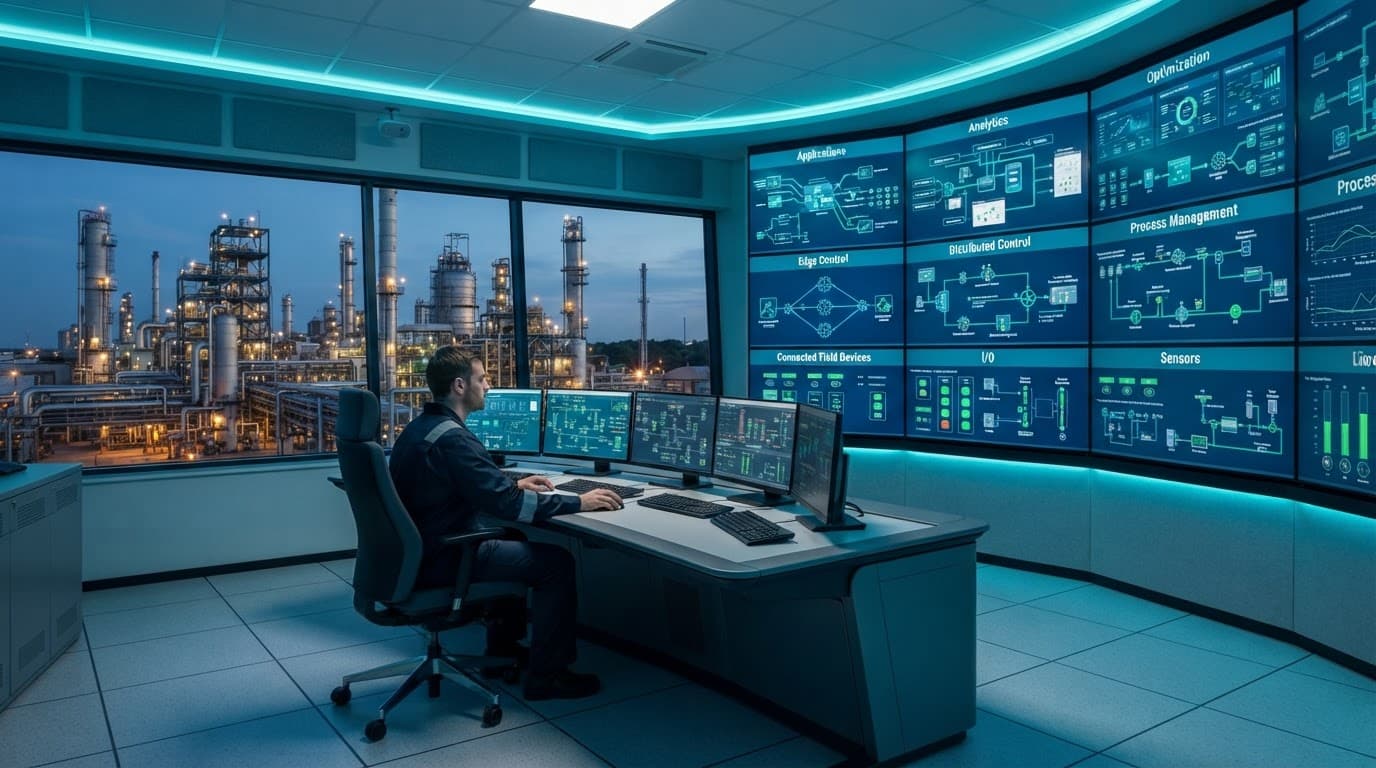
Foxboro SDA organizes the control environment into three connected layers. Each one has a distinct job, but the architecture links them so operational data can support control, monitoring, analysis, and improvement.

| Architecture layer | Primary role | What it supports |
|---|---|---|
| Apps, analytics, and services | Combines IoT and operational data | Smarter decisions and ongoing digital improvement |
| Edge control and compute | Executes functions close to operations | Fast, reliable response at the operational edge |
| Connected products | Links field assets and plant equipment | Essential operational data from the facility |
The layers form a practical chain. Connected products provide the operational information. Edge control and compute act where timely response matters. Apps, analytics, and services can then use connected data to support broader operational insight.
Apps, analytics, and services
At the upper layer, Foxboro SDA combines IoT data with applications, analytics, and services. The purpose is to make operational information more useful for decision-making and continuous improvement.
For example, data that originates with connected products can become available to analytical services without turning the control system into an isolated information island. This arrangement supports IT and OT convergence, where information technology systems and operational technology systems work with more consistent access to relevant data.
Edge control and compute
The middle layer places control and computing capability near the operational edge. This is where fast and reliable response is essential.
Edge components help the system act close to the process rather than depending solely on distant computing resources. That local capability is important in industrial environments where control performance must remain dependable.
Connected products
The foundation layer connects equipment across the facility and supplies operational data. These connected products link the physical process to the rest of the architecture.
Without reliable field-level data, analytics and supervisory functions have little useful context. Foxboro SDA treats the connected facility as part of the wider control structure, rather than an afterthought.
A more intuitive experience for operators
Control-room usability affects reliability. Operators work under time pressure, often while balancing alarms, process conditions, procedures, and communication across the site. An interface that is difficult to interpret can add unnecessary friction during routine work and abnormal situations.
Foxboro SDA gives operators a modern, intuitive experience intended to improve ease of use and reliability. The goal is not visual novelty. It is clearer interaction with the information and controls operators need to manage the process.
Consistent data can support better decisions
When control, monitoring, and operational data connect through a validated architecture, teams can spend less effort reconciling disconnected systems. That can make it easier to see process conditions in context and use available data for continuous improvement.
The benefits depend on how a facility designs, validates, and operates its system. Still, an open architecture gives teams a stronger base for connecting technologies such as analytics and AI to industrial operations.
Schneider Electric’s announcement describes Foxboro SDA as combining openness, embedded cybersecurity, and real-time intelligence for industrial modernization. The details are available in its Foxboro SDA launch announcement.
Modernization without a fixed hardware path
Many facilities need to extend the useful life of existing operations while preparing for new applications, cybersecurity requirements, and data needs. A full rip-and-replace project can introduce cost, downtime, and operational risk, especially where systems are central to production.
Foxboro SDA is positioned as a future-ready upgrade path. Its validated architecture and industry templates are intended to make deployment more repeatable, while its software-defined design gives teams more choice in how and where they run control functions.

Openness with industrial discipline
“Open” does not mean unmanaged. Industrial systems still require validated designs, security controls, availability planning, and clearly defined operating practices.
Foxboro SDA pairs openness with a validated architecture and built-in cybersecurity. That balance matters because process facilities cannot trade dependable operations for flexibility. The system must support both.
The same principle applies to energy performance. Connected power and automation systems can help teams measure conditions, control process loads, and identify inefficient operating modes. Schneider Electric energy management provides additional context on how EcoStruxure connects measurement, control, and improvement.
Where Foxboro SDA fits in a plant strategy
Foxboro SDA fits organizations that want a DCS environment built for the realities of process and hybrid industries, yet less constrained by rigid proprietary architecture. It is relevant where operations need high availability, where edge response matters, and where IT and OT teams need a clearer path to shared operational data.
The architecture also supports advanced technologies such as AI by providing an integrated environment for apps, analytics, services, control, and connected products. AI still depends on sound data, appropriate governance, and a clear operational purpose. Foxboro SDA provides an architecture intended to support those requirements rather than positioning AI as a separate add-on.
A plant does not modernize through software alone. It modernizes through choices about architecture, deployment, operational workflows, and the information that moves among systems. A software-defined DCS gives those choices more room to adapt over time.
Building a more flexible control foundation
Foxboro SDA centers industrial control on an open, software-defined approach while retaining the reliability expected in process operations. Its three-layer architecture connects field equipment, edge control, and higher-level applications in one validated structure.
The strongest idea is simple: control software can be more portable without losing its industrial purpose. For facilities facing modernization pressure, that creates a practical route to connect operations, data, cybersecurity, and future technologies without treating every change as a hardware-bound project.