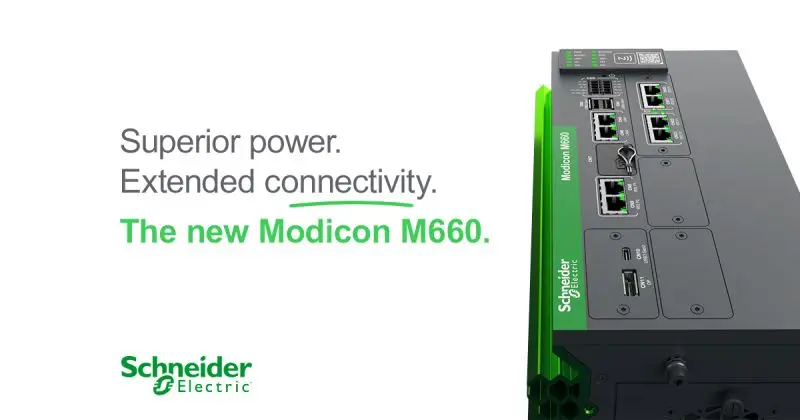
When a machine has to move with split-second timing, a basic controller can start to feel like a traffic cop using hand signals in a thunderstorm. The Modicon M660 is built for that harder job. It comes from Schneider Electric, and it targets machines that need fast, exact, coordinated motion.
Many people search for it as a PLC. That makes sense, because it can handle PLC-style logic. Still, that label misses the bigger picture. The M660 is better described as an IPC-based motion controller with real-time control, machine communication, and edge-level computing in one box. That mix is why it matters in smart manufacturing as of April 2026.
What the Modicon M660 is built to do
At its core, the Modicon M660 is a high-performance controller for machines with serious motion demands. It doesn’t only turn outputs on and off. It also manages axis coordination, timing, communication, and local computing without forcing those jobs into separate hardware.
Schneider Electric positions it as an integrated motion platform, and the Modicon M660 product page shows why. The platform combines real-time control with machine data handling and modern connectivity, which helps machine builders reduce cabinet clutter and avoid stitching together too many separate systems.
Why some people call it a PLC, but that only tells part of the story
The PLC label isn’t wrong, but it’s incomplete. A standard PLC is usually strongest at sequence control, I/O handling, alarms, and routine machine logic. That works well for many systems. Yet once you add tightly synchronized servos, fast path changes, and data-heavy tasks, the controller needs more muscle.
The M660 is built for that next step. It handles PLC logic, but it also brings IPC-style computing power and motion control into the same platform. In plain terms, it can think faster, react sooner, and manage more motion detail than a classic PLC designed for simpler automation.
This quick comparison helps set the line:
| Control platform | Best at | Typical machine fit |
|---|---|---|
| Standard PLC | Logic, I/O, sequencing | Conveyors, pumps, basic automation |
| Modicon M660 | Real-time motion, logic, data processing | Robotics, packaging, converting, multi-axis systems |
If machine performance depends on axis sync and fast response, the M660 sits in a different class than a general-purpose PLC.
That difference also affects buying decisions. Engineers may still group it with PLCs because it lives in the control cabinet and runs the machine. However, the M660 is aimed at advanced motion tasks and edge-level intelligence, not only standard control loops.
The kind of machines that benefit most from the M660
The best fit is any machine where motion has to stay clean, repeatable, and tightly timed. Packaging is a strong example. A line filling, capping, labeling, and indexing products at high speed can’t afford hesitation. One missed beat can ripple across the whole machine.
Robotics also fits well. A robot cell often needs coordinated motion, safe operation, and quick decisions at the machine edge. Material handling is another good match, especially where sortation, transfer, lifting, or gantry motion must stay in sync. Converting machines, such as web handling, slitting, and winding systems, also benefit because tension and position errors can ruin product quality in seconds.
The hardware guide for the Modicon M660 gives a more technical view of installation and system details. Even without reading every spec, the pattern is clear: the M660 makes sense where one controller has to juggle many moving parts without losing timing.
Key Modicon M660 features that make it different from older control systems
The spec sheet matters here, but only because the features change what the machine can do. The M660 uses 13th-gen Intel multicore processors and a 64-bit real-time operating system. That gives it more room to handle motion, logic, and data work at the same time. For builders, that means less compromise when a machine needs both speed and visibility.
One standout point is the motion scale. The platform supports up to 32 axes on Sercos III, which matters when a machine has several servo-driven sections that must move together. Older systems often need extra hardware or careful workarounds to keep that kind of setup under control.
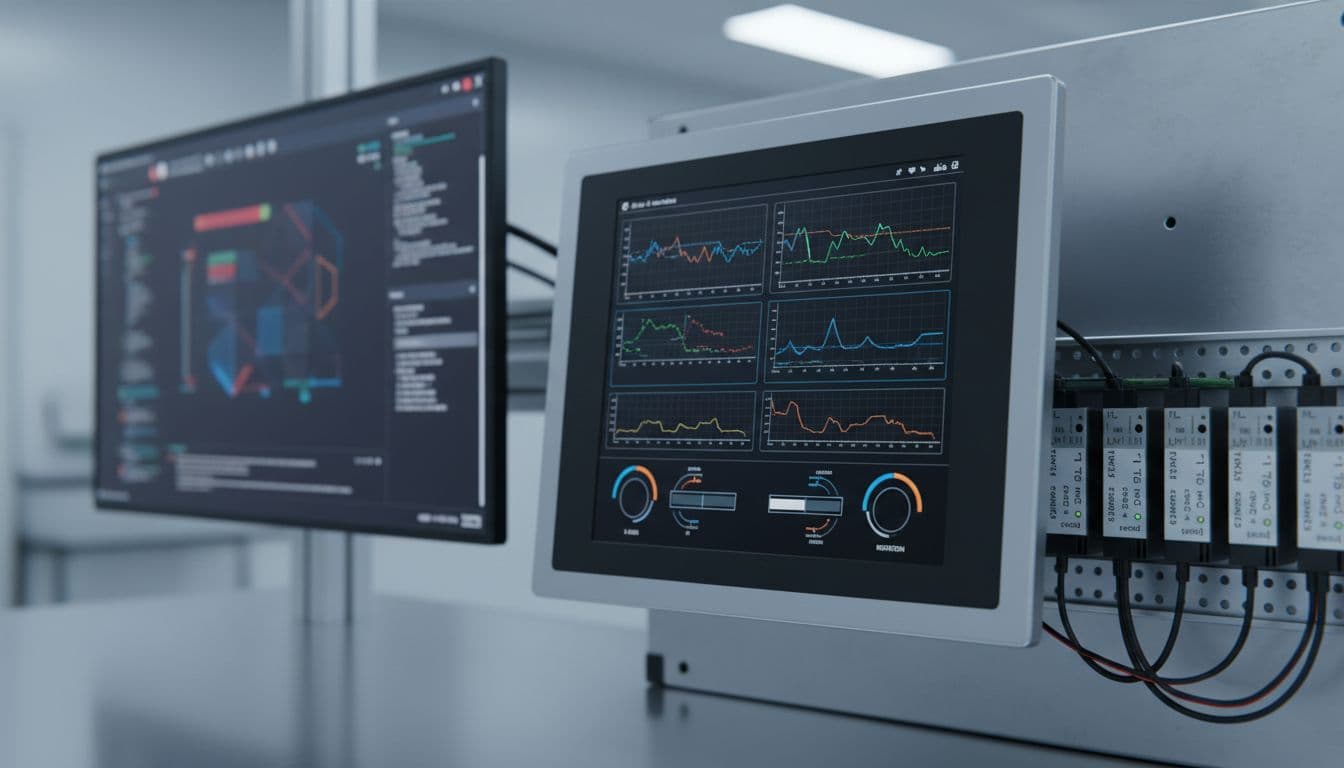
Safety support is another practical gain. Instead of treating safety like a separate island, the M660 is designed to work alongside motion and machine communication in a more unified way. That can simplify architecture and reduce friction during design.
It also pushes past older control systems with edge computing. The controller can process data near the machine, where the action happens, instead of sending everything upstream first. That helps with faster decisions, local analytics, and condition monitoring. Schneider’s edge computing overview for the M660 also points to AI and digital twin readiness, which matters for builders who want simulation, diagnostics, and future software growth without swapping out the control core.
Security and hardware design count too. The embedded TPM adds a hardware-based trust layer, which helps protect credentials and system integrity. The fanless, energy-aware design is less flashy, but it matters in real plants. Fewer moving parts can mean less maintenance, and lower power use helps in tightly packed cabinets.
As of April 2026, no major hardware change has replaced the M660 since its late 2025 launch. That gives early adopters a clearer picture of where it fits: a newer controller for machine builders who need motion precision, data handling, and room to grow.
The clearest way to understand the Modicon M660 is to stop forcing it into the old PLC box. It can handle PLC-style control, but its real value shows up in machines where motion quality, response time, and local data matter every second.
If your machine is simple, a standard PLC may still be enough. If the machine moves like an orchestra and every axis has to hit its mark on time, the M660 is built for that stage.