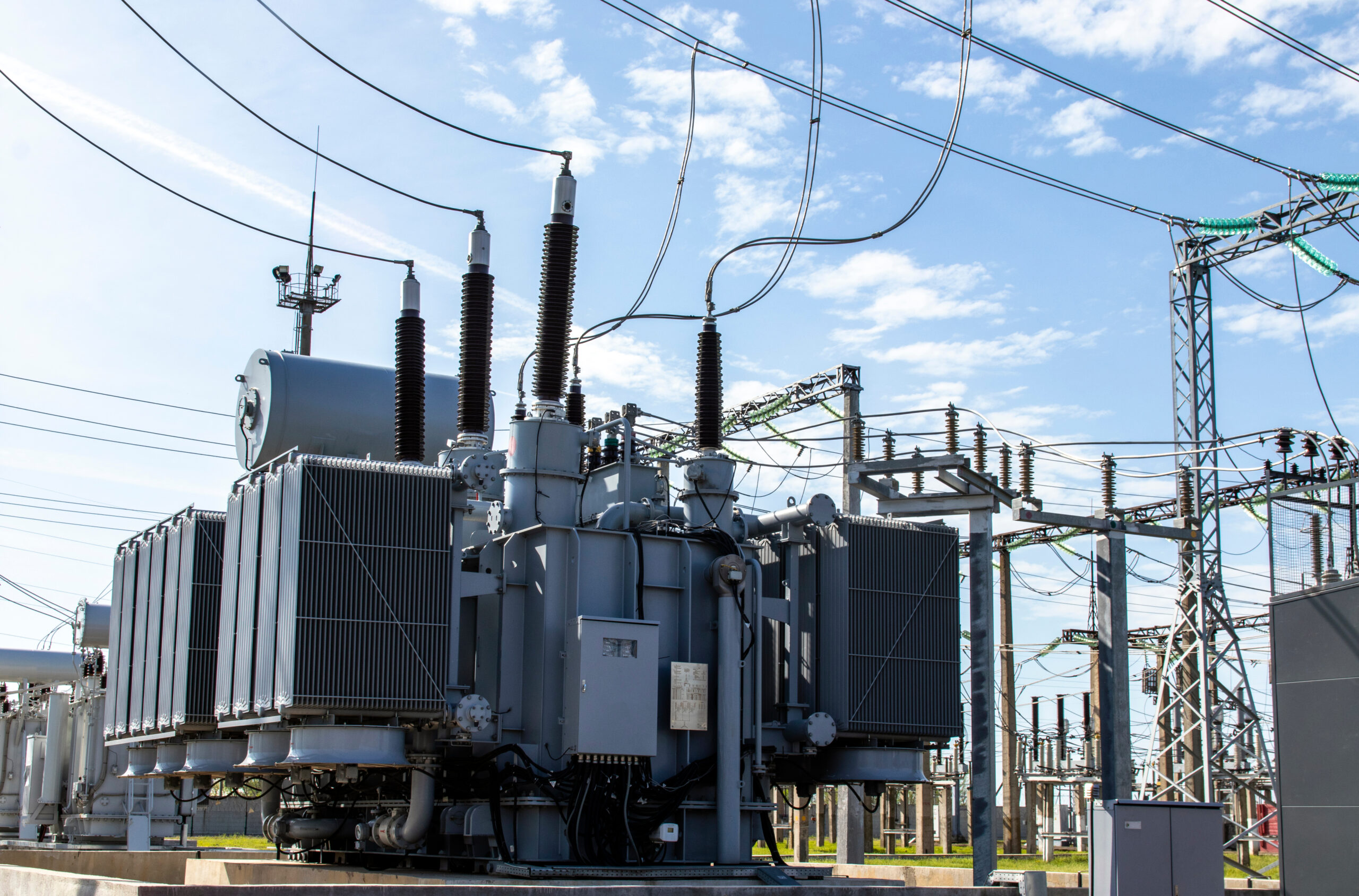
Two transformers can share the same voltage rating and the same MVA rating, yet act like different machines in service. If you treat them as identical, you can run into trouble with parallel operation, voltage control, losses, heating, and fault levels.
The difference sits in a handful of transformer parameters that shape how the unit behaves in the real system, not only on paper. Once you know what to read, the nameplate starts to tell a much richer story.
Why equal ratings don’t mean equal transformers
A 2 MVA transformer is not automatically interchangeable with another 2 MVA transformer. The big numbers tell you capacity and voltage level, but they do not tell you how the windings are connected, how the unit will cool itself, how it will respond to faults, or how much energy it will waste every day.
That matters in substations, industrial plants, and distribution networks. A transformer has to match the system around it. If it does not, the result can be poor voltage regulation, extra losses, overheating, nuisance alarms, or trouble when trying to run two units in parallel. If you need a quick refresher on how substation transformers work, it helps frame why these details show up on the nameplate in the first place.
This quick reference shows the five checks that separate two same-rated transformers:
| Parameter | What it tells you | Why it matters |
|---|---|---|
| Vector group | Winding connection, neutral, phase shift | Needed for correct system connection and parallel operation |
| Losses | Fixed core loss and load-dependent copper loss | Affects efficiency and lifetime operating cost |
| Tap changer | How the transformer adjusts voltage | Helps maintain acceptable output voltage |
| Cooling method | How heat leaves the transformer | Protects insulation life and loading capability |
| Impedance | Opposition to AC current | Changes fault current and voltage drop |
A broader transformer design parameters overview also shows how these choices fit into the larger design of a power system.
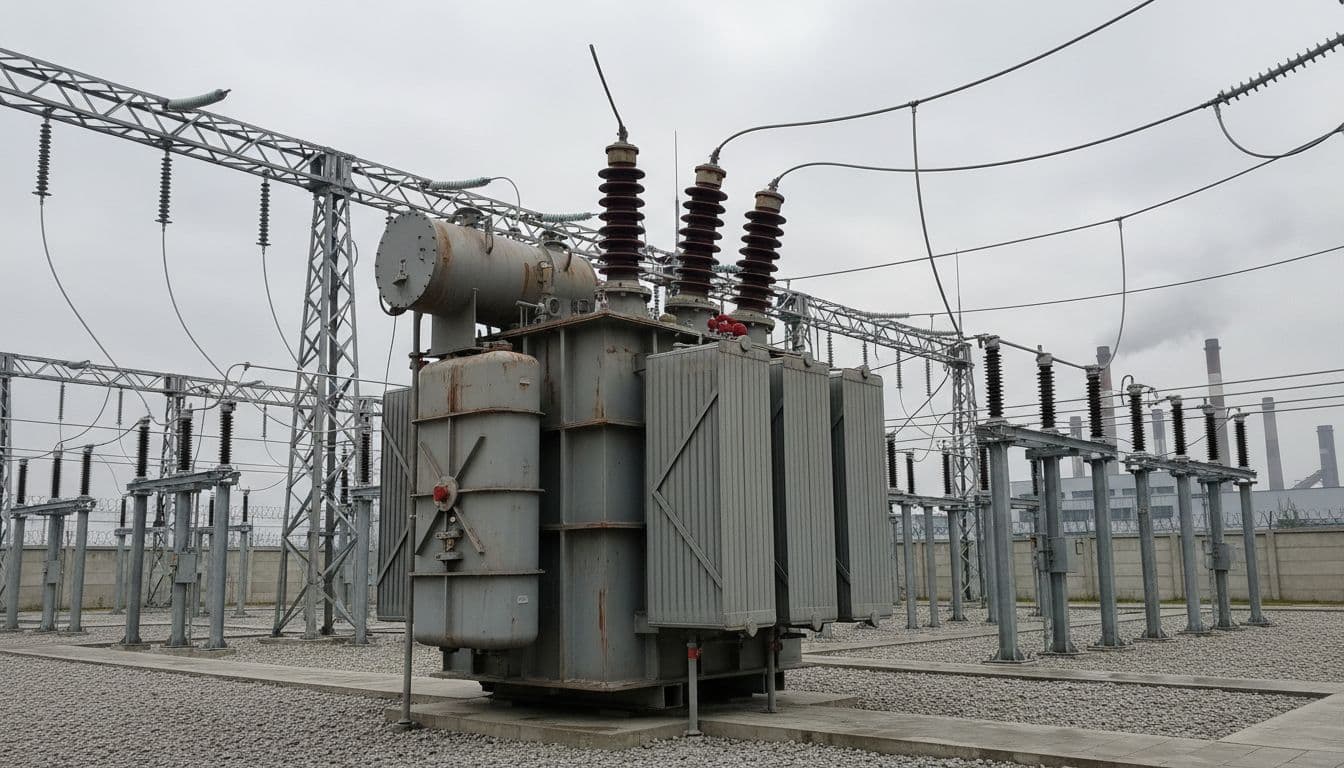
When two transformers match on voltage and MVA but differ in any of these five areas, they are not the same unit in practice. That is where selection starts.
Vector group tells you how the windings are connected
The vector group is one of the fastest ways to spot a meaningful difference between two transformers. Codes like DYn11 or YNd1 are not random. They tell you how the high-voltage winding is connected, how the low-voltage winding is connected, whether neutral is available, and what phase displacement exists between the two sides.
The capital letter refers to the HV winding. In that code, D means delta and Y means star. The lower-case letter refers to the LV winding, again using d and y for delta and star. The letter N or n shows whether neutral is brought out. That is a big deal on the distribution side, where loads are often unbalanced and a neutral is needed.
How to read DYn11
DYn11 is common on distribution transformers. In that code:
- D means the HV winding is delta-connected.
- y means the LV winding is star-connected.
- n means the LV neutral is available.
- 11 gives the phase displacement by the clock method.
The clock method uses 30 degrees per hour mark. So 11 means 11 x 30 = 330 degrees, which is the same as a 30-degree leading shift, depending on the reference you use.
This is not a small detail. If two transformers have different vector groups, they should not be paralleled as if nothing changed. A mismatch can cause circulating currents, extra heating, losses, and poor load sharing.
Matching voltage and MVA is not enough for parallel operation. The vector group also has to match.
That is why engineers often check the vector group first. It tells you, in one short code, whether the transformer even belongs in the same conversation as the other unit.
Transformer losses decide how expensive the unit is to run
Transformers are efficient, but none are loss-free. Those losses fall into two main groups, and the difference between them matters when you choose a unit for a real site.
The first group is core loss, also called iron loss. This loss comes from the transformer core and stays roughly constant as long as the transformer is energized at the rated voltage and frequency. It does not matter much whether the transformer is lightly loaded or fully loaded. Even with little or no load connected, core losses are still there. Hysteresis and eddy current losses sit in this category.
The second group is copper loss. This loss depends on load current, so it rises when current rises and drops when current drops. That is why copper loss is often called a variable loss.
A site’s load profile should guide the choice. Picture a factory that runs hard for only eight hours a day. For the rest of the time, the transformer stays energized but lightly loaded. In that case, high core loss becomes a steady drain because the transformer wastes power even during quiet hours.
Now compare that with a utility or industrial application where the transformer stays near 80% to 90% loading for long periods. There, copper loss becomes more painful because load current stays high for most of the day.
A cheaper transformer with higher losses can look attractive at purchase time and cost more over the years. That tradeoff is why losses belong near the top of any power transformer performance parameter checklist. Purchase price matters, but operating cost keeps showing up on the bill.
Tap changers keep the output voltage in range
Power-system voltage does not sit still. It moves with loading, reactive power, and changing system conditions. A transformer helps manage that movement through tap changers, which adjust the turns ratio and shift the output voltage without changing the whole grid upstream.
The idea is simple. Secondary voltage depends on primary voltage and the turns ratio between the windings. Since the system cannot casually change the incoming voltage from the source, the practical option is to change the number of effective turns on one side of the transformer. That is what taps do.
A transformer may have taps on the HV side or the LV side, depending on the design and application. The key question is how those taps are changed.
Off-load and on-load tap changers
An off-load tap changer needs a full shutdown. The transformer must be isolated, and the tap is changed manually. This method is simpler and cheaper, but it offers no real-time control. Step sizes can vary by project and manufacturer, often by a few percent at each position.
An on-load tap changer, often called an OLTC, can change taps while the transformer stays energized. That makes it a better fit where voltage needs active control. If system voltage drops, the OLTC can shift position and bring the output back toward the target range.
That convenience comes with a price. OLTC systems cost more and need solid maintenance. Poor upkeep of the tap-changing mechanism is a common source of transformer trouble. So when you compare two same-rated units, do not stop at “has tap changer” or “doesn’t have tap changer.” Check whether it is off-load or on-load, where the taps are located, and what adjustment range the transformer provides.
Cooling method protects transformer life
A transformer lives or dies by temperature. Once heat rises beyond the design limit, insulation ages faster, and transformer life starts shrinking. A common rule of thumb says a 10% rise in temperature can cut equipment life by 50%. Whether the exact number shifts by standard or application, the message is the same: heat is expensive.
That is why the cooling code on the nameplate matters. Common codes include ONAN, ONAF, OFAF, and OFWF.
ONAN means oil natural, air natural. The oil circulates naturally inside the transformer, and the surrounding air also moves naturally across the radiators. No fans, no oil pumps. This suits lower-capacity transformers or installations with easier thermal conditions.
ONAF means oil natural, air forced. The oil still moves by natural circulation, but fans push air across the cooling surfaces. Mid-range power transformers often use this method. Some transformers even carry dual ratings, such as 20 MVA under ONAN and 25 MVA under ONAF. In plain terms, the fan-assisted mode allows more loading.
OFAF means oil forced, air forced. Now pumps move the oil, and fans move the air. OFWF means oil forced, water forced, where water helps remove heat. These methods fit heavier loading and larger transformers.
Cooling also works in stages. At one temperature level, the first bank of fans may start. At a higher level, another stage may come on. If temperature keeps rising, the system may alarm or trip. That is why winding temperature indicators, oil temperature indicators, and maintenance checks matter. For a closer look at condition checks around insulation, impedance, and winding health, this guide to power transformer testing essentials adds helpful context.
Transformer impedance sets fault current and voltage drop
The last parameter often has the biggest effect on the fault level of the system: transformer impedance. You will usually see it on the nameplate as a percentage, such as 5%, 6%, 10%, or 12%.
In simple terms, impedance is the total opposition to AC current. It includes resistance and reactance together, so it tells you more than resistance alone. In a transformer, that percentage changes how much short-circuit current can flow during a fault.
If a short circuit occurs on the secondary side and the transformer has low impedance, say 2%, fault current can rise sharply because the transformer offers little opposition. If that same fault occurs on a transformer with much higher impedance, the short-circuit current will be lower.
That sounds like a reason to choose the highest impedance possible, but that creates a second problem. Higher impedance also causes higher voltage drop and poorer voltage regulation under load.
Low impedance raises fault current. High impedance lowers fault current but increases voltage drop.
So the right choice is a balance. You need to know how much voltage drop the system can tolerate and how much fault current the downstream equipment can handle. Circuit breakers, disconnectors, and other gear near the transformer must be rated for that short-circuit duty, and the breaker must interrupt that current safely.
This is where two same-rated transformers can part ways in a hurry. One might fit the available breaker duty and voltage-drop limits. The other might force changes to the rest of the installation.
Final thoughts
When two transformers sit side by side with the same voltage and MVA rating, the big numbers only tell part of the story. The real difference is often hidden in vector group, loss profile, tap-changing method, cooling code, and impedance.
Read those five items before calling two transformers “the same.” That habit leads to better decisions on selection, operation, maintenance, and parallel use.

![Why MV Switchgear Fails: 5 Causes That Lead to Major Faults A 36 kV switchgear panel can sit closed for two years, carry load without complaint, and still fail on the one day you need it to clear a fault. That is the risk hiding behind a quiet panel. If the breaker won't trip, if protection doesn't detect the fault, or if insulation breaks down inside the cubicle, the result can be fire, arc flash, equipment loss, and a hard production stop. The real job is not waiting for failure and reacting later. It is spotting the warning signs before the panel runs out of margin. What counts as a switchgear failure Not every defect in a medium-voltage panel is a true failure. That distinction matters because reliability studies do not count every bad lamp, loose label, or minor nuisance the same way they count a breaker that won't trip. IEC 62271-1, clause 3.1.12, defines a major failure as a failure of switchgear and controlgear that causes the loss of one or more fundamental functions. It also says a major failure leads to an immediate change in system operating conditions, such as backup protection having to clear a fault, or forces unscheduled removal from service within 30 minutes. Major failures affect the core job of the panel In plain language, a major failure means the switchgear can no longer do one of its main jobs. Those jobs include switching, protection, monitoring, and control. If a fault occurs and the protection system does not detect it, that is a major failure. If the relay sends a trip command and the vacuum circuit breaker stays closed, that is also a major failure. The same goes for a situation where one bus section fails and the plant has to shift supply to another bus to keep running. The standard's wording about "immediate change in operating conditions" is useful because it points to real plant behavior, not theory. When primary protection fails and backup protection has to step in, the system has already moved into an abnormal state. If a breaker will not close because of a spring problem and must be removed from service at once, the equipment has lost its reliability. Minor failures are different, even if they still need attention A minor failure is anything that does not take away those core functions. An LED indication lamp that has gone dark is annoying, but it does not stop the panel from switching or protecting the system. A cosmetic defect may need correction, but it does not belong in the same category as a breaker mechanism that sticks. That distinction helps when you look at failure data. Most reliability studies focus on major failures, because those are the events that threaten safety, uptime, and equipment life. > A panel does not become dangerous only when it burns. It becomes dangerous the moment it can no longer switch, protect, or isolate a fault as intended. The five failure modes behind most serious problems Across published guidance and field experience, the same trouble spots keep showing up in MV switchgear. Insulation breakdown and mechanical faults sit near the top, while overheating, environmental stress, and aging keep chipping away at the system until something gives. A single medium voltage switchgear panel stands inside a clean and brightly lit industrial facility. [https://user-images.rightblogger.com/ai/f382171e-d1b1-4320-b7eb-289d9b53ee27/medium-voltage-switchgear-panel-dc9d5203.jpg] This quick summary helps frame where the risk usually sits: | Failure mode | Typical share or impact | Common triggers | Best early warning | | | | | | | Insulation failure | About 20% to 30% of failures | Partial discharge, insulation defects, contamination | PD testing or continuous PD monitoring | | Internal arc | Less about share, more about severity | Insulation breakdown, loose parts, human error, foreign objects | Arc detection plus proper panel design and rating | | Busbar and connection overheating | Major contributor within remaining failures | Poor joints, high contact resistance, loose terminations | Thermal inspection or continuous temperature monitoring | | Environmental and aging effects | Significant long-term driver | Moisture, dust, corrosion, seal failure, material degradation | Inspection, humidity monitoring, life assessment | | Mechanical failures | About 30% to 40% of failures | Trip coil issues, dry lubrication, worn parts, weak spring energy | Breaker monitoring and functional testing | The headline is simple. A switchgear failure usually starts as a small loss of margin, then turns into a major event when nobody is watching. Insulation failure usually starts where you can't see it Insulation failure is one of the biggest reasons MV switchgear fails. The hard part is that the panel can look healthy from the outside while the weakness grows inside cable insulation, busbar insulation, or instrument transformer resin. Partial discharge is small at first, then destructive Partial discharge starts when electrical stress concentrates inside tiny voids, impurities, or defects within insulation. In a cable, for example, a manufacturing void or a badly prepared termination can create a weak point. Stress collects there because the local dielectric strength is lower. Once the stress exceeds what that spot can withstand, a localized discharge starts. It is called "partial" because the discharge does not bridge the full insulation path at first. Still, the damage does not stay small. Repeated discharges eat away at the insulation until a much larger fault develops. A wood beam with termites offers a good comparison. The outside may still look sound, while the inside has already lost strength. By the time the damage is visible, the collapse is close. In MV panels, partial discharge often shows up in cable terminations, cable insulation itself, CT and VT epoxy insulation, and insulated busbar systems. The danger is that it rarely gives an obvious warning unless you are looking for it. For a broader research view, the review of medium-voltage switchgear fault detection [https://www.mdpi.com/1996-1073/15/18/6762] covers common detection methods and fault behavior in more detail. Periodic partial discharge testing helps, but it has a limit. You only see the panel at the moment of the test. Continuous monitoring fills the blind spot between maintenance visits. That difference matters more as the switchgear ages. Internal arc is where hidden weakness becomes immediate danger Internal arc is one of the worst events that can happen inside switchgear because it combines heat, pressure, smoke, and metal vapor in a confined space. It is not the same thing as a normal short circuit. An internal arc is a fault that develops inside the enclosure and puts people nearby at direct risk. Insulation failure can trigger it. So can a loose connection, a dropped tool, a foreign object left behind after maintenance, or simple human error. A screwdriver bridging two phases is enough to turn a routine task into a violent event. Besides fire damage, the smoke from an internal arc is hazardous on its own. That is why this topic is not only about asset protection. It is also about human safety. Modern panels may include arc detection systems that watch for both light and current. When they detect an arc, they send a trip command in milliseconds. It also pays to check whether the panel has been tested for internal arc classification, because that tells you how the equipment is expected to behave during this kind of fault. Heat at joints and contacts can undo a good panel Every electrical joint carries some risk. If the connection is poor, resistance rises. When current keeps flowing through that resistance, I squared R losses turn into heat, and heat becomes the start of the next failure. This issue appears again and again at busbar joints, cable terminations, breaker contacts, and earthing connections. The busbar connection between two panels is a common weak point. So is the cable end where termination quality depends on careful stripping, clean surfaces, correct materials, and proper tightening. In withdrawable breakers, primary contact engagement needs extra attention because poor seating can cause local hot spots. The physics is simple, but the effect is expensive. A small increase in contact resistance can push the temperature high enough to damage insulation, oxidize surfaces, weaken spring pressure, and set up the next arc fault. That is why overheating is a recurring theme in switchgear failure analysis, including this overview of switchgear failures and solutions [https://blog.exertherm.com/causes-of-switchgear-failures-and-solutions]. Good workmanship cuts most of this risk at the start. Joints need the right preparation, the right torque, and the right method from the manufacturer. After installation, thermal checks matter. A handheld IR inspection helps during rounds, but large sites with many panels often need more than occasional scans. Fixed thermal sensors on critical joints can track temperature all day and flag a problem before the panel forces a shutdown. Age and environment wear down the margin of safety Switchgear does not fail only because something was assembled badly. Time and environment also wear down the panel, even when operation looks normal. A typical service life is often described as about 25 to 30 years, though real life depends on duty, environment, maintenance, and design. Once equipment gets deep into that age range, the risk rises. Insulation can crack. Corrosion can creep across sheet metal and hardware. Seals can weaken in gas-filled compartments. Contacts wear. Springs lose strength. Materials that looked stable for years start to drift out of their original condition. Environmental stress speeds that process up. Moisture is a common problem because it lowers insulation resistance and can help contamination become conductive. Dust does the same thing when it settles where it should not. Some reported failure summaries tie a large share of busbar trouble to moisture and dust exposure, and this medium-voltage switchgear problem summary [https://www.green-energy-elec.com/common-problems-in-medium-voltage-switchgear/] highlights that pattern clearly. The fix depends on the site. Air-insulated panels in humid, dusty areas need more cleaning and inspection. Higher IP ratings help when the environment is harsh. In some applications, enclosed technologies such as GIS or solid-insulated systems reduce exposure. Humidity sensors inside selected panels also help, because they warn you when the room condition and the cubicle condition are drifting apart. Mechanical failures stop the breaker when it matters most Mechanical trouble is often the biggest single contributor to MV switchgear failure. That makes sense because a fault may be detected perfectly, yet the system still fails if the breaker mechanism cannot move. A breaker that has stayed closed for two years can look healthy, but that does not prove it will trip on demand. The trip coil may be open or shorted. Lubrication may have dried out or picked up contamination. Stored-energy springs may have weakened. Linkages may seize. Contacts may be worn. Any one of those problems can turn a valid trip command into a non-event. That is the nightmare scenario in a live plant. Fault current continues to flow because the breaker remains closed. Backup protection may clear the fault later, but the delay can mean heavier equipment damage, a wider outage, and greater risk to people nearby. Routine maintenance helps because it proves the mechanism can still move. Still, periodic checks have gaps. A breaker can pass a test in January and develop a mechanical issue in March. That is why breaker monitoring is gaining ground. Modern systems can track operating count, contact wear, gas or pressure status where relevant, opening and closing speed, and other health indicators that point to a weakening mechanism. For teams that already use connected diagnostics on breakers, tools such as a Pact series breaker diagnostic and testing interface [https://www.interestingautomation.com/schneider-electric-service-interface-kit-pact-series-circuit-breakers-installation-compatibility-expert-review/] show how live measurements and event data can shorten troubleshooting time and expose developing faults before a trip failure happens. > A breaker is not reliable because it stayed closed. It is reliable because you have evidence that it can still open. Why monitoring beats calendar-based maintenance alone Traditional maintenance still matters. Panels need cleaning, inspection, tightening, lubrication, and testing. Yet calendar-based maintenance only gives you snapshots. It cannot tell you what happened between visits. Monitoring changes that. A continuous system can watch temperature rise at a joint, catch partial discharge activity, track humidity inside a cubicle, and record breaker operation data around the clock. It also makes condition-based maintenance possible. Instead of opening equipment on a fixed calendar, you act when data shows the condition is changing. That approach is often the difference between "repair after failure" and "intervene before failure." On new switchgear, you may not need every sensor from day one. On older panels, on hard-worked breakers, or across a large fleet, the case for monitoring becomes much stronger. A plant-wide supervision layer also helps because raw data is not enough by itself. Operators need one place to see alarms, status changes, and events in context. Platforms focused on real-time monitoring with Schneider EPAS [https://www.interestingautomation.com/schneider-electric-epas/] show why visibility matters when a feeder trips or a breaker changes state. Faster fault isolation starts with seeing the right information at the right time. Final thoughts The most dangerous switchgear failures do not start with a dramatic event. They start with a missed warning, a weak joint, a dry mechanism, or insulation that is breaking down in silence. If there is one takeaway to keep, it is this: reliability needs proof. A breaker that has been closed for two years is only comforting when you know it can still trip today, and the rest of the panel can still do its core job when the fault arrives.](https://www.interestingautomation.com/wp-content/uploads/2026/05/Why-MV-Switchgear-Fails-5-Causes-That-Lead-to-Major-Faults-150x150.jpg)