Warehouses feel tighter than ever in 2026. Order volume keeps rising, labor is harder to find, and delivery windows keep shrinking.
When a team spends too much time walking, searching, re-checking, and fixing errors, the whole building slows down. Warehouse automation is the mix of software and machines that helps move, store, track, pick, and pack goods with less manual work.
Adoption is climbing because companies need speed, safety, and room to adapt, not only lower labor costs. Current 2026 reporting suggests only about 20 to 25 percent of warehouses use meaningful automation, so most operations still have plenty of ground to gain. The smart place to begin is understanding what automation actually includes.
What warehouse automation includes, from simple tools to smart robot systems
Warehouse automation is not one giant robot rolling into a building and fixing everything. In real operations, it usually starts with smaller tools, then grows over time.
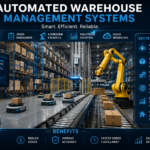
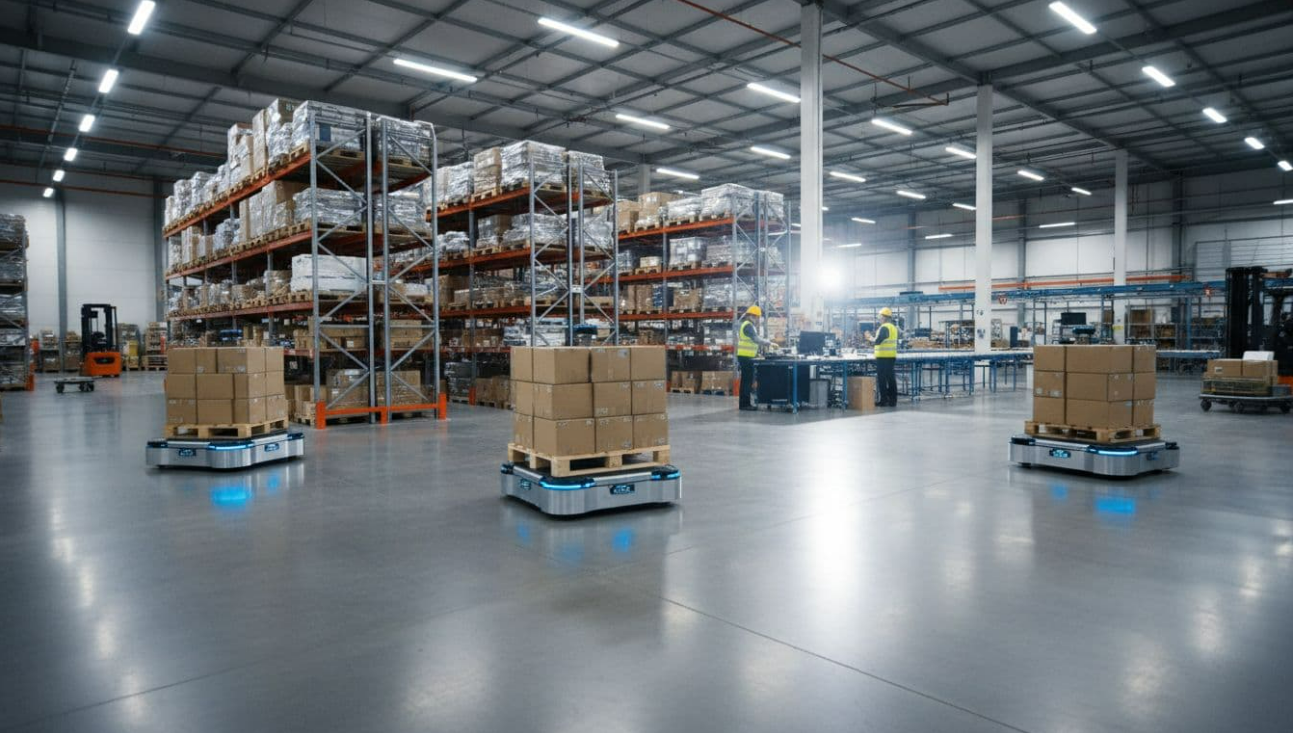
A warehouse might begin with barcode scanning, mobile devices, and software that directs work. Next, it may add conveyors, print-and-apply labeling, or pick-to-light. Larger sites often move into autonomous mobile robots (AMRs), robotic palletizing, computer vision, and automated storage and retrieval systems, also called AS/RS.
Most warehouses run a mixed model. People still handle exceptions, fragile items, and changing priorities. Machines take the repetitive moves that eat time and strain workers. Meanwhile, software keeps the whole floor in sync. A strong warehouse inventory management software setup often becomes the base layer, because robots are only as useful as the data guiding them.
The main types of warehouse automation you will see in real operations
Fixed automation works best when the flow is steady. Conveyors, sortation lines, and AS/RS fit buildings with repeatable volume, stable layouts, and clear product paths. These systems can move a lot of goods fast, but they cost more to install and are harder to shift once they are in place.
Flexible automation is built for change. AMRs, mobile carts, robotic arms, and voice picking fit sites with changing order profiles, seasonal peaks, and mixed SKU sizes. These tools can adapt faster when a warehouse adds product lines or rearranges zones.
Software automation sits above both. Warehouse execution systems, task orchestration tools, and labor management platforms decide what should happen next. That layer matters because a building with great hardware and weak software still gets traffic jams. Recent 2026 market analysis from Interact Analysis points to the same trend: more value is coming from connected systems, not isolated machines.
How AI, sensors, and software help machines make better decisions
AI in a warehouse is usually less dramatic than people expect. It does not replace managers. It helps the system make faster, better choices all day.
For example, AI can help plan robot paths, balance tasks across workers, suggest better slotting, and control traffic so machines do not bunch up in one aisle. Sensors add the live signals. Scanner reads, weight checks, location beacons, and computer vision tell the software what is really happening on the floor.
That leads to practical gains. Pickers waste less time hunting for items. Robots avoid blocked routes. Supervisors see delays sooner. Space gets used better because slotting improves as demand changes.
Where warehouse automation delivers the biggest wins
The business case for warehouse automation is strongest when it removes a daily bottleneck. That is why the best projects focus on task flow, not buzzwords.
Faster picking, packing, and shipping with fewer errors
Picking is where warehouses bleed time. Workers walk long distances, stop to confirm SKUs, and backtrack when locations are wrong. Automation cuts that travel and guides each move.
Pick-to-light, voice picking, and mobile task systems help workers move with less hesitation. Conveyors and AMRs reduce walking between zones. Packing stations with scan checks and auto-labeling speed the last step before shipment. In well-controlled automated environments, current 2026 reporting often shows order processing running up to three times faster, with pick accuracy near 99 percent. Coverage in DC Velocity’s 2026 warehouse automation trends shows why accuracy and throughput remain the top buying drivers, especially for e-commerce and high-SKU operations.
The payoff is simple. Fewer wrong items leave the dock. Carrier cutoffs are easier to hit. Customer service gets fewer “Where is my order?” messages.
Safer work, lower strain, and better use of labor
A warehouse can wear people down fast. Repeated lifting, long walks, awkward reaches, and forklift traffic all raise risk. Automation helps by taking on the dull, heavy, and repetitive moves.
Robotic palletizing and de-palletizing reduce lifting. Goods-to-person systems cut long travel paths. AMRs lower the number of manual cart runs across the floor. Current reporting also suggests injury rates can drop meaningfully when automation removes the hardest physical tasks.
That does not mean people disappear. The work shifts. Teams move into oversight, exception handling, quality checks, software control, and maintenance. A solid warehouse stock management system helps with that shift because better task visibility makes training and exception handling much easier.
More room to grow when demand changes
Growth rarely arrives in a neat line. One month brings a holiday surge. The next adds a new product line. After that, order profiles change from case picks to each pick.
That is why modular systems are gaining ground in 2026. Instead of rebuilding the whole site, companies can add a few robots, another packing cell, or new software rules. Reporting on warehouse robotics trends in 2026 highlights the same pattern: operators want flexible tools that scale in steps.
Internal learning matters here, too. These examples of autonomous mobile robots in logistics show why mobile systems appeal to warehouses that cannot afford a long shutdown.
The most common warehouse automation systems and when they make sense
Technology choices get easier when you tie them to real constraints: order volume, SKU mix, space, labor pain, and budget. A flashy system that does not fit the building is still the wrong system.
AMRs, conveyors, and ASRS, choosing the right way to move goods
AMRs fit changing layouts and mixed tasks. They are strong in facilities where travel time is the pain point and workflows shift often. Conveyors fit stable, repeatable flows between fixed points, such as receiving to sortation or picking to packing. AS/RS works best when space is tight, and inventory density matters.
This quick comparison helps frame the choice:
| System | Best fit | Watch for |
|---|---|---|
| AMRs | Mixed tasks, growth, changing layouts | Fleet traffic, charging, software quality |
| Conveyors | Stable volume, fixed paths, fast transfer | Building changes cost more |
| AS/RS | High density, limited space, repeatable storage | Higher capital cost, tighter planning needs |
A simple rule helps. If your process changes every quarter, start with flexible automation. If the same product flow repeats every day, fixed systems may pay back faster.
Picking and packing tools that improve speed without a full rebuild
Not every warehouse needs robots first. Mid-size operations often get faster results from smaller upgrades.
Pick-to-light reduces search time in dense pick faces. Voice picking helps hands stay free. Mobile scanners guide workers and validate each move. Print-and-apply labeling speeds carton prep and cuts labeling errors. Better packing stations also help, especially when they include dimensioning, weight checks, and direct carrier integration.
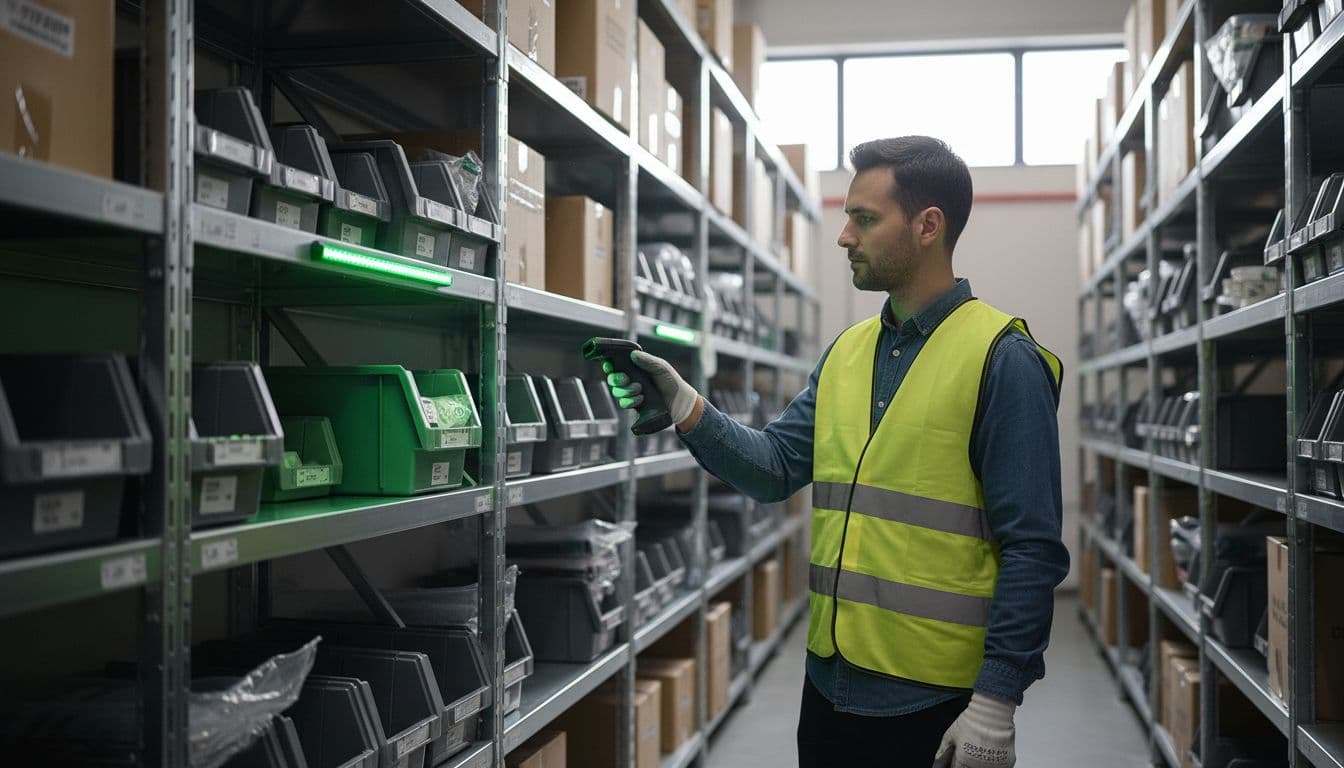
These projects matter because they avoid the “all or nothing” trap. As Cisco-Eagle’s 2026 warehouse planning guidance notes, many sites improve throughput by tightening one process at a time instead of chasing a full rebuild.
Inbound automation for receiving, de-palletizing, and putaway
Inbound work often gets less attention than picking, but it shapes everything after it. If receiving runs late, stock is invisible. If putaway stalls, replenishment suffers. Then the entire day slips.
That is why inbound automation is growing fast. Robotic de-palletizing can remove heavy, repetitive work. Vision-based inspection checks for damage or wrong labels. Dimensioning systems capture carton data quickly. Smart putaway suggestions place goods where they will support faster future picks.
When inbound gets smoother, the whole warehouse breathes easier. Stock becomes available sooner, and downstream teams stop waiting for inventory that is already in the building.
What can go wrong, and how to build a warehouse automation plan that works
Warehouse automation can save time and labor, but it also exposes weak process design. Buying hardware before fixing the workflow is an expensive mistake.
The real challenges are cost, integration, downtime risk, and change fatigue
The hard parts are familiar. Upfront costs can be high. Integration with WMS and ERP tools can drag on. Larger projects may take months, and some take much longer if layout changes or network upgrades are needed.
There is also a people problem. New tools change how work gets done, and teams get tired if every month brings another screen, device, or route change. Weak orchestration software creates new trouble, too. Robot fleets can clog busy intersections. Poor slotting can push congestion into new zones.
Automating a bad process only helps you make mistakes faster.
That is why many operators start with process mapping and baseline metrics before buying equipment. Articles like E-Commerce Warehouse Automation 2026 make the same point: ROI is easier to reach when the workflow is clear first.
How to start small, measure results, and scale with confidence
A low-risk rollout usually follows a short path:
- Map the bottleneck, such as travel time, picking errors, or inbound delays.
- Set a few success metrics, usually throughput, accuracy, labor hours, and dock-to-stock time.
- Pilot one process in one zone.
- Train the team early, then track exceptions every day.
- Expand only after the first workflow is stable.
Hybrid human-robot workflows are often the safest place to begin. People handle exceptions while machines take the repetitive runs. Over time, the software learns the rhythm of the building, and the team learns what really needs automation.
The best warehouse automation plan is not the biggest one. It is the one that fixes the right bottleneck first.
You do not need to automate every aisle, every task, or every shift at once. Match the tools to your workflow, your budget, and your growth plan, and the warehouse starts moving like a system instead of a series of daily recoveries.