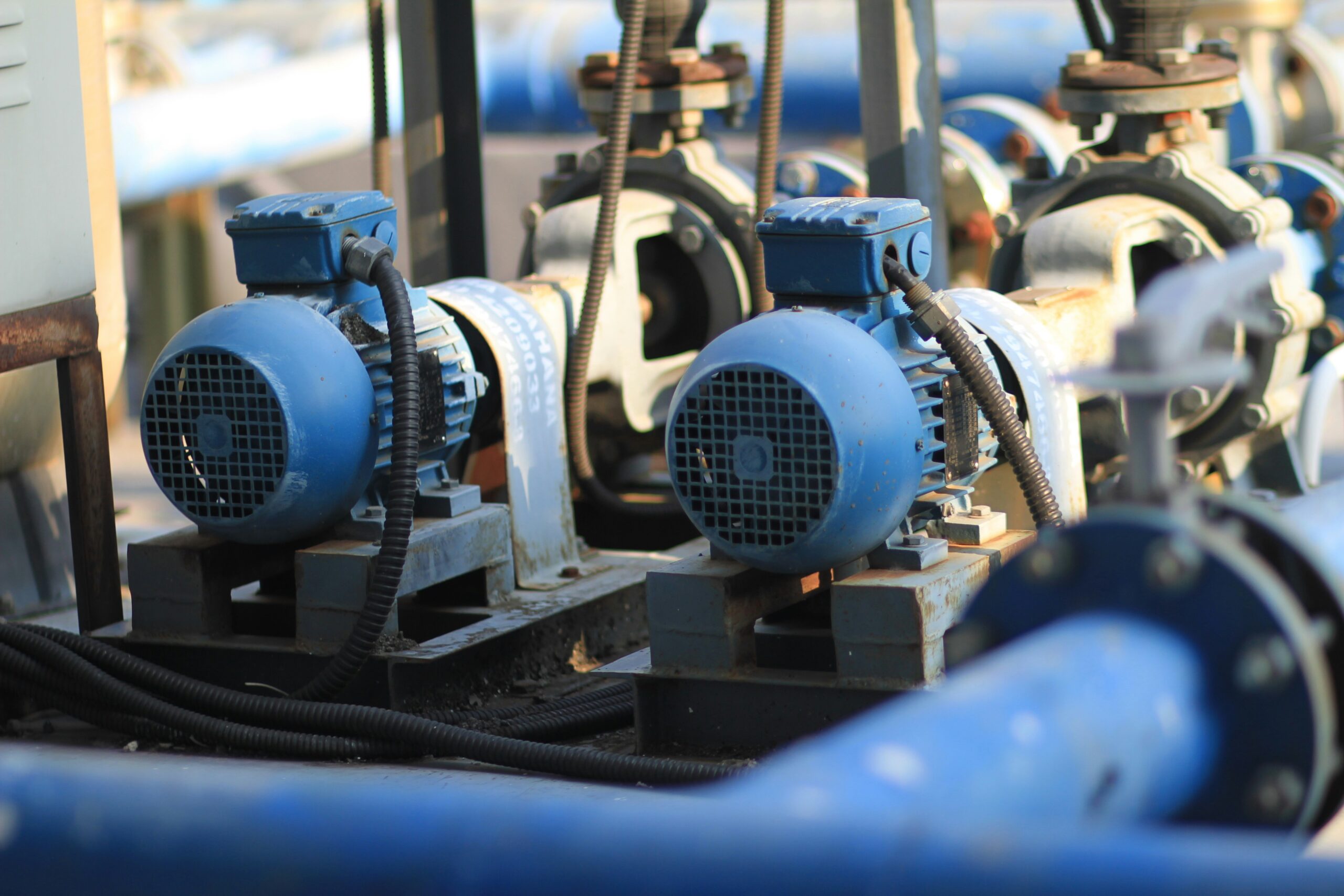
Induction motors are among the most widely used electric motors in homes, commercial buildings, and industrial facilities. They are known for their simple construction, reliability, low maintenance, and excellent efficiency.
Whether you are designing an industrial automation system or selecting a motor for a pump, conveyor, compressor, or fan, understanding the different types of induction motors helps you choose the right solution.
Table of Contents
What Is an Induction Motor?
An induction motor is an AC electric motor in which electrical power is transferred to the rotor through electromagnetic induction instead of direct electrical connections.
Unlike DC motors, induction motors do not require brushes or commutators, making them durable and cost-effective.
Working Principle of an Induction Motor
When AC power is supplied to the stator winding:
- A rotating magnetic field is produced.
- This magnetic field cuts the rotor conductors.
- EMF is induced in the rotor.
- Rotor current flows.
- Interaction between stator and rotor magnetic fields produces torque.
- The rotor starts rotating.
The rotor always rotates slightly slower than the rotating magnetic field. This difference is known as slip.
Main Types of Induction Motors
1. Single-Phase Induction Motor
Single-phase induction motors are commonly used where only single-phase electricity is available.
Features
- Simple construction
- Low maintenance
- Affordable
- Suitable for light-duty applications
Applications
- Ceiling fans
- Washing machines
- Water pumps
- Air coolers
- Small compressors
Types of Single-Phase Induction Motors
Split Phase Induction Motor
Uses an auxiliary winding for starting torque.
Best for:
- Blowers
- Small pumps
- Machine tools
Capacitor Start Induction Motor
Uses a starting capacitor to produce higher starting torque.
Applications:
- Compressors
- Refrigeration equipment
- Air conditioners
Capacitor Start Capacitor Run Motor
Provides excellent starting torque and running efficiency.
Applications:
- Heavy-duty pumps
- Industrial compressors
- Agricultural equipment
Permanent Split Capacitor (PSC) Motor
Uses a permanently connected capacitor.
Advantages:
- Quiet operation
- Better efficiency
- Lower maintenance
Applications:
- Fans
- HVAC systems
- Air handling units
Shaded Pole Motor
One of the simplest induction motors.
Advantages
- Low cost
- Compact
- Reliable
Applications
- Exhaust fans
- Small cooling fans
- Electric toys
Three-Phase Induction Motor
Three-phase induction motors are the backbone of industrial automation.
Advantages:
- High efficiency
- High reliability
- Better power factor
- Self-starting
- Suitable for continuous operation
Applications:
- Manufacturing plants
- Pumps
- Conveyor systems
- Crushers
- HVAC systems
- Mining
- Cement plants
Types of Three-Phase Induction Motors
Squirrel Cage Induction Motor
The most common industrial motor.
Advantages
- Rugged construction
- Low maintenance
- High efficiency
- Long service life
Applications
- Conveyors
- Fans
- Pumps
- Compressors
- Machine tools
Slip Ring (Wound Rotor) Induction Motor
Uses external resistance through slip rings.
Advantages
- High starting torque
- Smooth acceleration
- Better speed control
Applications
- Cranes
- Hoists
- Elevators
- Rolling mills
- Crushers
Comparison of Induction Motor Types
| Motor Type | Starting Torque | Cost | Maintenance | Typical Applications |
|---|---|---|---|---|
| Shaded Pole | Low | Very Low | Very Low | Small Fans |
| Split Phase | Medium | Low | Low | Pumps |
| Capacitor Start | High | Medium | Low | Compressors |
| PSC Motor | Medium | Medium | Low | HVAC |
| Squirrel Cage | High | Medium | Very Low | Industries |
| Slip Ring | Very High | High | Medium | Heavy Industrial Loads |
Advantages of Induction Motors
- High efficiency
- Reliable operation
- Low maintenance
- Brushless design
- Long service life
- Low operating cost
- Excellent overload capability
- Suitable for continuous operation
Disadvantages
- Speed depends on supply frequency
- Speed control requires a Variable Frequency Drive (VFD)
- Single-phase motors have lower starting torque
- Slip ring motors require more maintenance
How to Choose the Right Induction Motor
Consider the following factors:
- Load type
- Starting torque requirement
- Power supply (single-phase or three-phase)
- Duty cycle
- Operating environment
- Speed control requirements
- Efficiency
- Maintenance cost
Industrial Applications
Induction motors are widely used in:
- Water treatment plants
- Manufacturing industries
- Textile mills
- Food processing
- Cement plants
- Oil & gas
- HVAC systems
- Material handling systems
- Conveyor belts
- Packaging machines
Frequently Asked Questions (FAQs)
Which induction motor is most commonly used?
The Squirrel Cage Induction Motor is the most commonly used due to its rugged design, efficiency, and low maintenance.
What is the difference between single-phase and three-phase induction motors?
Single-phase motors are mainly used for domestic and light-duty applications, while three-phase motors are designed for industrial and heavy-duty operations.
Why is slip important in an induction motor?
Slip allows electromagnetic induction to occur between the stator and rotor. Without slip, torque cannot be produced.
Which induction motor provides the highest starting torque?
The Slip Ring Induction Motor offers the highest starting torque and is ideal for heavy-load applications.