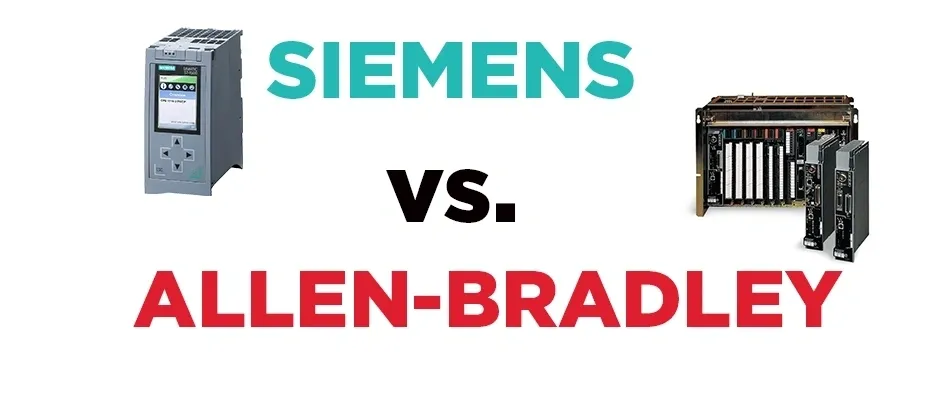
Choosing between tia portal vs studio 5000 often feels less like picking software and more like picking a workbench. Both can build strong control systems. Both can frustrate you if they don’t match your hardware, team, and project style.
If you’re comparing Siemens and Rockwell for real plant work, brand loyalty won’t help much. What matters is how the software feels on a Monday morning, during commissioning, during edits on a live line, and six months later when someone else has to maintain it.
What each platform is built to do, and why that matters
TIA Portal is Siemens’ broad engineering platform. It brings PLC programming, HMI work, drives, safety, motion, and diagnostics into one project space. Studio 5000, by contrast, centers on Rockwell Logix controllers and PLC logic first, then connects to a wider Rockwell tool set for HMI and other layers.
That difference shapes everything that follows. TIA Portal feels like one workshop with many tools hanging on the same wall. Studio 5000 feels more like a dedicated bench built around the PLC, especially in Allen-Bradley plants.
TIA Portal brings PLC, HMI, drives, and safety into one workspace
With Siemens, the big selling point is shared context. Tags can flow across devices more easily. Hardware setup, PLC code, HMI screens, and diagnostics live in the same environment. For teams building machines around S7-1200 or S7-1500 controllers, this reduces handoffs and duplicate work.
That doesn’t mean TIA Portal is simple on day one. It has depth, and new users often feel that depth fast. Still, once a project grows beyond a single PLC, the all-in-one setup starts to pay back time.
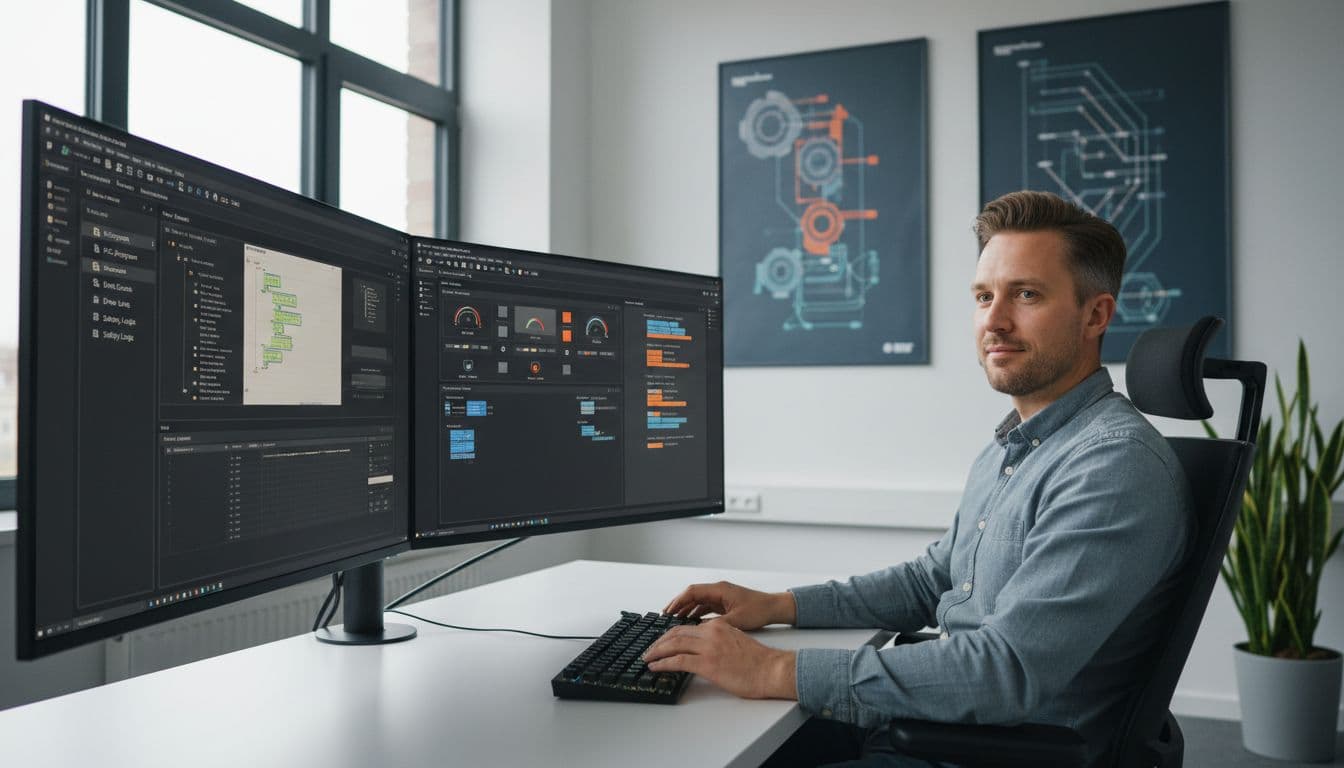
As of March 2026, Siemens is also pushing TIA Portal further with V21, including an Engineering Copilot, Git support, and cloud or subscription options. If you’re watching Siemens releases closely, this guide to TIA Portal V20 Update 4 features and installation adds useful background on how Siemens has been improving stability and device support.
Studio 5000 shines when your plant runs on ControlLogix or CompactLogix
Studio 5000 is a strong fit when your plant already runs ControlLogix or CompactLogix. In that setting, it often feels like the natural choice, not because it’s flashy, but because it matches the hardware and service culture already on the floor.
Rockwell users also like the familiar Logix model. The platform is direct, and many technicians learn the basic flow quickly. HMI and wider system tasks may involve separate Rockwell software, so the experience can feel more split than Siemens.
For another practical angle on code organization across both systems, this Rockwell vs Siemens structuring comparison is worth a look.
Before digging into workflow, this quick side-by-side view helps set the stage.
| Area | TIA Portal | Studio 5000 |
|---|---|---|
| Main strength | Integrated engineering | Logix PLC programming |
| Best hardware fit | Siemens S7 family | ControlLogix, CompactLogix |
| HMI workflow | Usually inside same project | Often separate tools |
| First impression | Broader, deeper | Cleaner, flatter |
| Best for | Full-system builds | Rockwell-centered PLC work |
The short version is simple: TIA Portal usually wins on breadth, while Studio 5000 often wins on focus.
How TIA Portal and Studio 5000 feel during daily engineering work
The biggest difference isn’t found on a spec sheet. It’s felt in the small motions of the day, opening projects, jumping between devices, tracing tags, and making edits while production waits.
Project structure and navigation are simple in Studio 5000, deeper in TIA Portal
Studio 5000 uses a model many people grasp fast: Tasks, Programs, and Routines. That layout feels clean, especially for PLC-only jobs. You can picture the control strategy without hiking through a large project tree.
TIA Portal has more layers. You work through devices, networks, blocks, tag tables, technology objects, HMI views, and hardware folders. At first, that can feel like walking through a large factory instead of a single room. Yet on bigger integrated jobs, the added structure can help keep things in place.
Managers often miss this point. A platform that feels easier in a one-PLC demo may not stay easier when the project includes drives, remote I/O, safety, and an HMI tied to shared tags.
Online edits, diagnostics, and troubleshooting can change the day-to-day pace
Both platforms support online work, and both can handle live changes when used carefully. Studio 5000 has long been solid for online edits inside Logix projects. If your task is focused on PLC logic, the path is usually direct.
TIA Portal often gets more praise when troubleshooting spans the whole system. Its integrated diagnostics, trace tools, and device-level views can make fault hunting faster, especially when PLC logic, networked devices, and HMI alarms all connect inside one project.
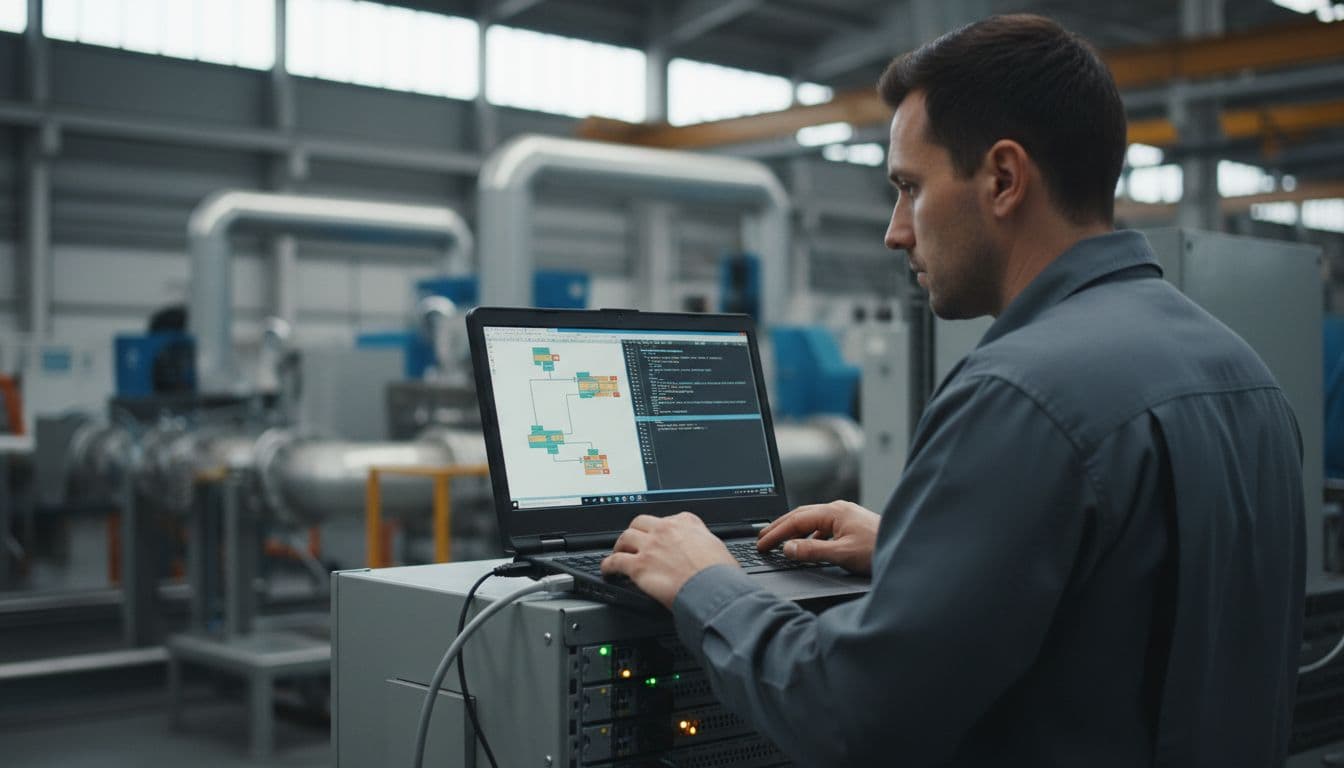
In plain terms, Studio 5000 can feel like a sharp pocketknife. TIA Portal can feel like a tool chest. If you only need the knife, the chest may seem heavy. If the job touches many layers, the chest starts to make sense.
A second outside view on this workflow gap appears in this TIA Portal project comparison with Studio 5000, especially around project handling.
The better daily tool is usually the one that matches the kind of problems your team solves every week.
The biggest technical differences, code reuse, integration, and scalability
This is where the tia portal vs studio 5000 choice starts to affect labor hours, not opinions. Reuse, data structure, and system integration decide how much code you write, how easy it is to standardize, and how painful future expansion becomes.
TIA Portal makes code reuse easier with libraries and shared data structures
TIA Portal leans hard into libraries and reusable engineering objects. Teams can build standard motor modules, valve blocks, faceplates, and device templates, then reuse them across machines. When done well, updates can stay centralized instead of living in ten slightly different projects.
That matters for OEMs and plants with repeat modules. If your line has the same pump skid five times, reuse saves real money. It also cuts the “which version is the right one?” problem that creeps into older systems.
Studio 5000 uses Add-On Instructions well, but reuse can take more manual work
Studio 5000 handles modular logic through Add-On Instructions (AOIs) and user-defined data types. That’s powerful, and many Rockwell programmers build clean, repeatable code this way. AOIs can package behavior neatly and give teams a consistent block style across projects.
Still, the reuse workflow can feel more manual than TIA Portal’s library-driven model. You can absolutely standardize in Studio 5000, but it often takes stricter discipline from the team. In other words, Rockwell gives you good building blocks, while Siemens often gives you more shelves to store and manage them.
Integration is where TIA Portal often pulls ahead on full-system projects
When the project covers PLC, HMI, drives, safety, and networked field hardware, TIA Portal usually has the smoother path. Shared tags, linked engineering, and one project database reduce repeated setup work. That can shorten commissioning and make troubleshooting less scattered.
Rockwell can still build large, capable systems. Plenty of major plants prove that every day. Yet the path often runs through Studio 5000 plus other Rockwell software, so the workflow may add steps.
That difference shows up clearly at the I/O level too. If you’re weighing broader platform fit, this Siemens ET200 vs Allen-Bradley POINT I/O comparison helps show how software and hardware ecosystems often move together.
For a broader programming view, this Siemens vs Allen-Bradley PLC comparison lines up many of the same tradeoffs from the controller side.
Which one is easier to learn, cheaper to own, and better for your plant
People often ask which platform is “better.” That’s like asking whether a pickup is better than a van. Better for what, and for whose driveway?
New users often learn Studio 5000 faster, but TIA Portal can save time later
For PLC-only work, Studio 5000 often feels easier at the start. The structure is flatter, the mental model is clear, and many North American technicians meet Rockwell systems early in their careers.
TIA Portal asks for more up front. However, on larger jobs, it can save time later because more of the system sits in one place. Students and new techs comparing skill paths may also like this guide on becoming a PLC programmer in 2025, since language choice and platform exposure affect the learning curve.
Licensing and total cost depend on how much of the system you need to build
Sticker price rarely tells the whole story. Total cost comes from licenses, add-on tools, training time, engineering effort, and support after startup.
Studio 5000 may mean extra software when the project expands into HMI or wider plant layers. TIA Portal often bundles more engineering functions in one place. Also, current March 2026 data shows Siemens offering subscription and cloud options for TIA Portal, but exact pricing still depends on package and scope. Check current vendor quotes before you budget.
Choose based on installed hardware, support talent, and future expansion
If your plant is already built around ControlLogix or CompactLogix, Studio 5000 is usually the safer fit. The spare parts match, the support talent is easier to find, and the workflow matches the installed base. This ControlLogix 5580 controllers guide is a helpful reference if your Rockwell path centers on higher-end Logix hardware.
If you’re building a Siemens-centered system, or a project where PLC, HMI, drives, and safety all need to act like one family, TIA Portal usually makes more sense.
The software choice is often made before the first line of code, by the PLC rack already sitting in your panel.
Your best choice comes from plant reality, not brochure language. Look at installed hardware, local service options, team skill, and how much growth you expect over the next five years.
Neither side wins every category. TIA Portal usually wins on integrated engineering and system-wide workflow. Studio 5000 often wins when the job lives squarely inside a Rockwell PLC environment.
If you’re still weighing the tia portal vs studio 5000 decision, start with the hardware you own, the people you can hire, and the systems you’ll maintain tomorrow. That’s the comparison that holds up after commissioning.