What is an SPD (Surge Protection Device)?
Before diving deeper into Acti9 SPD, it’s important to understand the concept of SPD.
An SPD (Surge Protection Device) is an electrical safety device that protects electrical equipment from transient overvoltages. These are sudden, short-duration spikes in voltage that can exceed the normal operating range. They typically last only microseconds, but their impact can be devastating.
Common Causes of Power Surges:
- Lightning strikes – Even indirect strikes can send a huge surge through the power lines.
- Switching operations – Sudden switching of motors, transformers, or large electrical loads.
- Grid fluctuations – Instability in utility supply.
- Electrostatic discharge – Especially in sensitive electronic systems.
Why is SPD Important?
Without proper surge protection, sensitive devices such as computers, medical instruments, industrial control systems, and home appliances can suffer irreparable damage. SPDs act like shock absorbers for voltage surges, safely diverting excess energy to the ground and keeping the connected equipment safe.
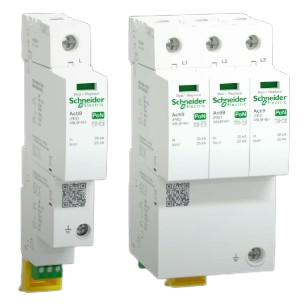
Schneider Electric’s Acti9 SPD Series
Schneider Electric is a global leader in energy management and automation solutions. The Acti9 range is one of its flagship product lines, designed to provide enhanced protection, user safety, and easy integration into modern electrical installations.
The Acti9 SPD series stands out because it is:
- User-friendly – Modular design, easy replacement, and clear indicators.
- Safe – Advanced arc prevention and insulation technology.
- Reliable – Built for long-lasting performance under harsh electrical conditions.
- Compliant – Meets international safety standards (IEC, IS, and UL).
Key Features of Acti9 SPD
The Acti9 SPD has several unique features that make it an industry favorite:
- Modular & Compact Design – Easy to integrate into distribution boards without taking up much space.
- Remote Signaling Option – Provides status information to building management systems.
- Thermal Disconnection Technology – Ensures safety in case of prolonged overvoltage.
- Plug-In Cartridges – Easy replacement of modules without rewiring.
- Clear End-of-Life Indicators – Visual signal when replacement is needed.
- Wide Range of Models – Suitable for residential, commercial, and industrial applications.
- High Discharge Capacity – Can handle large surges from lightning or switching events.
Types of Acti9 SPD
Schneider Electric offers a variety of Acti9 SPD models designed for different applications:
1. Type 1 SPD
- Installed at the service entrance.
- Protects against direct lightning strikes and high-energy surges.
- Ideal for industrial and commercial buildings in lightning-prone areas.
2. Type 2 SPD
- Installed in main distribution boards.
- Protects against residual surges from Type 1 SPDs.
- Commonly used in residential and commercial installations.
3. Type 3 SPD
- Installed close to sensitive equipment (computers, TVs, servers).
- Provides fine protection against low-level surges.
- Used in conjunction with Type 2 devices for layered safety.
4. Combined Type 1+2+3 SPDs
- All-in-one solution for complete protection.
- Saves installation space and simplifies wiring.
- Popular in modern smart homes and data centers.
Benefits of Using Acti9 SPD
Choosing Acti9 SPD offers several advantages over generic surge protection devices:
- Enhanced Equipment Lifespan – Prevents premature failure of electronic devices.
- Improved System Reliability – Reduces downtime in industrial processes.
- Cost Savings – Minimizes repair and replacement costs after surge events.
- Safety First – Prevents fire hazards caused by electrical surges.
- Energy Efficiency – Ensures stable operation of power-sensitive equipment.
- Scalable Protection – Suitable for both small homes and large factories.
Applications of Acti9 SPD
The versatility of Acti9 SPD makes it suitable for a wide range of applications:
- Residential Homes – Protects household appliances, smart devices, and lighting systems.
- Commercial Buildings – Safeguards office equipment, lifts, HVAC, and IT infrastructure.
- Industrial Plants – Ensures continuous operation of machinery and automation systems.
- Data Centers – Prevents downtime of servers and storage systems.
- Healthcare Facilities – Protects sensitive medical equipment.
- Telecommunication Hubs – Keeps communication lines running smoothly.
Installation & Safety Tips for Acti9 SPD
While Acti9 SPD is designed for ease of installation, following best practices ensures maximum safety:
- Choose the right type – Match the SPD type (1, 2, 3) with the installation location.
- Correct positioning – Install SPDs as close as possible to the protected equipment.
- Proper earthing – Ensure a low-resistance earth connection.
- Coordination with circuit breakers – Use appropriate MCBs or fuses for backup protection.
- Regular maintenance – Check indicators and replace cartridges when required.
- Professional installation – Always use a qualified electrician for safe installation.
Acti9 SPD vs Other Brands
While there are several SPD brands available, Schneider Electric’s Acti9 SPD has distinct advantages:
| Feature | Acti9 SPD | Generic SPDs |
|---|---|---|
| Build Quality | Premium, robust | Average |
| Safety Features | Thermal disconnection, arc prevention | Limited |
| Ease of Replacement | Plug-in cartridges | Often requires rewiring |
| Remote Monitoring | Available | Rarely available |
| Compliance | IEC/IS certified | Varies |
This comparison clearly shows why Acti9 SPD is a preferred choice for professionals and homeowners alike.
Buying Guide for Acti9 SPD
When buying Acti9 SPD, consider the following factors:
- Application – Home, office, or industrial use?
- Type of SPD – Choose Type 1, Type 2, or Type 3 as per requirement.
- Nominal Discharge Current (In) – Indicates surge handling capability.
- Maximum Discharge Current (Imax) – The highest surge the SPD can handle.
- Voltage Compatibility – Match with the system voltage (230V/415V).
- Number of Poles – Single-phase or three-phase system.
- Budget & Warranty – Schneider offers durable devices with solid warranties.
💡 Tip: For most homes, a Type 2 Acti9 SPD with proper earthing is sufficient. For industrial setups, a combination of Type 1 + Type 2 is recommended.
Frequently Asked Questions (FAQs) about Acti9 SPD
Q1. What is the lifespan of an Acti9 SPD?
A: Typically 5–10 years, depending on the surge frequency and installation environment.
Q2. How do I know when to replace it?
A: The device has a clear end-of-life indicator that shows when replacement is needed.
Q3. Can Acti9 SPD protect against lightning?
A: Yes, Type 1 SPDs are designed to handle lightning-induced surges.
Q4. Do I need an electrician to install it?
A: Yes, professional installation is recommended for safety and compliance.
Q5. Is Acti9 SPD suitable for solar power systems?
A: Absolutely, Schneider offers SPDs specifically designed for photovoltaic applications.
Why Choose Acti9 SPD?
In today’s world, where both homes and industries depend heavily on electronic systems, surge protection is no longer optional—it’s essential. The Acti9 SPD series by Schneider Electric offers unmatched safety, reliability, and ease of use. Whether you’re protecting your home appliances, office equipment, or industrial machinery, Acti9 SPD provides complete peace of mind.
Investing in a high-quality surge protection device like Acti9 SPD is not just about preventing damage—it’s about ensuring uninterrupted productivity, safety, and long-term cost savings.
If you’re looking for a trusted, globally recognized, and future-ready surge protection solution, then Schneider Electric’s Acti9 SPD is the perfect choice.