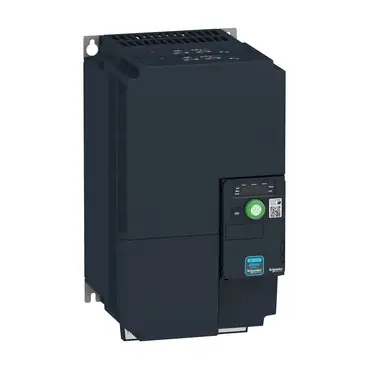
Compact HVAC machines ask a lot from a drive. The unit has to fit inside a tight control panel, manage motor speed with good accuracy, limit wasted energy, and connect cleanly to the rest of the machine. That combination is hard to get right when space, heat, and cost all push in different directions.
Altivar HVAC ATH200 is Schneider Electric’s answer for that use case. The focus is clear: help HVAC machine builders improve panel design, reduce energy waste, simplify automation links, and support long-term reliability.
Why the ATH200 message matters for compact HVAC equipment
In large HVAC systems, the drive is often treated as one more major component in a roomy electrical cabinet. Compact machines work differently. In a small rooftop unit, chiller package, or other space-limited HVAC machine, the drive affects almost every part of the design. It changes how the panel is laid out, how heat moves through the enclosure, and how easy the system is to wire and commission.
That’s why Schneider Electric frames the ATH200 around machine competitiveness, not only around motor control. The point is bigger than speed variation alone. A drive for compact HVAC equipment has to help the OEM build a machine that is easier to package, easier to integrate, and cheaper to operate over time.
The official Altivar HVAC ATH200 product page from Schneider Electric USA places the drive in the company’s HVAC-focused family for compact machines. Industry coverage also describes the launch as part of Schneider Electric’s push toward HVAC energy savings and smarter building equipment, as seen in Facilities Dive’s report on the release.
This summary helps frame the main themes behind ATH200.
| Focus area | What it touches in the machine | Why it matters |
|---|---|---|
| Electrical design | Wiring, protection, panel architecture | Better use of limited cabinet space |
| Mechanical design | Layout, mounting, access | Faster assembly and easier servicing |
| Thermal design | Heat inside the enclosure | Lower cooling burden and longer component life |
| Energy efficiency | Motor speed matched to load | Lower operating cost |
| Automation integration | Control and system communication | Faster startup and cleaner machine design |
| Sustainability | Product life and energy use | Better life-cycle value |
The main takeaway is simple: in compact HVAC machines, the drive sits at the center of both performance and packaging.
How ATH200 supports electrical, mechanical, and thermal design
Schneider Electric highlights optimization of electrical, mechanical, and thermal design as a core ATH200 benefit. That phrase matters because those three areas are tightly linked inside a compact HVAC control panel.
From an electrical view, drive selection affects the whole panel structure. It influences power distribution, protective device choices, cable routing, and the amount of space left for the rest of the machine controls. In a tight enclosure, every terminal and every bend radius matters. A drive built for compact HVAC equipment has to support a layout that is practical for production, not just functional on paper.
Mechanical design is just as important. Panel builders need room for mounting, access during wiring, and service clearance after installation. If the drive makes the panel awkward to assemble or hard to maintain, the problem shows up quickly on the production floor. The result is more build time, more field friction, and less consistency from one machine to the next.
Thermal design is where many compact panels run into trouble. Drives create heat, and that heat has to go somewhere. In a small HVAC machine, excess enclosure heat can force larger cooling provisions, tighter component spacing rules, or lower confidence in long-term reliability. So when Schneider Electric says ATH200 helps optimize thermal design, the real message is that the drive plays a direct role in how manageable panel heat becomes.
For compact HVAC equipment, the drive is not just a motor controller. It is part of the panel layout, airflow plan, and reliability strategy.
That broader system view also explains why HVAC machine builders often look across product families. For wider context on Schneider’s drive range, this overview of Schneider Altivar Series drives for HVAC shows how HVAC-focused motor control fits into the larger Altivar lineup.
Energy efficiency at every level starts with speed control
The phrase “energy efficiency at every level” can sound broad, but in HVAC it has a clear technical meaning. A variable speed drive adjusts motor speed to match actual demand. That matters because HVAC loads often run below peak conditions for long periods. Fans and pumps rarely need full speed all day. When the drive reduces motor speed to fit the real load, the machine avoids a large amount of wasted energy.
That is the first level of efficiency, the motor and the driven load. Instead of forcing a motor to run flat out and then trimming output with dampers, valves, or other mechanical restrictions, the drive controls speed directly. The system uses less power because it is not fighting itself.
The second level is the machine. Better speed control can reduce mechanical stress, soften operating swings, and support steadier process behavior. That can help the full HVAC package run with less strain across its moving parts.
The third level is the panel. If the drive contributes to a better thermal design, the cabinet may need less support from added cooling measures. In a compact machine, that is not a minor detail. Less excess heat inside the enclosure can help both operating efficiency and component life.
Trade coverage of Schneider Electric’s HVAC drive launch, including Drives & Controls reporting on the ATH200 and ATH600 families, ties the product family directly to the search for lower HVAC energy use. Even without focusing on one single percentage, the direction is clear. ATH200 is positioned as a drive that helps efficiency at the motor, machine, and panel levels at the same time.
Simplified automation integration helps machine builders move faster
A compact HVAC machine is more than a motor and a power section. It also has to sit inside a broader automation structure. That includes the local controller, the machine interface, startup settings, fault handling, and often a connection to a building or plant control environment. If drive integration is awkward, the pain shows up in wiring time, software work, and commissioning delays.
That’s why simplified integration is one of the clearest ATH200 themes. In practical terms, it means the drive should fit into the automation system without adding needless complexity. Machine builders want predictable setup, clear control behavior, and a layout that does not force workarounds in the cabinet or in the software.
This is where HVAC-focused drives differ from generic motor control hardware. The needs are more application-driven. The machine builder is not only asking,