Introduction
Explore the Ring Main Unit (RMU) Market, key trends, drivers, and future growth as RMUs shape smart grids, renewables, and modern energy systems.
As the world accelerates toward smarter grids, renewable integration, and decentralized power generation, the importance of reliable and compact electrical distribution solutions has never been greater. Among the technologies making this transformation possible, the Ring Main Unit (RMU) has emerged as a critical enabler of modern power distribution systems. These compact, sealed, and insulated units are designed to ensure continuous power supply, safety, and efficiency in medium-voltage (MV) networks.
In urban areas, where demand for uninterrupted electricity is rising rapidly, and in rural regions, where network resilience and grid modernization are priorities, RMUs are playing a central role. The global RMU market is witnessing exponential growth, driven by urbanization, digitalization, industrialization, renewable energy integration, and government investment in infrastructure.
This article provides an in-depth analysis of the RMU market landscape, covering technological trends, drivers, challenges, opportunities, competitive outlook, and the road ahead.
What is a Ring Main Unit (RMU)?
Discover trends, growth drivers, and future opportunities in the Ring Main Unit (RMU) Market as it powers smart grids, renewables, and urban infrastructure.
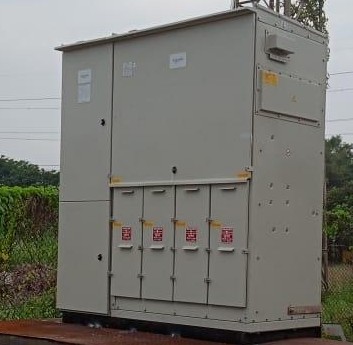
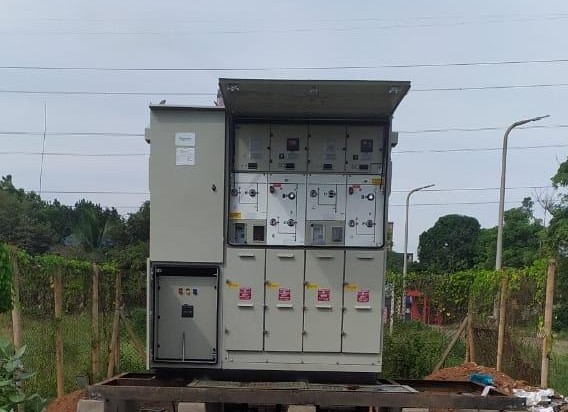
A Ring Main Unit is a type of medium-voltage switchgear used in power distribution networks (11kV to 33kV typically). It connects transformers and load points within a distribution system in a ring configuration, ensuring redundancy—if one path fails, the power automatically flows through the alternate route, minimizing downtime.
Key Characteristics of RMUs:
- Compact and sealed design – ideal for space-constrained urban setups.
- Operational safety – advanced arc-proofing, interlocks, and SF₆ gas or vacuum insulation.
- Flexibility – suitable for underground cable networks, renewable integration, and industrial applications.
- Low maintenance – long lifecycle with minimal operational intervention.
RMUs are extensively deployed in smart grids, renewable power plants, metro cities, data centers, and critical industries due to their ability to enhance system reliability.
Global RMU Market Overview
The global RMU market is valued at several billion USD and is expected to grow at a CAGR of 6–8% over the next decade.
Major Growth Drivers:
- Urbanization and Smart Cities – Increasing electricity demand in high-density cities.
- Renewable Energy Integration – Need for grid reliability with intermittent solar and wind sources.
- Industrial Expansion – Manufacturing, mining, oil & gas, and data centers require continuous power.
- Infrastructure Investments – Governments investing in modern grids, railways, and airports.
- Safety & Reliability Standards – Growing adoption of advanced switchgear for operator safety.
Market Segmentation:
- By Type: Gas Insulated, Air Insulated, Oil Insulated, Solid Dielectric.
- By Voltage Class: Up to 15kV, 16–25kV, 26–33kV.
- By Application: Utilities, Industries, Infrastructure, Renewable Energy.
- By Region: Asia-Pacific, Europe, North America, Middle East & Africa, Latin America.
Regional Analysis
1. Asia-Pacific (APAC) – The Fastest Growing Market
- Rapid urbanization in India, China, and Southeast Asia.
- Strong government push for smart cities and renewable integration.
- Expansion of metro rail networks, airports, and industrial parks.
- APAC holds the largest share of the global RMU market and continues to dominate.
2. Europe – A Mature but Evolving Market
- Focus on decarbonization and green energy.
- High adoption of SF₆-free and eco-friendly RMUs.
- Leading RMU manufacturers are headquartered in Europe, including Siemens, ABB, and Schneider Electric.
- Replacement demand for aging grid infrastructure sustains growth.
3. North America – Modernization and Digital Grids
- Significant investments in grid modernization.
- Expansion of EV charging infrastructure and renewables.
- Strong demand from utilities and data centers.
- Regulatory support for sustainable switchgear technologies.
4. Middle East & Africa – Emerging Opportunities
- Heavy investment in oil & gas, utilities, and mega infrastructure projects.
- Rising electricity demand due to urbanization and industrialization.
- Strong growth potential, particularly in GCC countries and African economies.
5. Latin America – Gradual Growth
- Growing renewable energy projects in Brazil, Chile, and Mexico.
- Increasing electricity consumption and government-led grid modernization programs.
Technological Trends in RMUs
The RMU market is being reshaped by technological innovation and sustainability initiatives.
- SF₆-Free RMUs
- SF₆ gas, traditionally used for insulation, is a potent greenhouse gas.
- Manufacturers are shifting to vacuum and solid dielectric insulation for eco-friendly RMUs.
- Digital RMUs
- Integration of IoT, sensors, and automation.
- Real-time monitoring, predictive maintenance, and fault detection.
- Essential for smart grid applications.
- Compact & Modular Designs
- Smaller footprint for urban environments.
- Modular RMUs allow scalability and easy expansion.
- Hybrid RMUs
- Combine multiple insulation technologies for optimized performance.
- Enhance flexibility for complex applications.
- Integration with Renewable Energy
- RMUs designed for solar, wind, and hybrid renewable plants.
- Facilitates grid balancing and reliability.
Key Market Drivers
1. Rising Electricity Demand
With global electricity consumption rising steadily, especially in emerging economies, RMUs are vital for uninterrupted and safe power delivery.
2. Government Investments
- India: $100+ billion planned for transmission & distribution upgrades.
- China: Smart grid investments exceeding billions annually.
- Europe: Strong policies for green switchgear adoption.
3. Industrialization & Urbanization
Industries and urban hubs require compact, reliable, and safe power distribution solutions—conditions where RMUs excel.
4. Renewable Energy Growth
As solar and wind projects expand, RMUs ensure grid stability and support distributed generation.
5. Safety & Reliability Standards
Stringent international standards (IEC, IEEE) push adoption of advanced insulated RMUs over conventional switchgear.
Market Challenges
Despite strong growth, the RMU market faces challenges:
- High Initial Costs – RMUs are costlier than traditional switchgear.
- SF₆ Gas Concerns – Environmental regulations push for alternatives.
- Technical Skill Gaps – Installation and maintenance require specialized expertise.
- Supply Chain Issues – Geopolitical tensions and raw material shortages affect availability.
- Competition from Alternative Technologies – Some regions still rely on conventional switchgear due to cost sensitivity.
Opportunities Ahead
The RMU market holds significant opportunities:
- Eco-Friendly RMUs – Development of SF₆-free solutions.
- Digital Smart Grids – RMUs integrated with AI & IoT.
- Rural Electrification – Especially in Africa and Asia.
- Data Centers & EV Infrastructure – Rapidly growing demand.
- Public-Private Partnerships – Infrastructure development worldwide.
Competitive Landscape
The RMU market is highly competitive with several global players and regional manufacturers.
Leading Companies:
- Siemens Energy – Advanced eco-friendly switchgear solutions.
- ABB Ltd. – Smart digital RMUs for global markets.
- Schneider Electric – EcoStruxure-enabled smart RMUs.
- Eaton Corporation – Emphasis on compact and modular RMUs.
- Lucy Electric – Strong presence in the UK and Middle East.
- Crompton Greaves (CG Power) – Key player in India.
- Hyundai Electric & Energy Systems – Strong in Asian markets.
These companies compete on technology, sustainability, price, and regional penetration.
Case Studies & Applications
1. Smart Cities in India
RMUs are deployed in metro rail, IT parks, and smart grids to ensure zero downtime electricity.
2. Renewable Plants in Europe
SF₆-free RMUs used in wind and solar projects to support green energy goals.
3. Middle East Oil & Gas Industry
Compact RMUs ensure safe and reliable power supply in hazardous environments.
4. African Electrification Projects
RMUs support rural electrification and microgrids, improving access to electricity.
Future Outlook of RMU Market
Looking ahead, RMUs will be at the center of the global energy transition.
- Green RMUs will replace SF₆-based designs.
- Digitalization will enable predictive maintenance and AI-powered grids.
- Integration with EV charging and renewable systems will drive exponential demand.
- Asia-Pacific and Africa will remain the fastest-growing markets.
- Public and private investments will accelerate adoption.
The RMU market of the future will not just be about reliability—it will be about sustainability, intelligence, and resilience.
The Ring Main Unit (RMU) market is evolving rapidly, driven by the urgent need for safe, reliable, and eco-friendly power distribution. With governments, industries, and utilities investing heavily in smart grids, renewable energy, and infrastructure, RMUs are set to become a backbone of modern energy systems.
From urban smart cities to rural electrification, from oil & gas to renewables, and from data centers to EV infrastructure, RMUs will continue to power the world’s growth story.
As the world moves toward net-zero emissions and sustainable energy, RMUs will not only enable uninterrupted electricity but also serve as a bridge to a smarter, greener, and more resilient future.