Outdated circuit breaker management can feel like maintaining a critical machine with the cover welded shut. You still have to keep the power on, but you also need confidence that protection will operate when it matters most. The usual answer has been scheduled maintenance, which often means shutdowns and a higher chance of downtime if wear shows up between service windows.
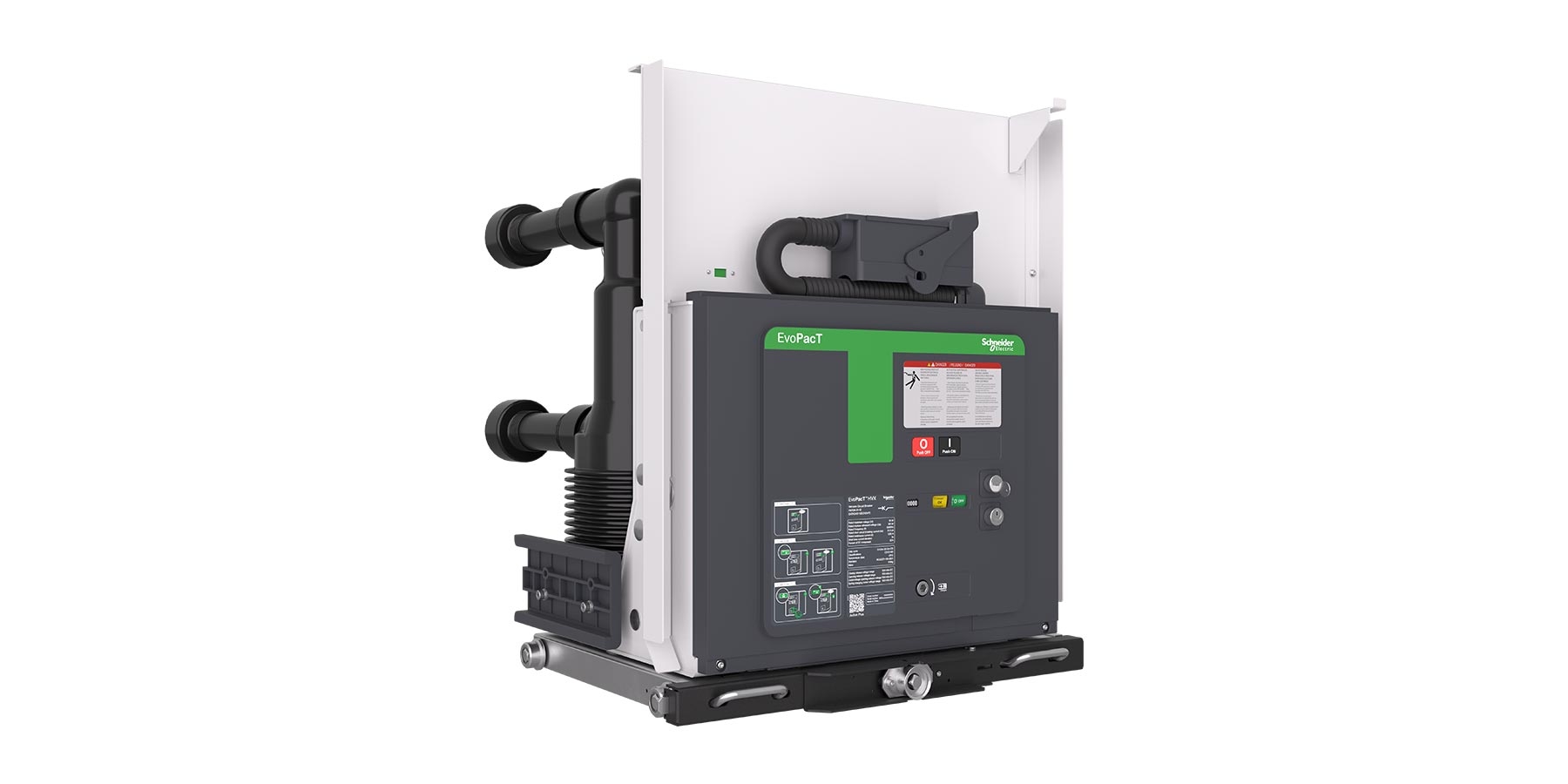
Schneider Electric’s EvoPacT HVX medium voltage (MV) vacuum circuit breakers take a different approach. They’re designed with embedded condition monitoring sensors that track how each breaker is aging in real operating conditions. The goal is simple: service the breaker based on its actual condition, not just the calendar.
Why outdated circuit breaker management increases downtime risk
Traditional breaker maintenance programs often trade visibility for routine. Crews perform inspections during planned outages, then put equipment back into service and hope the next interval is short enough. That works until it doesn’t, especially when a breaker operates more frequently than expected or sees harsh duty during a fault.
A few failure patterns show up again and again:
- Maintenance requires disruption: inspections, tests, or part replacements can require switching operations or full shutdowns.
- Condition is inferred, not measured: without embedded sensing, teams estimate wear based on operation counts, time-in-service, or generic duty assumptions.
- Service timing becomes guesswork: too early wastes labor and parts, too late raises risk and can shorten equipment life.
The biggest problem is that MV circuit breakers are mechanical and electrical systems at the same time. Contacts erode, springs fatigue, coils age, and alignment can drift after repeated racking operations. If you can’t see those changes while the breaker is in service, you’re reacting after the fact.
EvoPacT HVX is positioned around a clear maintenance idea: never too early, never too late. Instead of relying only on periodic checks, the breaker tracks key health indicators continuously, so maintenance can match the breaker’s real duty and wear.
EvoPacT HVX breakers are digital by design for condition-based service
EvoPacT HVX is a medium voltage vacuum circuit breaker platform built to support condition-based maintenance. The key design choice is that condition monitoring sensors are embedded in every breaker, rather than added later as external accessories. That matters because the most useful measurements often need stable placement, consistent calibration, and reliable data capture across the life of the breaker.
In practical terms, embedded sensing supports a different workflow:
- The breaker measures its own condition during normal service.
- The breaker stores those measurements as a continuous history.
- Maintenance teams act when indicators show a real need, not because a date arrived.
This approach is aimed at two outcomes that often conflict in older programs: reducing unplanned outages while also avoiding unnecessary service actions.
For readers who want broader circuit breaker fundamentals, it can help to compare MV breaker health concepts with low-voltage protection topics like breaker trip curves. Even though the hardware and standards differ, the core idea is the same: protection devices have measurable performance characteristics, and good decisions depend on understanding how they change over time.
Cloud analytics turns sensor signals into Health and Maintenance Index scores
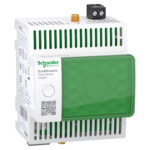
EvoPacT HVX monitoring is not just about collecting raw sensor readings. The system connects breaker data (via a gateway) to a cloud platform, where analytics models convert measurements into usable maintenance signals.
Schneider Electric describes these analytics as being powered by AI and data models trained using a very large electrical asset database hosted in the cloud. The practical benefit is consistency: instead of each site inventing its own thresholds and rules, the system can apply proven models to produce maintenance guidance that aligns with real asset behavior.
Two scores organize the output:
| Index | What it’s for | What it helps you do |
|---|---|---|
| Health Index | Tracks risk and condition | Reduce downtime and operational risk |
| Maintenance Index | Tracks service need and wear | Optimize maintenance timing and breaker life |
A useful way to think about the two-index setup is separation of concerns. Health Index is about whether you can trust the breaker to perform safely and reliably. Maintenance Index is about when service creates the most value, without wasting effort.
When a breaker can measure wear and performance during real duty, maintenance stops being a calendar event and becomes a condition decision.
For product documentation, Schneider Electric provides catalogs such as the EvoPacT MV distribution catalog and an EvoPacT HVX digital MV circuit breaker catalog document. For a high-level product entry point referenced with the video, use the EvoPacT HVX overview link from Schneider Electric.
The five embedded sensor types in EvoPacT HVX (and what each one catches)
EvoPacT HVX uses five types of embedded condition monitoring sensors. Each sensor type targets a physical mechanism that affects safety, performance, or maintenance timing. Together, they cover both electrical wear (what happens at the contacts and power joints) and mechanical performance (what happens in the operating mechanism and actuation parts).
Sensor type 1: Contact erosion monitoring (a primary health indicator)
Every time a breaker opens under load, it interrupts current and manages arc energy. Even with vacuum interruption, electrical contacts wear. Under high load or fault conditions, the stress increases, and erosion becomes a leading indicator of aging.
EvoPacT HVX includes a dedicated sensor that measures contact erosion starting from day one. That matters because you don’t need to infer wear from counts alone. Instead, you track what the breaker actually experienced.
A simple signal flow looks like this:
- Operate
- Measure erosion
- Store and trend the value
- Alert when erosion becomes excessive
Those measurements feed an aging model, and the results can be viewed in a mobile app. Over time, the erosion trend becomes a practical planning tool. If the slope increases after a set of heavy events, the maintenance plan can adapt quickly instead of waiting for the next outage window.
Sensor type 2: Operating speed tracking to control arc energy
A breaker doesn’t just need to open, it needs to open at the right speed. Opening requires rapid energy deployment from a charged spring, and the mechanism has to perform precisely to minimize arc energy during interruption.
EvoPacT HVX uses a dedicated sensor to track operating speed. A reduction in speed is a warning sign because it can affect interruption performance and overall reliability. If a mechanism begins to slow, the risk is not theoretical. Timing and speed are part of how the breaker achieves safe separation of contacts and proper interruption behavior.
Speed trending also supports maintenance optimization. Instead of replacing parts on a fixed schedule, the system highlights performance degradation early enough to plan service before the breaker enters a higher-risk state.
Sensor type 3: Alignment sensing to reduce racking-related hazards
Medium voltage breakers are often racked into a compartment. That insertion process has real risk. Misalignment can increase arc flash or fire risk because it can compromise how primary contacts engage or how the breaker sits in the cell.
EvoPacT HVX includes an alignment sensor that measures the breaker’s position within the compartment. The purpose is straightforward: ensure MV contacts insert correctly.
Even without changing operating procedures, position feedback can catch issues that are easy to miss during a busy shutdown. If alignment drifts, teams can correct it before the next operation turns a mechanical mismatch into an electrical hazard.
Sensor type 4: Thermal monitoring at major power connections
Heat is one of the clearest early signs of connection problems. Elevated temperature at major power connections can indicate high resistance, abnormal loading, or installation issues. The challenge is that many thermal problems develop quietly, then show up as damage when the equipment is already stressed.
EvoPacT HVX thermal sensors watch for heat buildup at key connections so abnormal conditions are easily detected before risks occur.
A few common causes of elevated thermal conditions include loose or degraded connections and sustained high current. The value of embedded thermal sensing is timing. You catch temperature rise early, while the fix is still controlled and planned, rather than after a trip, smoke event, or insulation damage.
Sensor type 5: Coil and motor health monitoring for reliable actuation
Breakers depend on coils and motors to deploy energy precisely for operation. If those parts degrade, a breaker can fail to operate as intended even if the main power circuit looks fine.
EvoPacT HVX monitors the health of coils and motors and flags when replacement is needed. This is a practical maintenance win because actuation failures are high-impact events. They can stop switching operations, complicate restoration, and raise safety risk during abnormal system conditions.
Pulling these five sensor types together creates a set of checks that map to real MV breaker failure modes: contact wear, mechanism performance, insertion alignment, connection heating, and actuation component health.
The monitoring module builds a unique health profile for each breaker
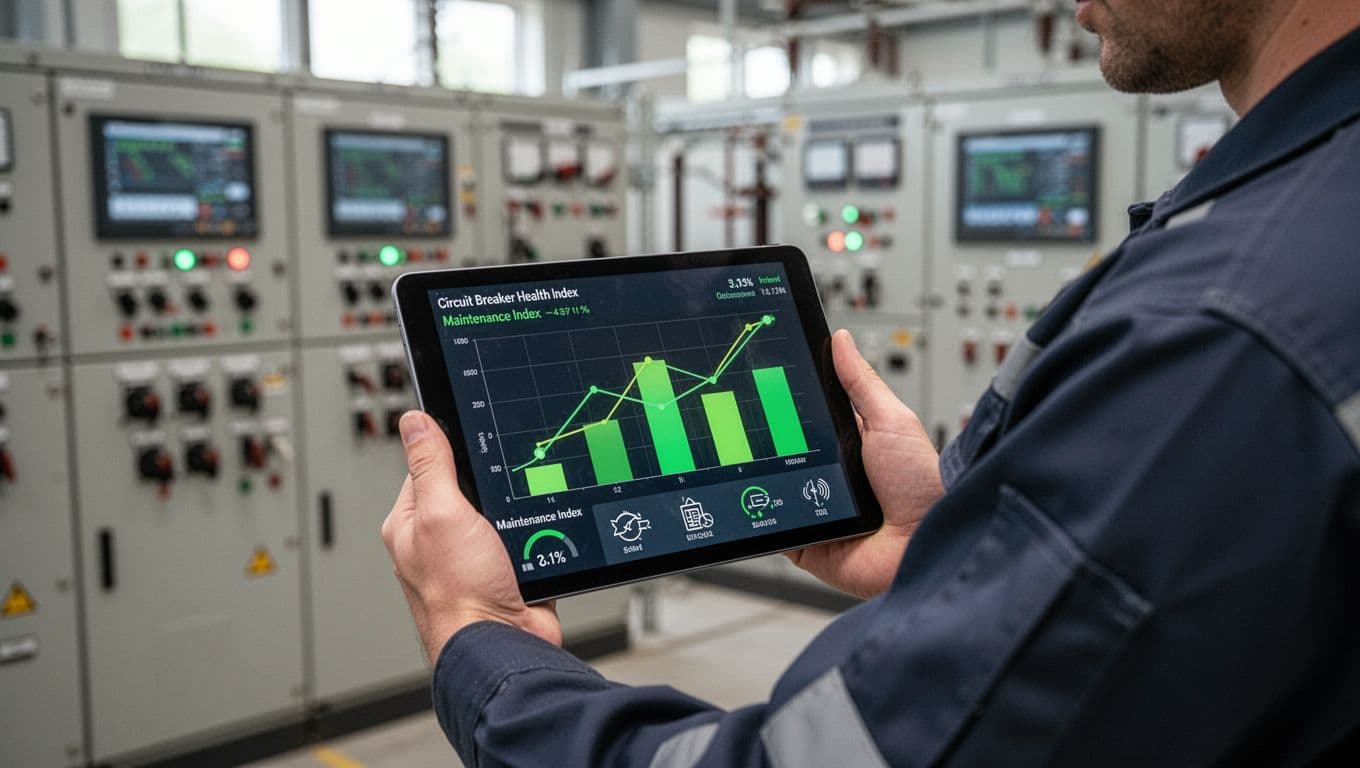 Turning breaker sensor histories into a clear maintenance view on a tablet in an industrial setting.
Sensors only help if the system records and organizes what they see. EvoPacT HVX uses a breaker monitoring module that continuously stores the health status from all sensors. That record is important because it creates a unique health profile for each individual breaker.
Two identical breakers in the same lineup can age differently. One might see more switching operations, higher load duty, or more fault interruptions. A per-breaker profile captures that reality, so maintenance planning stays tied to actual service conditions.
From there, a gateway connects the breaker data to cloud analytics. AI models then convert sensor histories into actionable insights that support three practical outcomes:
- Prevent unplanned downtime
- Minimize operational risk
- Optimize operations and maintenance planning
This is also where condition-based maintenance becomes easier to defend internally. When a maintenance recommendation is linked to measured erosion, speed change, or abnormal temperature, it becomes a technical decision with evidence, not a preference.
For additional background on breaker construction and safety concepts, it can also help to review air circuit breaker essentials. Air breakers and MV vacuum breakers differ in design and application, but both show how arc control, contact behavior, and mechanical operation tie directly to protection performance.
The most useful breaker data is data you can trend, compare, and tie to a clear risk or service action.
What “most intelligent MV breaker” means in day-to-day operations
“Intelligent” can be an empty word unless it changes real work. In the EvoPacT HVX context, intelligence means the breaker can report on the conditions that drive failure and maintenance cost, without waiting for a shutdown inspection.
Day to day, that can translate into:
- Fewer interruptions for routine checks, because condition signals tell you when attention is needed.
- Earlier warning on high-impact problems, like rising connection temperature or slowing mechanism speed.
- Better outage planning, because wear indicators (like erosion) show whether service can wait or needs action soon.
It also supports clearer communication across roles. Operators can see status, maintenance can see trends, and engineering can tie condition signals back to breaker duty. That shared picture matters in MV systems because the cost of being wrong can be high: lost production, damaged switchgear, or personnel exposure during abnormal events.
If you want to follow Schneider Electric’s updates and related content sources mentioned with the video, these official links provide the same entry points: the Schneider Electric global website and the Schneider Electric blog.
Conclusion: sensor-based MV breaker maintenance is about timing and proof
EvoPacT HVX frames MV breaker maintenance around measured conditions: contact erosion, operating speed, racking alignment, thermal rise, and coil or motor health. Those five sensor types feed a monitoring module, then cloud analytics, which supports Health Index and Maintenance Index scoring tied to real duty. The result is fewer disruptive shutdowns and better control of risk because service work aligns with evidence. If the goal is higher uptime with clearer maintenance decisions, condition monitoring is the practical foundation.