Briefly explain Easergy T300 – a smart and innovative solution from Schneider Electric designed for modern power distribution networks. In today’s world, where smart grids and reliable electricity are more important than ever, Easergy T300 stands out as a complete automation and monitoring system for medium-voltage distribution.
This device combines the roles of Remote Terminal Unit (RTU), Feeder RTU, and Fault Passage Indicator management into one compact unit. By doing so, it helps utilities, industries, and renewable energy networks achieve higher efficiency, reduced downtime, and improved sustainability.
In this detailed guide, we will briefly explain Easergy T300, covering its key features, architecture, applications, benefits, and importance in building smarter energy systems. Whether you are a utility professional, an industrial engineer, or someone interested in the future of digital grids, this article will give you a clear understanding of why Easergy T300 is transforming power distribution worldwide.
What is Easergy T300?
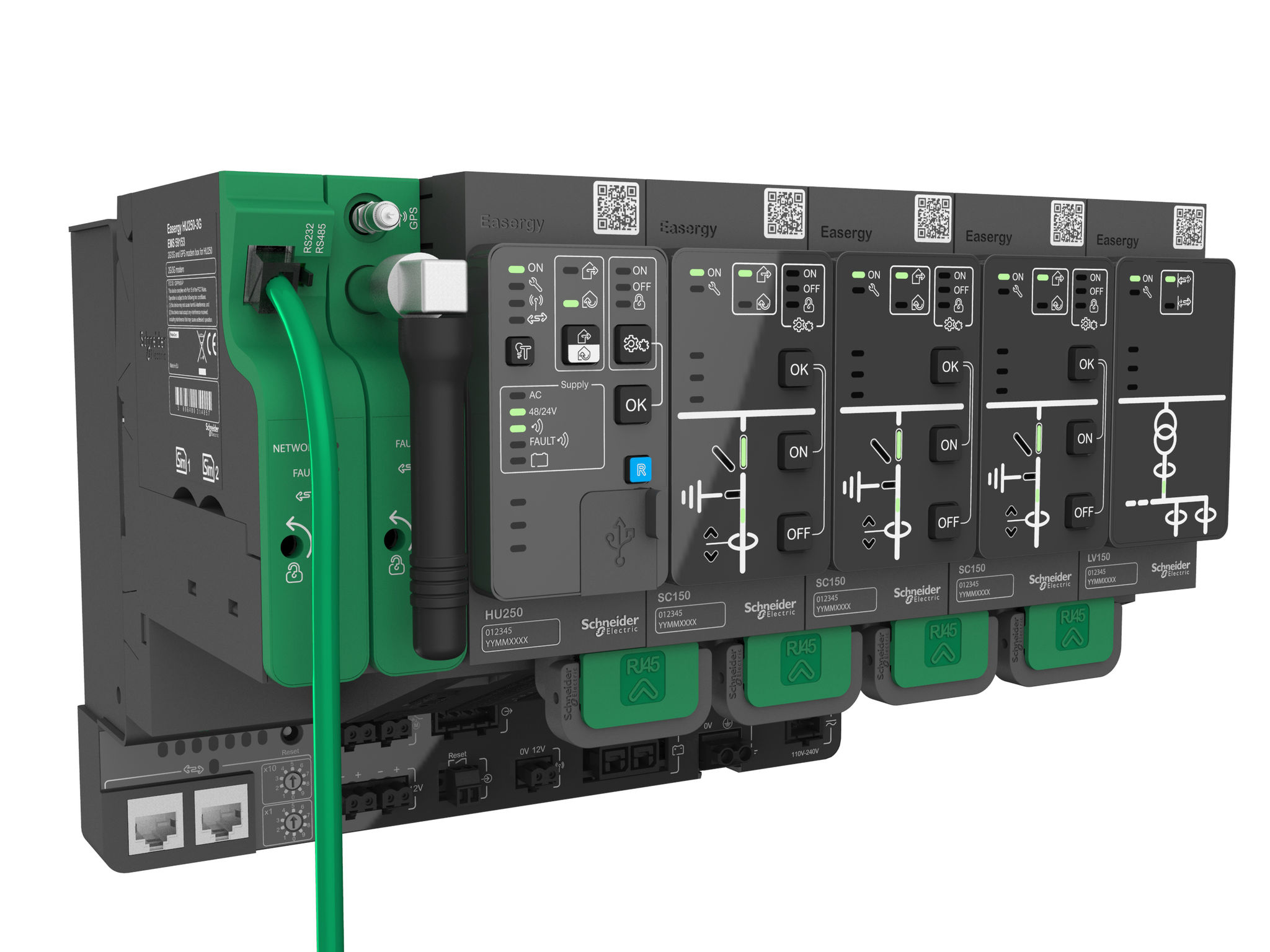
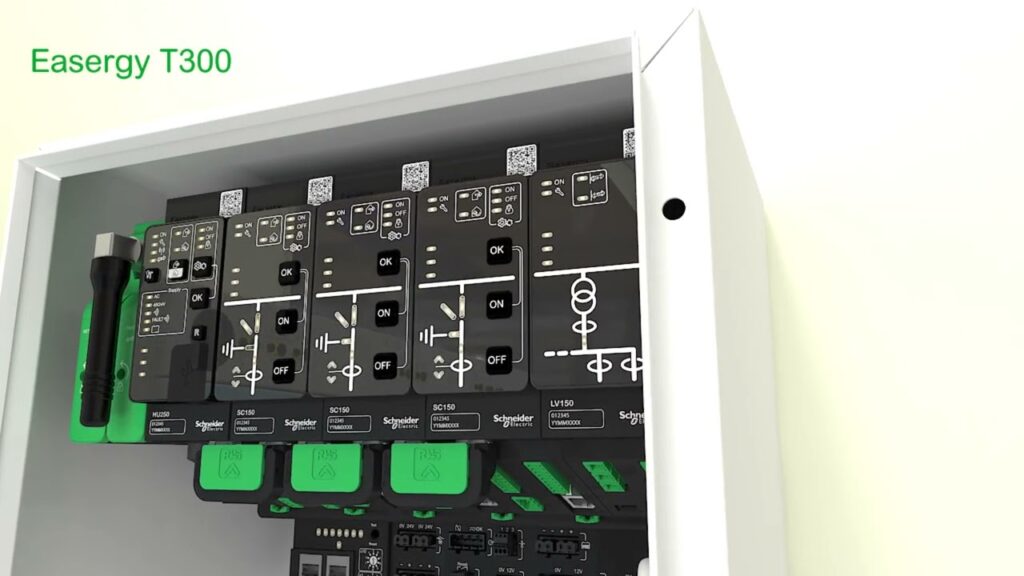
The Easergy T300 is a next-generation remote terminal unit (RTU) from Schneider Electric, specially built to enhance the automation of medium-voltage distribution networks.
It combines several functions in one device:
- Feeder RTU (for monitoring and control of distribution feeders)
- Fault Passage Indicators (FPI) management
- Voltage and current measurement
- Grid monitoring and data collection
- Remote communication with SCADA systems
- Smart grid functions such as self-healing, renewable energy integration, and demand response
In simple terms, Easergy T300 acts as the brain of the distribution grid, ensuring that electricity distribution is efficient, reliable, and ready for future digital challenges.
Key Features of Easergy T300
When we briefly explain Easergy T300, it is important to focus on its features that make it stand out in grid automation.
1. Integrated RTU and FPI Functions
Unlike traditional devices that need separate systems, Easergy T300 combines RTU and Fault Passage Indicators. This reduces equipment costs, installation time, and maintenance complexity.
2. Modular and Scalable Design
- Built with a modular approach
- Easy to expand with new features or communication protocols
- Adaptable to small substations or large utility networks
3. Advanced Measurement and Monitoring
- Real-time monitoring of voltage, current, and power quality
- Detects faults and disturbances quickly
- Provides accurate load data for optimization
4. Communication Flexibility
- Supports multiple communication protocols: IEC 60870-5-104, DNP3, IEC 61850, and more
- Compatible with wired and wireless communication networks
- Secure cybersecurity protection for data integrity
5. Remote Control and Automation
- Can open/close switches remotely
- Automates fault isolation and service restoration
- Reduces downtime and improves service reliability
6. Cybersecurity and Safety
- Built with robust cybersecurity standards
- Protection from unauthorized access
- Ensures safe and secure grid operation
7. Designed for Harsh Environments
- Compact and robust design
- Can operate in outdoor cabinets or substations
- Resistant to high temperature, humidity, and electrical disturbances
Easergy T300 Architecture – How It Works
The architecture of Easergy T300 is designed for flexibility and high performance.
It consists of:
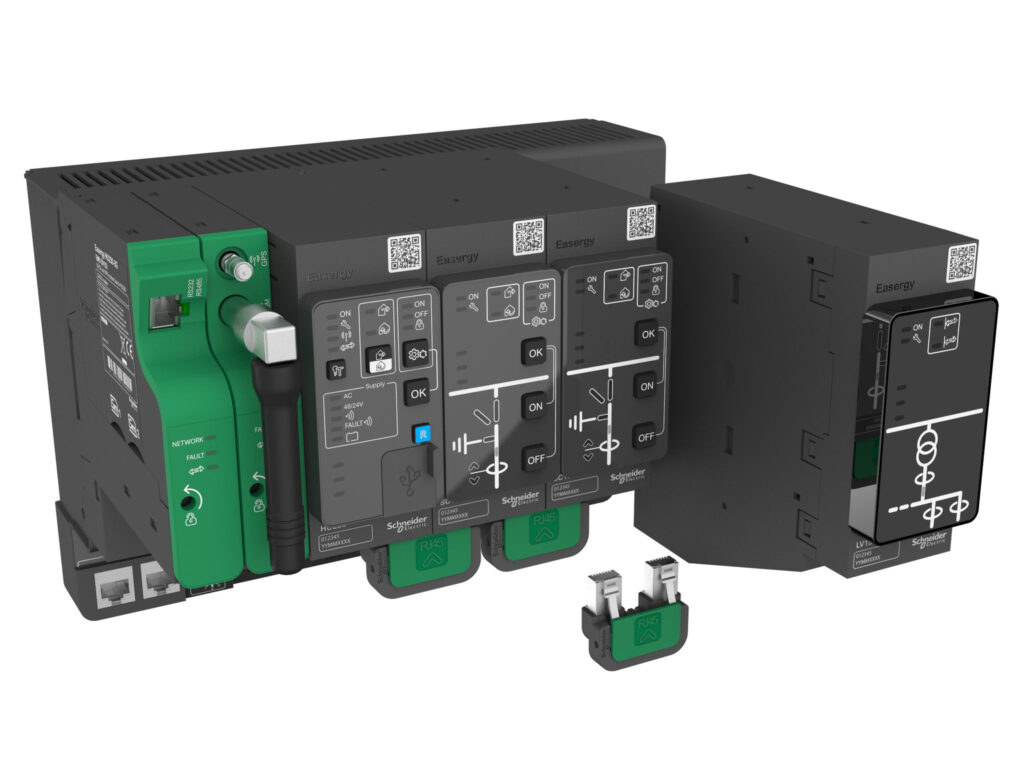
- Main Controller Unit (MCU) – The brain of the system. It manages data, communication, and logic execution.
- Acquisition Modules – Collect field measurements such as voltage, current, temperature, and alarms.
- Control Modules – Allow opening/closing of switches and breakers.
- Communication Interfaces – Connect with SCADA, cloud systems, and local operator panels.
- Local HMI (Human Machine Interface) – Provides on-site access for technicians.
This modular architecture makes it easy to tailor the Easergy T300 to different grid automation projects.
Applications of Easergy T300
The Easergy T300 is widely used across multiple sectors:
1. Utility Distribution Networks
- Fault detection, isolation, and service restoration (FISR)
- Load management
- Voltage and current monitoring
- Remote operation of feeders
2. Smart Grids
- Integration with renewable energy sources (solar, wind, etc.)
- Demand response and load balancing
- Real-time grid monitoring
3. Industrial Networks
- Ensures an uninterrupted power supply
- Monitors energy usage for optimization
- Supports automation of industrial substations
4. Renewable Energy Integration
- Connects distributed energy resources (DERs)
- Manages grid stability with renewable fluctuations
- Improves the efficiency of green power distribution
5. Rural Electrification
- Provides automation for remote and rural networks
- Reduces outages in areas with limited maintenance resources
Benefits of Easergy T300
When we briefly explain Easergy T300, highlighting its advantages is key:
- Improved Reliability – Faster fault detection and isolation.
- Reduced Downtime – Automatic service restoration minimizes outages.
- Cost Savings – One device replaces multiple components.
- Future-Ready – Supports the integration of smart grid and renewable energy.
- Scalability – Can grow with network expansion.
- Cybersecurity – Ensures data integrity and safe operation.
- Environmental Benefits – Supports energy efficiency and the adoption of renewable energy.
Easergy T300 vs Traditional RTUs
| Feature | Traditional RTU | Easergy T300 |
|---|---|---|
| Functions | Limited, needs add-ons | Integrated RTU + FPI + control |
| Scalability | Complex | Modular and scalable |
| Communication | Often single protocol | Multi-protocol support |
| Reliability | Slower fault detection | Fast, automated restoration |
| Cybersecurity | Basic | Advanced protection |
| Maintenance | Higher cost | Reduced cost |
Clearly, the Easergy T300 is more advanced and cost-effective compared to conventional RTUs.
Easergy T300 in Smart Grid Development
The move towards digital and sustainable energy systems makes Easergy T300 highly relevant. It helps in:
- Building resilient smart grids
- Integrating distributed energy resources (DERs)
- Supporting grid decarbonization
- Improving customer satisfaction with a reliable power supply
Why Utilities Prefer Easergy T300
Utilities choose Easergy T300 because:
- It reduces the SAIDI and SAIFI indexes (power outage duration and frequency).
- Offers remote operations, reducing field visits.
- Provides real-time data for decision-making.
- Future-proof design ensures long-term ROI.
Easergy T300 – Technical Specifications (Overview)
- Operating Voltage: Suitable for MV distribution networks
- Communication: IEC 60870-5-104, DNP3, IEC 61850, Modbus, etc.
- Environment: Harsh outdoor/indoor
- Cybersecurity: Inbuilt protection
- Modularity: Expandable with modules
(Exact specs vary by model; always check the official Schneider Electric datasheet for precise values.)
How Easergy T300 Improves Power Quality
Power quality issues like voltage sags, harmonics, and outages affect industries and consumers. Easergy T300 helps by:
- Monitoring power quality parameters
- Providing early fault alerts
- Enabling load balancing
- Reducing downtime with self-healing grid automation
Installation and Maintenance of Easergy T300
- Installation is straightforward due to the modular design.
- Commissioning tools make setup easier.
- Maintenance is minimal since it integrates multiple functions in one.
- Remote firmware updates reduce site visits.
Real-World Use Cases of Easergy T300
Case 1: Utility in Europe
A utility integrated Easergy T300 across its MV substations. Result:
- Outage time reduced by 40%
- Improved renewable energy integration
Case 2: Industrial Plant in Asia
An industrial facility used Easergy T300 for substation automation. Result:
- Reduced downtime
- Energy efficiency improved by 15%
Case 3: Rural Electrification in Africa
Easergy T300 supported rural networks with limited resources. Result:
- Reliable electricity supply
- Reduced maintenance costs
Easergy T300 and Sustainability
By supporting renewable integration and reducing outages, Easergy T300 directly contributes to sustainability goals. It helps utilities achieve:
- Reduced carbon footprint
- Efficient energy usage
- Sustainable development of power networks
Future of Easergy T300 in Digital Grids
With increasing demand for clean and reliable energy, Easergy T300 will play a vital role in:
- Smart city energy infrastructure
- IoT-based energy management
- Artificial Intelligence (AI) integration for predictive maintenance
- Cloud-connected grid automation
To briefly explain Easergy T300, it is a powerful, future-ready smart RTU designed by Schneider Electric for medium-voltage distribution automation. With its integrated functions, modularity, communication flexibility, and cybersecurity, it is an ideal choice for utilities, industries, and renewable networks.
By adopting Easergy T300, companies and utilities can reduce downtime, improve power quality, support renewable energy, and achieve sustainability goals.
In short, the Easergy T300 is not just a device, but a complete digital solution for the evolving energy grid.