A box of mac and cheese shouldn’t become a puzzle because the label can’t be read. For Rick Blair, AI turns moments like that into something simpler: usable information.
On Schneider Electric’s AI at Scale podcast, Blair explains how AI is already helping people with disabilities move through daily life with more freedom. His message is clear: accessibility starts with awareness, and AI works best when it grows from that awareness.
Why accessibility starts with awareness
This episode carried extra weight because it aired on Global Accessibility Awareness Day on May 21, 2026. That annual event asks a basic but powerful question: do the people building digital products understand how other people use them?
Rick Blair brings that question into sharp focus. He has spent decades in industrial automation and engineering, working on system architecture, product architecture, processes, and machines. After gradually losing his eyesight beginning in the late 1990s, he kept working in technical leadership roles while paying closer attention to the gaps that many teams miss. Today, as Senior Principal, Digital Accessibility Program Manager at Schneider Electric, he speaks from lived experience as well as technical depth.
“Accessibility starts with awareness. When we design with accessibility in mind, everyone benefits.”
That idea sounds simple, yet it cuts straight to the biggest barrier Blair describes. Too many people still build digital tools without knowing how disabled people consume digital content. A blind user may rely on a screen reader. Someone with limited mobility may use only a keyboard or eye-gaze software. A deaf or hard-of-hearing user may need captions because a video’s audio track carries the whole message.
The page may be the same, but the path through it is not.
Blair also points out that the disabled community is one of the largest minorities in the world, and it has real spending power. That makes accessibility more than a compliance item or a side note in design review. It is part of how people shop, work, learn, and take part in daily life. The wider GAAD 2026 program reflected that reality, with sessions that looked at AI, speech tools, and digital access in practical terms.
When teams lack awareness, barriers appear early. They show up in missing alt text, video without captions, forms that won’t work from a keyboard, and interfaces that assume every user sees, hears, and clicks in the same way. Blair’s point is not abstract. It is about how a person gets through the day.
How AI helps Rick Blair in everyday life
Smart glasses make the physical world easier to read
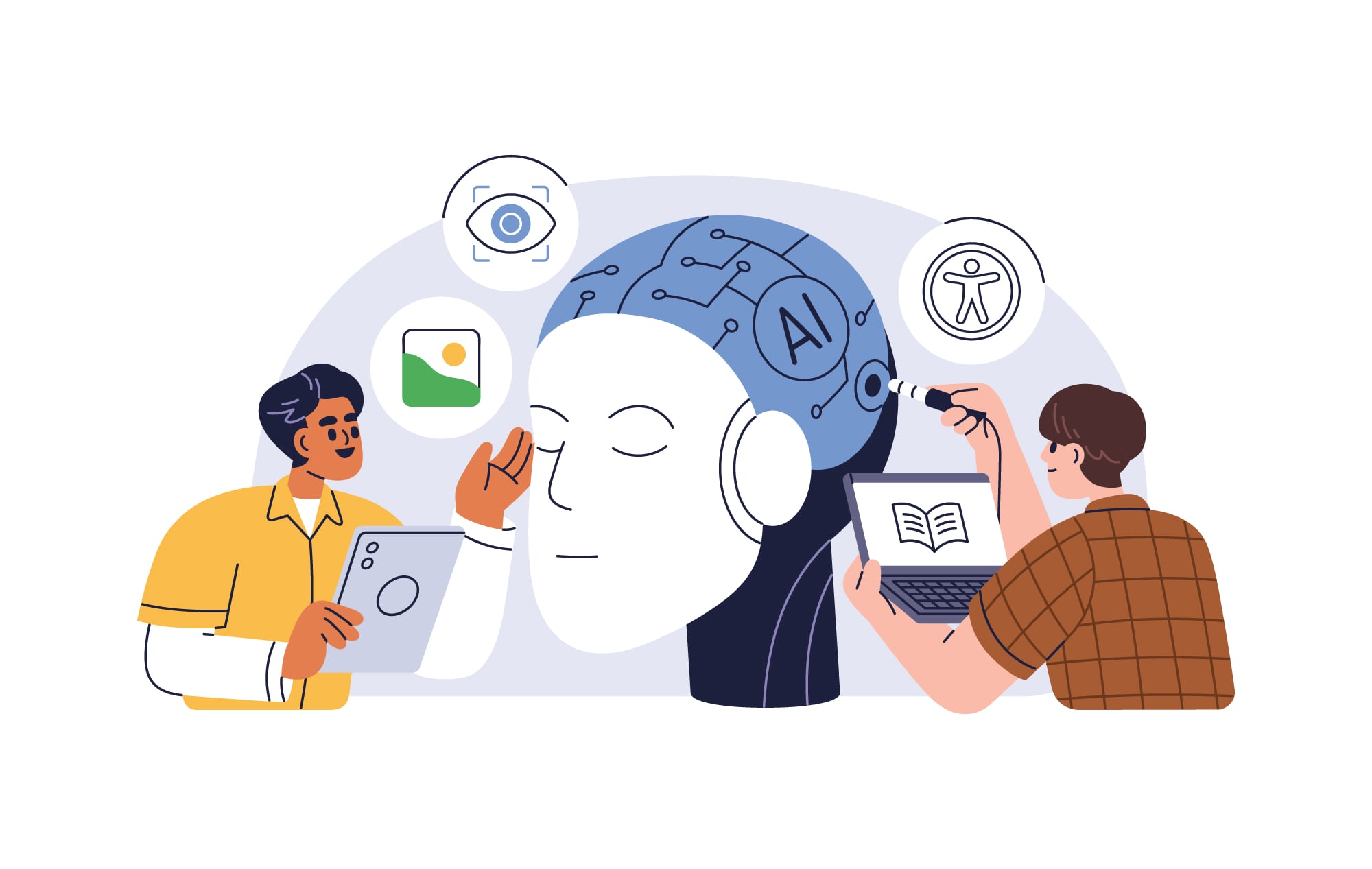
One of the strongest examples Blair shares is also one of the most ordinary. He describes using smart glasses that can take a picture and tell him what is in front of him. That matters because older tools often forced blind or low-vision users to rely on optical character recognition alone, and OCR can fail when product packaging uses decorative fonts or poor contrast.
So instead of trying to fight with stylized text on a food package, Blair can hold up the box and ask for a description. The glasses can tell him he is holding a frozen box of mac and cheese. Then he can turn the package over and ask the tool to read the cooking instructions. If he needs nutrition details, including calorie information, it can read that too.

The same pattern shows up outside the kitchen. Blair gives the example of using GPS to get near a coffee shop in a strip mall. GPS can get him to the area, but not always to the right door. With the smart glasses, he can ask for a scene description and hear that there is a barber shop on the left, a coffee shop in the middle, and a comic book store on the right. That turns a rough location into a usable one.
In industrial work, the same push toward in-context, hands-free information is showing up in other forms too. A related example is this EcoStruxure XR Operator Advisor overview, which looks at how digital information can sit closer to the physical task. It is not an accessibility product, but it reflects the same shift toward tools that reduce friction in the moment.
Still, Blair is careful about the limits. AI image descriptions are not always right. He recalls holding up a can of sparkling water and being told it was a Dr Pepper. That kind of mistake matters because trust matters. A tool that helps nine times out of ten still leaves room for doubt on the tenth try.
Yet the gain is hard to miss. Even with errors, AI image recognition gives people more independence in situations that once depended on another person’s eyes.
AI can help with writing, but it shouldn’t replace the writer
Blair also uses AI in a very different way at work. He says it helps him shape the tone of his email messages. By his own description, he tends to write in a direct, to-the-point style. AI can soften that tone, make it warmer, and help the message land better with colleagues.
That is a small use case on the surface, but it says a lot about what practical AI looks like. The tool is not replacing judgment. It is helping with presentation.
He uses the same approach for first drafts on accessibility topics. If he wants to prepare a short paper on something like alternative text, AI can produce an initial draft that he can then edit, revise, and finish. That saves time at the blank-page stage. It also helps him move faster when he already knows the subject but needs help building a first structure.
Blair draws a firm line, though. He does not want AI writing the final version for him.
“I want it to be my words and my thoughts.”
That sentence gets to the heart of a better AI workflow. The machine can help with tone, structure, and speed. The person still owns the message. Blair also notes that meaningful prompts matter. Better prompts lead to better draft material, which gives him something stronger to refine and share.
This is a grounded way to use AI. It is not about handing over authorship. It is about reducing friction while keeping human judgment in charge.
Where AI is helping accessibility teams build better products
Blair’s examples are personal, but he also points to a broader shift inside digital product work. One area where AI is already changing the job is accessibility testing.
According to Blair, older automated testing tools often caught only around 30 percent of accessibility defects. Newer AI-based tools can catch upwards of 60 percent. That does not solve the whole problem, but it changes the workload in a meaningful way.
The contrast is easier to see side by side:
| Testing approach | Approximate defect detection | What it changes |
|---|---|---|
| Older automated testing tools | Around 30% | Teams still miss a large share of issues |
| Newer AI-based testing tools | Upwards of 60% | More defects surface earlier in the process |
| Manual testing | No fixed percentage given | Finds usability issues tools still miss |
The main takeaway is simple: AI can reduce the amount of basic manual checking required, and that gives teams a stronger starting point.
Better testing does not remove the need for disabled users
Even with stronger tools, Blair does not present AI as a replacement for human testing. Manual testing still matters because people experience products in ways automated tools cannot fully measure.
A scanner may detect missing alt text. It cannot always tell whether that alt text is meaningful. A tool may flag a keyboard trap. It cannot fully describe how frustrating it feels to move through a cluttered interface with no clear focus order. In the same way, an automated review can note that captions exist, but it may not judge whether they are accurate, timed well, or easy to follow.
Blair also points to a real staffing problem. Manual accessibility testing often works best when disabled people take part, yet many organizations do not have many employees who identify as having a disability. That makes strong automated support even more useful. If AI-based testing can catch more issues early, teams can spend more of their limited human review time on the problems that need human experience to evaluate.
This is where AI and accessibility fit together well. AI does the repetitive checking faster and at greater scale. People bring context, judgment, and lived experience. One without the other leaves gaps.
Accessibility is about participation, not just technology
Blair’s examples move across home life, public space, and office work, and that range matters. He is not talking about accessibility as a narrow software feature. He is talking about whether a person can read a package, find a door, write a message with the right tone, or use a digital product without hitting a wall.
That wider view also changes how businesses should see the issue. When a team treats accessibility as an afterthought, it is not only missing a technical requirement. It is missing real people. Blair says the disabled community consumes content differently. That means a product can look polished in a demo and still fail in ordinary use.
The same point runs through his comments on AI. AI can help remove barriers, but awareness has to come first. If teams do not understand how blind users, keyboard-only users, eye-gaze users, and deaf users move through interfaces, then smarter tools alone will not fix the blind spots in the design.
Schneider Electric’s episode makes that human point again and again. Technology matters. Standards matter. Testing matters. Yet the center of the issue is still the person on the other side of the screen or the device. Accessibility is not about adding polish at the end. It is about whether the product works for the people it claims to include.
The clearest takeaway from Rick Blair’s message
The strongest idea in this conversation is not about software at all. It is about independence.
When AI can describe a food package, point out the right storefront, or help shape communication at work, it gives people more room to act on their own terms. When AI helps teams catch more accessibility defects, it gives digital products a better chance of meeting people where they are.
Blair’s point holds the whole discussion together: accessibility is about people first. AI has real value when it helps remove friction from everyday life and when the humans building those tools understand who they are building for.