People don’t upgrade a switchboard because it’s fun. They do it because the house is changing. A remodel adds circuits, a heat pump replaces a furnace, or an EV charger shows up in the garage. Suddenly the old panel feels like an overloaded power strip.
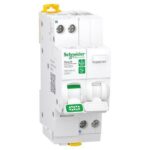
That’s where an acti9 resi9 rcbo comes into the picture. In plain terms, an RCBO combines three protections in one device for a single circuit: overload, short circuit, and earth leakage (ground-fault) protection. Resi9 is Schneider Electric’s home-focused range within the broader Acti9 family, built around compact DIN-rail devices used in many IEC-style switchboards.
This guide explains what an RCBO actually protects, what the common ratings mean, how slim formats affect panel space, and the basics of testing. It stays practical and safety-first. A licensed electrician should select, install, and test protection devices to local code.
What an Acti9 Resi9 RCBO protects against, and how it does it
An RCBO is basically two devices working as one. It combines an MCB function (overcurrent and short-circuit protection) with an RCD function (earth leakage protection). The key advantage is per-circuit isolation. If a fault happens on the outdoor outlets, only that RCBO trips, instead of taking out a whole group protected by a shared RCD.
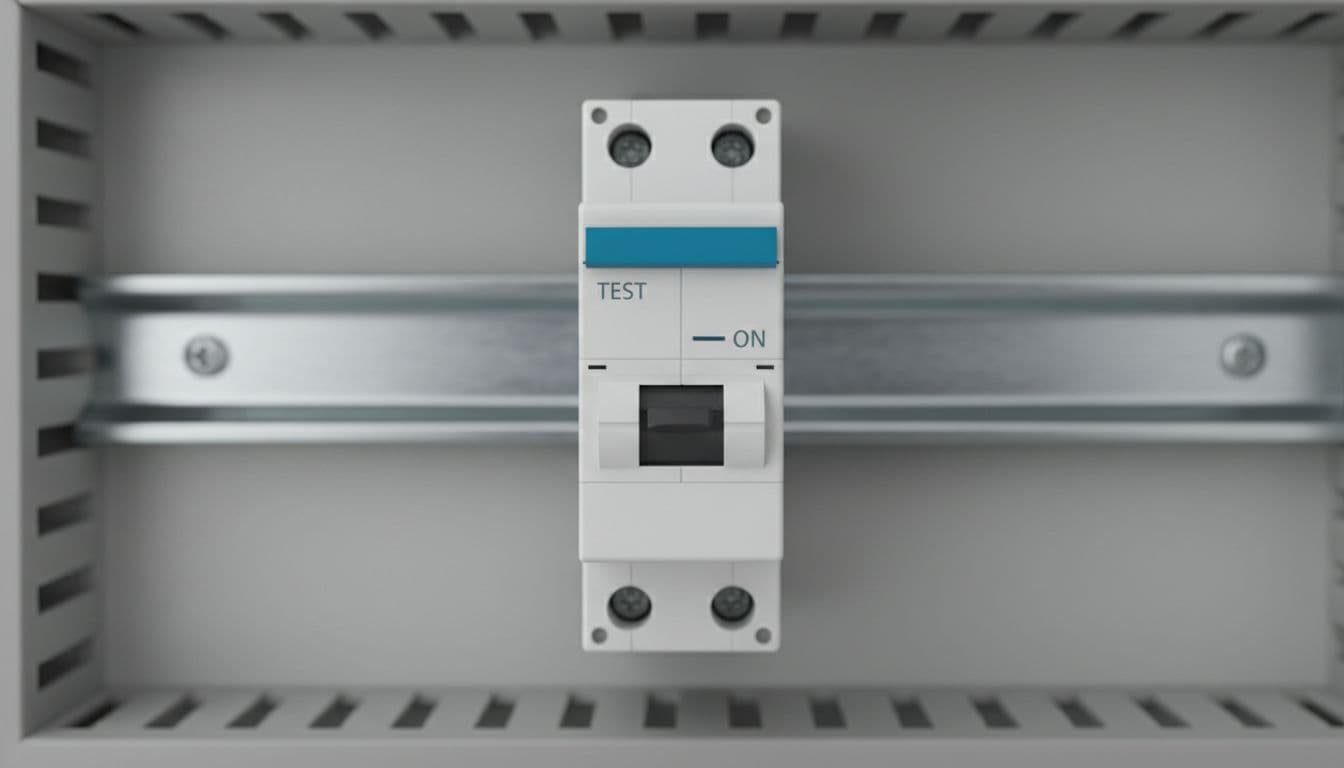
Most residential RCBOs you’ll see in IEC markets use 30 mA residual current sensitivity because it’s aimed at shock protection. The device also includes a test button that creates an internal imbalance so the RCBO should trip. That button isn’t decoration. It’s a quick functional check, although it doesn’t replace proper electrical testing.
For installation details, wiring orientation, and torque notes, Schneider publishes a model-specific document such as the Resi9 RCBO instruction sheet. Always confirm you’re reading the exact sheet for the device in hand, since designs vary by region and series.
Overload and short-circuit protection in everyday terms
Overload is the slow problem. Think of it like towing too much weight up a long hill. The wiring warms up, insulation ages faster, and the risk climbs over time. A classic example is a bedroom circuit that ends up running two space heaters plus a vacuum.
Short circuit is the sudden problem. It’s more like dropping a wrench across the battery terminals. A damaged cord, a pinched cable behind drywall, or a failed appliance can create a near-zero-resistance path. Current spikes fast, so the breaker must open quickly.
Trip curves describe how fast the breaker trips during overcurrent surges. You’ll often see C-curve in residential RCBOs in many markets because it tolerates brief inrush currents (like motor starts) better than a very “fast” curve. The curve doesn’t change the continuous rating. It changes how the device reacts during short bursts above normal current.
If you want a broader refresher on how different low-voltage protective devices fit together, this overview of types of low voltage breakers gives helpful context (MCB, RCCB/RCD, RCBO, and more).
Earth leakage protection, what it is, and why 30 mA matters
Earth leakage happens when current escapes the intended circuit path. Using a water analogy, it’s like a pressurized pipe with a hidden crack. Most of the flow still reaches the faucet, but some leaks into the wall. With electricity, that “leak” can travel through a person, damp framing, or a damaged appliance chassis.
The RCBO measures the difference between the outgoing and returning current. If the numbers don’t match, current is going somewhere it shouldn’t. At about 30 mA, the risk of serious shock rises, especially with longer contact time. That’s why 30 mA is widely used for personal protection in many residential standards.
Many modern appliances can produce pulsing DC components in leakage current (for example, speed-controlled drives inside washers, induction cooktops, and some power supplies). Because of that, Type A residual current detection is common in homes in many IEC regions. Still, device type selection depends on local rules and the actual connected loads.
A good way to think about an RCBO is “one circuit, one set of protections, one clear trip point.” That simplicity helps during both faults and routine testing.
Key Resi9 RCBO features that affect your switchboard layout and install time
Specs matter, but physical details matter too, especially during retrofits. Resi9 RCBOs are often chosen because they combine functions without eating up DIN-rail space. In many models, a 1P+N RCBO can fit in a single module width (commonly 18 mm), which helps when the enclosure is already crowded.

You’ll also see residential breaking capacities commonly listed around 6 kA for many markets. That number relates to the maximum prospective short-circuit current the device can interrupt safely. It’s not a “stronger is always better” badge. The right value depends on the available fault current at the installation and what local standards require.
Resi9 devices are also designed for repeatable wiring. Terminal access, clear line and load identification, and compatibility with busbar systems can reduce installation time and wiring clutter. However, exact specs vary by part number and region, so the label and datasheet should drive decisions.
Slim 18 mm design, what it changes in a crowded panel
A slim RCBO can change the whole plan of a board upgrade. Instead of grouping circuits under a shared RCD, the electrician can protect more circuits individually without doubling the enclosure width. That matters when you add:
- A dedicated kitchen circuit for each high-load appliance
- Outdoor circuits split by zone
- A garage circuit for tools or an EVSE feed (where allowed and properly designed)
Still, slim devices don’t magically fix a cramped panel. Space also disappears quickly because of the main switch, surge protection (SPD) requirements, arc-fault devices where required, and simple cable bending radius. In other words, DIN-rail width is only one constraint.
Busbar-ready connections (including MAXBAR), why electricians like it
Link wires can turn a neat build into a nest. Busbar systems reduce that clutter by feeding multiple devices with a single, properly sized conductor bar. The result is a layout that’s easier to inspect and easier to repeat.
A clean busbar build also reduces some common failure points. Fewer conductor terminations can mean fewer chances for a loose link or an incorrectly stripped wire. Even so, good outcomes depend on basics: the correct busbar type, correct device compatibility, and torque settings followed exactly.
When you’re comparing RCBOs, don’t just look at the trip rating. Look closely at the terminal style and whether it supports top or bottom feed, because that affects how the board is physically built.
How to choose the right Acti9 Resi9 RCBO for each circuit
Selection should start with the circuit, not the product catalog. Cable size, installation method, ambient temperature, and expected load drive the rated current. Fault level and earthing system drive the short-circuit rating and residual current approach.
Here’s a simple checklist electricians commonly work through for each circuit:
- Poles: 1P+N is common for single-phase final circuits in many IEC homes
- Rated current (In): often 6 A to 32 A in residential, sometimes higher by design
- Trip curve: C-curve is common for mixed home loads, but confirm per application
- Residual type: Type A is widely used for modern appliance mixes in many regions
- Sensitivity: 30 mA is typical for personal protection in many home circuits
- Breaking capacity: commonly 6 kA on many residential devices, but verify required fault duty
A key US-specific note: as of March 2026, Resi9 RCBOs are typically built to IEC/EN 61009-1 or AS/NZS 61009.1, and they are not generally UL-listed for US residential panels. US homes usually require NRTL listings (often UL) aligned to NEC practices. So, treat Resi9 as a product family used in IEC-style installations, and use US-listed equivalents when working in US dwellings.
Picking the amperage and curve without guessing
Amperage selection follows the conductor, not the appliance nameplate alone. A space heater may be 12.5 A, but that doesn’t automatically mean “use a 20 A RCBO.” The wiring and the circuit design set the limit.
In practice, loads tend to fall into patterns:
Lighting circuits often sit at lower ratings because the wiring and load are lighter. General receptacle circuits commonly land mid-range. Dedicated appliances (dishwasher, disposal, microwave, washer) often justify their own circuit because it reduces nuisance trips and makes faults easier to locate.
Curve choice depends on inrush. A circuit with a compressor or motor can pull high current for a short time. A curve that allows that brief surge without nuisance tripping makes the system calmer, while still tripping fast under a real short.
1P+N, A-type, 30 mA, decoding the label fast
Labels can look like a code until you translate them into function:
- 1P+N: switches the phase pole and provides a neutral path arrangement for the circuit (exact switching behavior depends on the device design)
- Type A: detects AC residual current and pulsing DC components
- 30 mA: the trip sensitivity for residual current aimed at shock protection
- kA rating: the maximum fault current interruption capacity under the stated standard
For a concrete example of how those specs are presented, see a Schneider product listing like Resi9 1P+N 16A C-curve 6 kA Type A 30 mA. Use it as a reference format, then verify the exact local part number you’re buying.
One more wiring rule matters during installs and troubleshooting: don’t mix neutrals between RCBO-protected circuits. Each RCBO’s neutral must return through its own neutral terminal path, or trips and testing results become meaningless.
Where Resi9 RCBOs fit best in a home, and common mistakes to avoid
Per-circuit RCBO protection shines where you want two things at once: better safety and faster fault finding. Instead of guessing which load on a shared RCD caused a trip, you can narrow it to a single circuit. That saves time during an outage and reduces the chance of repeated resets that hide a real issue.

Common residential fits include lighting, general power outlets, kitchen appliance circuits, bathroom circuits, outdoor receptacles, laundry, and dedicated equipment circuits. Wet or outdoor zones deserve extra attention because moisture lowers resistance and raises shock risk.
Schneider also publishes application-focused guidance for these scenarios, for example the Resi9 RCBO note on outdoor appliances. Even if your final selection differs by region, the fault modes and use cases are the same.
Best circuits to protect individually, especially in kitchens and wet areas
Kitchens stack high-load devices into one room. Add a kettle, toaster, microwave, and dishwasher, and you’ve got a mix of heating loads, motors, and electronics. Individual RCBO protection helps keep one fault from blacking out the whole room.
Wet areas also raise the stakes. Bathrooms, laundry rooms, and outdoor outlets see higher leakage risk because of humidity, condensation, and damaged cords. Separating these circuits can prevent a single damp extension cord from tripping protection for indoor lighting or refrigeration.
A practical approach is to give “can’t lose it” loads their own protected circuit where design rules allow. Refrigerators, freezers, sump pumps, and network gear are common examples. That doesn’t remove the need for proper protection, it just reduces collateral outages.
Nuisance tripping and wiring errors, what usually causes them
RCBO nuisance trips often point to a wiring mistake or a real insulation problem. The most common causes are shared neutrals, neutral mix-ups between circuits, or neutrals landed on the wrong bar. Mixed neutrals are especially common after renovations, when older multi-wire practices or rushed changes leave hidden ties.
Load-related leakage can stack up too. A circuit with many electronics can have enough combined leakage to approach the RCBO threshold, even if each device is “fine” on its own. Damaged appliances, moisture in outdoor equipment, and pinched cables can push it over the edge.
If a trip happens, the safest first response is simple: stop resetting repeatedly, unplug portable loads if it’s safe, then call an electrician. Proper troubleshooting may include insulation resistance testing and leakage measurement to locate the fault without guesswork.
For readers who want to compare with higher-end RCBO families in the broader Acti9 line, a listing like the Acti9 iC60 RCBO product example shows how ratings, poles, and sensitivity can vary by application and region.
Conclusion
An acti9 resi9 rcbo combines overload, short-circuit, and earth leakage protection in one device per circuit. That per-circuit approach makes faults easier to locate and limits how much of the home goes dark. The slim form factor (often 18 mm for 1P+N models) can also help during crowded switchboard upgrades.
Selection still comes down to the circuit design, the available fault level, and local rules. Next, have a licensed electrician confirm the right ratings, install the devices correctly (especially neutrals), label every circuit, and show you how and when to use the test button.