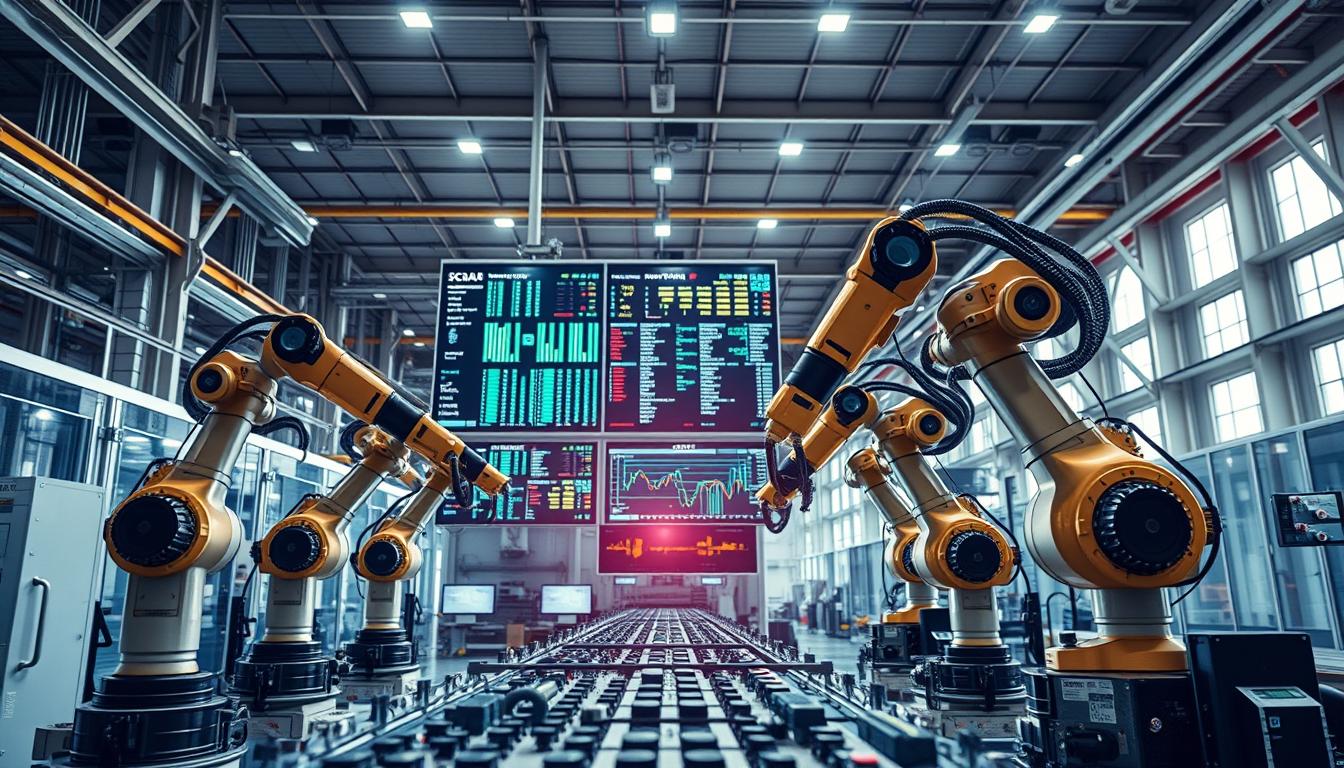
The manufacturing world is changing fast. New technologies like PLC and SCADA systems are leading the way.
Factory automation is getting better with industrial robots and smart automation systems.
These advanced tools help make production better. They make things faster, cheaper, and more efficient.
Using these automation technologies also means better products. You can be more flexible and competitive worldwide.
Key Takeaways
- Optimizing industrial automation with advanced technologies.
- Improving production efficiency with PLC and SCADA systems.
- Enhancing productivity using industrial robots.
- Reducing operational costs through automation systems.
- Improving product quality and increasing flexibility.
The Current State of Industrial Automation
The world of industrial automation is changing fast. New technologies and market needs are pushing for better efficiency and productivity. Programmable logic controllers (PLCs), supervisory control and data acquisition (SCADA) systems, and human-machine interfaces (HMIs) are key players in this shift.
Market Overview and Growth Projections
The industrial automation market is booming. It’s growing because companies want to make things faster and cheaper. Experts say the market will grow 8-10% each year for the next five years.
This growth is thanks to new tech like AI, IoT, and robotics. The automotive, food, and pharmaceutical industries are leading the way. They’re using automation to make better products, save money, and work more efficiently.
Key Drivers of Automation Adoption in 2023
In 2023, several factors will push automation adoption. Companies want to work better and spend less. They need advanced systems like PLCs, SCADA, and HMIs to manage complex processes.
Also, the push for smart manufacturing and Industry 4.0 is growing. This means more companies will use automation to stay competitive.
Recent Breakthroughs in PLC Technology
The world of industrial automation is changing fast with new PLC technology. These updates make industrial processes more efficient and reliable. They also help create smarter and more connected manufacturing systems.
Next-Generation Programmable Logic Controllers
New PLCs have more power, allowing for complex control and faster actions. This means better production, quality, and less downtime. Modern PLCs are also more adaptable, working well with many systems.
Edge Computing Capabilities in Modern PLCs
PLCs now handle data processing right where it’s needed, thanks to edge computing. This cuts down on delays and helps make quick decisions. It’s great for fast-paced settings like manufacturing lines.
Integration with Industry 4.0 Frameworks
PLCs are key to Industry 4.0, aiming for smart, connected factories. By linking PLCs with IoT and cloud tech, companies get better control and insights. This leads to better analytics, maintenance, and planning.
SCADA Systems: Evolution and Current Capabilities
SCADA systems have changed a lot in modern times. They started as simple monitoring tools. Now, they are complex networks that control important infrastructure.
With more connections between industries, SCADA’s role has grown. It now includes advanced data analysis, real-time monitoring, and remote control. This change helps make operations more efficient, reliable, and flexible.
Cloud-Based SCADA Solutions
Cloud-based SCADA solutions have been a big change. They help save money on infrastructure, grow easily, and make data more accessible.
Real-Time Analytics Features
Cloud-based SCADA is great for real-time analytics. This lets operators make fast, informed decisions. They can quickly respond to system changes or unexpected events.
Scalability Benefits
Cloud-based SCADA offers scalability benefits. It lets companies grow their systems without big hardware costs. This is key for industries that grow or have changing needs.
Enhanced Security Protocols for Critical Infrastructure
SCADA systems handle critical infrastructure, so security is key. New security steps include encryption, secure login, and regular checks. These steps keep systems safe from cyber threats and ensure they work right.
Good security in SCADA systems is not just about fighting off hackers. It’s also about keeping services running smoothly. By focusing on security, companies can protect their operations and keep public trust.
Advancements in HMI Design and Functionality
Recent breakthroughs in HMI design have changed how we interact with complex systems. This has made things more efficient and cut down on mistakes. The Human Machine Interface (HMI) is now key in industrial automation. It makes it easier for humans to work with machines.
HMI technology has evolved a lot. We see better designs, more functions, and a better user experience. Today’s HMIs are more user-friendly and quick to respond. This lets operators do their jobs better.
Touchscreen and Gesture-Based Interfaces
The use of touchscreen and gesture-based interfaces has changed HMI a lot. These new interfaces make it easier and more natural to work with industrial systems.
Touchscreen HMIs bring many benefits, like:
- They make it easier to use with gestures
- They show complex data in a clear way
- They help operators work faster
Mobile HMI Applications for Remote Monitoring
The growth of mobile HMI applications has made it possible to monitor and control systems from anywhere. This lets operators check on things and make changes whenever they need to.
Mobile HMI apps offer:
- They let you watch industrial processes in real-time
- They give you control from anywhere
- They send alerts so you can act fast
Augmented Reality in Industrial HMI Systems
The use of augmented reality (AR) in HMI systems is bringing new possibilities to automation. AR adds digital info to what you see, helping you make better decisions and avoid mistakes.
AR in HMI has many benefits, such as:
- It makes it easier to see equipment and processes
- It helps with diagnosing problems
- It shortens the time it takes to train new operators
Smart Actuators Transforming Motion Control
Smart actuators are changing how we control motion in factories. They make systems more precise and efficient. They also have self-checking features and can connect to networks for better control.
Precision and Energy Efficiency Improvements
Smart actuators offer high precision in motion control. This means they work more accurately and reliably. They are also energy-efficient, using less power than before.
This is thanks to new materials and designs. These help cut down on energy waste.
| Feature | Traditional Actuators | Smart Actuators |
|---|---|---|
| Precision | Limited by mechanical constraints | Enhanced through advanced control algorithms |
| Energy Efficiency | Often results in energy waste | Optimized for minimal energy consumption |
Self-Diagnostic Capabilities
Smart actuators can check themselves. This means they can spot problems before they cause big issues. This leads to less downtime and more reliable systems.
Network-Connected Actuators for Distributed Control
Smart actuators can connect to networks. This lets them be controlled and watched from anywhere. It makes systems more flexible and quick to respond.
This setup also helps follow Industry 4.0 ideas. Devices talk to each other in real-time, making systems smarter.
In short, smart actuators are making motion control better. They improve precision, save energy, and check themselves. Their network connection helps control systems work better together, pushing industrial automation forward.
Industrial Robots: From Assembly Lines to Collaborative Workspaces
Industrial robots are no longer just for assembly lines. They now play a key role in collaborative workspaces. This change comes from new tech in robotics and AI. It lets robots work safely and well with humans.
Cobots: The Rise of Collaborative Robotics
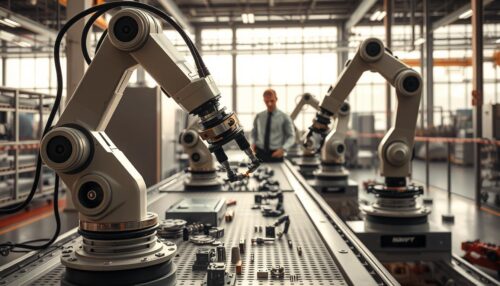
Collaborative robots, or cobots, work alongside humans. They boost productivity and safety. Brands like Universal Robots and KUKA lead in making these robots. They’re used in many fields now.
Cobots have smart sensors and AI. This lets them understand and act on their surroundings. Humans and robots can work together better, making things more efficient.
AI-Enhanced Robot Decision Making
AI has made robots smarter at making choices. AI lets robots look at data, learn, and decide quickly. This is a big step forward.
“AI is changing industrial robots. It lets them adjust to new situations and decide on their own,” said Dr. Maria Richter, a robotics expert at KUKA.
Recent Deployments in Non-Traditional Industries
Robots are now in fields like healthcare, agriculture, and logistics. For example, hospitals use robots for cleaning and helping patients.
| Industry | Application | Benefits |
|---|---|---|
| Healthcare | Disinfection, patient care | Improved hygiene, reduced labor costs |
| Agriculture | Crop monitoring, harvesting | Increased efficiency, reduced waste |
| Logistics | Warehouse management, packaging | Enhanced productivity, accuracy |
Robots’ ability to adapt is creating new chances in many areas. This is driving innovation and making things more efficient.
PLC, SCADA, HMI, Actuators, Industrial Robots, Automation Systems: Integration Challenges and Solutions
The mix of PLC, SCADA, HMI, actuators, and industrial robots in today’s systems offers both chances and hurdles for factory workers. As companies aim for better efficiency and output, linking these systems together is key.
Interoperability Issues in Legacy Systems
One big problem in combining these systems is dealing with old systems not made for easy integration. These systems often use different ways to talk to each other, making it hard to work together.
For example, older PLCs might use special protocols that don’t match newer SCADA systems or HMIs. This mismatch can make it more expensive and complicated to link these systems.
“The lack of standardization in communication protocols is a major hurdle in achieving seamless integration of automation systems.”
Standardization Efforts and Open Protocols
To solve interoperability issues, there’s a push for standardization and open protocols. Groups like the Open Platform Communications (OPC) Foundation have created standards like OPC-UA. This standard offers a common way for industrial devices to talk to each other.
Using standards like OPC-UA can make integration easier. For instance, a modern HMI can now talk directly to a PLC from another maker, cutting down on the need for custom setups.
| Protocol | Description | Advantages |
|---|---|---|
| OPC-UA | Open standard for industrial communication | Interoperability, security, scalability |
| Modbus | Widely used protocol for industrial devices | Simple, widely supported, robust |
| PROFINET | Ethernet-based protocol for industrial automation | High-speed, flexible, compatible with various devices |
Case Study: Successful Multi-Vendor Integration
A top car maker linked different automation systems together, mixing PLCs with SCADA and HMI systems. They used OPC-UA for communication between systems.
This integration led to real-time monitoring and control of the production line. It boosted efficiency by 15% and cut downtime a lot.
This example shows that with the right tech and approach, diverse automation systems can be integrated. This can lead to big operational gains.
Real-World Implementation Success Stories
Automation has changed many industries for the better. It has improved outcomes in various fields. Here are some examples of how automation has made a big difference.
Automotive Manufacturing Transformation
The car industry has quickly adopted automation. Companies like Ford and Toyota are leading the charge. They use advanced robots and PLC systems to boost efficiency and quality.
For example, a big car maker sped up their production by 30% with the help of cobots. This made their work safer and more efficient.
Food and Beverage Industry Automation
The food and drink industry has also seen big benefits from automation. PepsiCo and Nestle use SCADA systems to better control their production. This has made their products more consistent and cut down on waste.
One food company cut their energy use by 25% by automating their packaging. They used smart actuators to make it happen.
Pharmaceutical Production Line Modernization
In the world of medicine, automation helps meet strict rules while making things more efficient. Pfizer and Merck have put a lot of money into making their production lines better with automation.
A top pharmaceutical company cut their batch time by 40% and improved quality with new HMI systems and integrated equipment.
Cybersecurity Concerns in Industrial Automation
Cybersecurity is a big worry in industrial automation. Systems are now connected, making them more vulnerable. This means new risks and weaknesses are appearing.
Vulnerability Assessment in Connected Systems
Checking for weaknesses is key in keeping systems safe. This means finding outdated software or misconfigured networks. Regular checks help find and fix problems before they cause harm.
Defense Strategies for Critical Infrastructure
Protecting critical infrastructure from cyber threats is essential. Using firewalls and intrusion detection systems helps monitor traffic. Also, strong access controls limit who can access the system.
“The cybersecurity landscape for industrial automation is rapidly evolving, requiring continuous vigilance and adaptation to stay ahead of emerging threats.”
Recent Incidents and Lessons Learned
Recent attacks show how important strong security is. For example, the NotPetya malware attack in 2017 hit many industries hard. These events teach us the value of being proactive with security.
By understanding and addressing cybersecurity issues, companies can safeguard their systems. This keeps their operations running smoothly and securely.
The Impact of 5G on Factory Automation
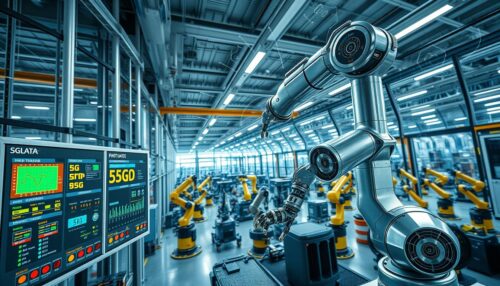
With 5G’s arrival, industries are ready to use its fast communication and better connectivity for advanced factory automation. This new tech is set to change the manufacturing world. It will bring faster data transfer, more reliability, and better connections.
Low-Latency Communication Benefits
5G’s low-latency communication is a big plus for factory automation. It’s essential for tasks that need quick data processing and fast decisions. Low-latency communication lets machines react fast to production line changes, cutting downtime and boosting efficiency.
In smart factories, 5G makes data sharing between machines and systems fast. This makes production processes more agile and responsive.
Wireless Sensor Networks and IoT Integration
5G also makes it easier to link up wireless sensor networks (WSNs) and the Internet of Things (IoT) in factories. Its better connectivity lets more devices connect, making factories more connected and comprehensive.
This connection helps monitor and control machines in real-time. It also leads to better predictive maintenance and more efficient production workflows. This all adds up to a more productive and efficient factory.
Early Adopters and Measured Outcomes
Early users of 5G in factories have seen big gains in productivity and efficiency. For example, companies using 5G automation have cut down on production downtime and improved product quality.
These gains come from 5G’s enhanced connectivity and real-time data processing. They show how 5G can change the manufacturing world.
Workforce Transformation: Skills for the Automated Factory
Factories are getting more automated, and we need skilled workers more than ever. The world of work is changing fast because of new tech in automation, robotics, and AI.
Training Programs for Automation Specialists are key in this new world. Companies are spending a lot to teach their workers how to use the new machines and software. For example, Rockwell Automation has programs that teach everything from basic to advanced skills.
Training Programs for Automation Specialists
Good training programs fit the needs of the industry and the company. They give workers hands-on practice with the latest tech. This makes sure they can use and fix complex systems.
Human-Machine Collaboration Models
The future of making things is about Human-Machine Collaboration. This means humans and machines working together to get better results. Collaborative robots, or cobots, are a great example. They work with people to do tasks that need both precision and flexibility.
Educational Institutions Adapting to Industry Needs
To meet the need for automation experts, educational institutions are changing their courses. They now teach about automation, robotics, and AI. Schools are teaming up with companies to make sure students are ready for the job market.
Changing the workforce is not just about learning new tech skills. It’s also about creating a culture of learning and being able to adapt. As tech keeps getting better, being able to work well with machines and learn new things will be very important.
Future Trends: AI, Machine Learning, and Digital Twins
AI, machine learning, and digital twins are changing industrial automation. They make systems more efficient and smart. As more industries use these technologies, we’ll see big boosts in productivity and efficiency.
Predictive Maintenance Revolution
Predictive maintenance is getting a big boost from AI and machine learning. These tools analyze sensor data to forecast when maintenance is needed. This approach cuts downtime and makes machines last longer.
With predictive analytics, industries can switch from scheduled to condition-based maintenance. This saves resources and cuts down on unexpected shutdowns.
Virtual Commissioning and Simulation
Virtual commissioning and simulation are key in designing and testing automated systems. Engineers create digital twins of equipment and lines. They then test different scenarios to find issues and improve performance before building anything real.
This method cuts down on the time and cost of making prototypes. It also makes the final system more reliable and efficient.
Emerging Technologies on the Horizon
Looking ahead, new technologies will keep changing industrial automation. We’ll see better AI-driven decision-making, more IoT devices in automation, and advanced digital twin tech.
These advancements will keep driving innovation and efficiency. They’ll help companies stay ahead in a fast-changing world.
Conclusion: Embracing the Automated Future
The world of industrial automation is changing fast. New technologies like PLC, SCADA, and robots are leading the way. These advancements are making industries more efficient and setting the stage for an automated future.
For industries to stay ahead, embracing this new era is key. Using PLC and SCADA systems can make processes better and cheaper. Adding industrial robots and advanced HMI systems makes production lines more efficient and flexible.
As automation keeps growing, industries need to keep up. Adopting the latest tech and practices can open new doors. It can also improve product quality and help businesses grow in the automated future.