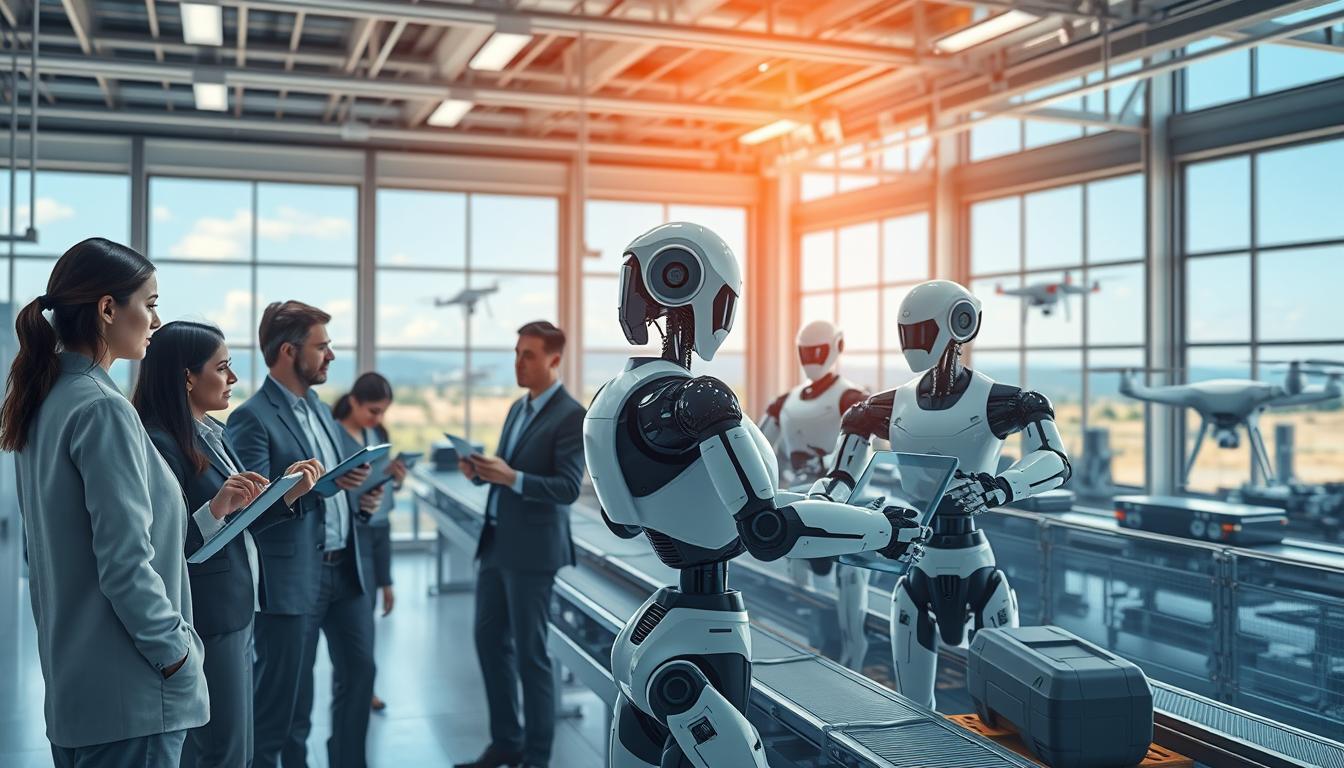
The US automation industry is changing a lot. New tech, especially in artificial intelligence and robotics, is making manufacturing better and more efficient.
Companies are using these new tools, changing how automation works. This change is making work more productive and changing what the future of work looks like.
AI and robotics are making things run smoothly, more accurately, and cheaply. This big change will likely have a big effect on the US economy for a long time.
Key Takeaways
- The US automation industry is being transformed by AI and robotics.
- Technological advancements are enhancing operational efficiencies.
- The adoption of AI and robotics is redefining the future of work.
- Productivity is being significantly improved through automation.
- The transformation is expected to have a lasting impact on the US economy.
The Current State of Automation in the United States
Automation in the United States is changing fast with new technologies. The US automation sector is growing thanks to AI and robotics. This change is making things more efficient and changing the way we work.
Key Statistics and Market Overview
The US automation market is strong, with lots of money going into technology. In 2022, the US industrial automation market was about $200 billion. It’s expected to grow 8% from 2023 to 2028, thanks to more AI and robotics use.
| Industry | Automation Spend (2022) | Projected Growth (2023-2028) |
|---|---|---|
| Manufacturing | $80 billion | 10% |
| Logistics | $30 billion | 12% |
| Healthcare | $20 billion | 8% |
Recent Developments in 2023-2024
2023 and 2024 have brought big changes in US automation. Companies are using AI to work better and save money. For example, big makers are adding robots to their work, making things safer and more efficient.
Notable Trends: More use of machine learning for fixing things before they break, more Industry 4.0 tech, and more robots moving things in warehouses.
AI and Robots Are Reshaping the US Automation Industry — Here’s What’s Changing
The US automation industry is changing fast thanks to AI and robotics. It’s not just about new tech; it’s a big change in how we think about and use automation.
Fundamental Shifts in Automation Technology
New robotic innovations in US manufacturing are changing the game. These robots can do complex tasks with great precision and flexibility. They learn from experience and adapt to new situations, making them very useful in factories.
Another big change is the rise of collaborative robots, or cobots. They work with humans and have advanced sensors and AI. This lets them understand and react to their surroundings in real-time.
The Convergence of AI and Robotics
The impact of AI on US automation is huge, especially when combined with robotics. AI can analyze lots of data from robots, making them work better and predict when they need maintenance. This mix is leading to smarter, more efficient automation that can keep up with changing needs.
Also, AI and robotics together are making autonomous systems possible. These systems can make decisions on their own. This is changing industries by making them more efficient, saving money, and improving product quality.
Major Players Driving Innovation in US Automation
Big names are changing the US automation scene with new tech. The US automation world is getting a big makeover. This is thanks to both big tech companies and new startups.
Leading Technology Companies
Big tech companies are key to moving US automation forward. They spend a lot on research and development. This helps them explore new limits in automation tech.
Boston Dynamics and Advanced Robotics
Boston Dynamics is a big name in advanced robotics. Their robots, like Atlas and Spot, can do tough tasks. They show how robots can help in many fields.
NVIDIA’s AI Infrastructure
NVIDIA is also very important. They provide the AI base for many automation tech. Their GPUs and AI platforms help make smart AI models for robots and automation.
Emerging Startups Disrupting the Industry
New startups are also changing the US automation scene. They often lead in new ideas and tech. They bring fresh ways to do things and shake up old industries.
| Company | Focus Area | Notable Innovation |
|---|---|---|
| Boston Dynamics | Advanced Robotics | Humanoid robots like Atlas |
| NVIDIA | AI Infrastructure | GPU computing for AI |
| AMP Robotics | AI-powered Recycling | Automated recycling systems |
Together, big names and new startups are shaping the future of robotics in the US. They are leading the change in the US automation industry.
Breaking News: Recent Breakthroughs in Automation Technology
The US automation industry is on the verge of a big change. This is thanks to new advancements in AI and robotics. These changes are making old processes better and opening up new ones for many industries.
Landmark Research Findings
Recent studies have made big discoveries in AI and machine learning. This has led to more advanced automation solutions. For example, studies on reinforcement learning have shown great results in creating systems that can handle complex tasks. Some key findings include:
- Improved robotic grasping and manipulation capabilities
- Enhanced predictive maintenance through advanced anomaly detection
- Better human-robot interaction through natural language processing
These breakthroughs are making automation more efficient and effective.

Industry-Changing Product Launches
The US automation market is seeing a lot of new and exciting products. These products use AI and robotics to solve big problems. Some examples include:
- Advanced robotic arms with better precision and flexibility
- AI-powered quality control systems for manufacturing
- Autonomous mobile robots for warehouse and logistics management
These products are boosting productivity and making automation more popular in different sectors.
Machine Learning’s Role in Advanced Manufacturing
The role of machine learning in advanced manufacturing is key in the US automation sector. It helps make production more efficient and products better.
Predictive Maintenance and Quality Control
Predictive maintenance uses machine learning to foresee when equipment might fail. This lets manufacturers plan maintenance, cutting down on downtime. It also boosts quality control by spotting defects and issues right away.
Adaptive Production Systems
Adaptive production systems use machine learning for flexibility. This is vital in today’s fast-changing production world.
Self-Optimizing Assembly Lines
Self-optimizing assembly lines adjust production on the fly with machine learning. This makes them more efficient and cuts down on waste. It’s changing how assembly lines work.
Real-time Process Adjustments
Thanks to machine learning, production can adjust instantly to problems. This keeps product quality high and reduces the need for costly fixes.
By using machine learning in advanced manufacturing, the US automation sector is set for big growth and new ideas. As more manufacturers adopt these technologies, we’ll see even better production and product quality.
Collaborative Robots (Cobots): The New Workforce
Collaborative robots, or cobots, are changing the US workforce. They work with humans, boosting productivity and safety. This new way of working is making factories more efficient.
Human-Robot Collaboration Models
In the US, different ways of working with robots are being tried. These include:
- Shared workspace models where humans and cobots work together on the same task.
- Sequential models where cobots perform tasks before or after human intervention.
- Coactive models where humans and cobots work together simultaneously on a task.
These methods are being used in many industries. They help make work more efficient and cut down on costs.
Safety Innovations and Standards
With cobots in the workplace, new safety rules are needed. Important safety features include:
- Advanced sensor technologies enable cobots to detect and respond to their environment.
- Collision detection and avoidance systems that prevent accidents.
- Safety-rated monitored stop functions that halt cobot operation when a human enters the workspace.
Groups like the Robotic Industries Association (RIA) and the International Organization for Standardization (ISO) are setting safety standards. They help ensure cobots are used safely in factories.
AI-Powered Automation in Supply Chain Management
AI is changing how businesses work, making things more efficient and saving money. As markets change fast, using AI is key to staying ahead.
Warehouse Automation and Logistics
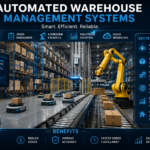
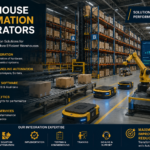
AI is making warehouses smarter and more efficient. A McKinsey report says AI and robots can boost efficiency by up to 30%. They help track items, predict when things need fixing, and arrange storage better.
This leads to quicker and more accurate orders. Companies like Amazon and DHL use AI robots to improve their warehouses. They cut costs and make their workplaces safer.
Predictive Analytics for Inventory Optimization
AI is also changing how we manage stock. It uses past data and trends to guess what will sell next. This helps businesses keep just the right amount of stock.
“AI-driven predictive analytics can reduce inventory costs by up to 20% while improving service levels.”
This cuts down on waste and makes sure products are there when customers want them. It makes customers happier, too.
By using AI for stock management, businesses can stay ahead. They’re ready for when demand goes up or down.
Industry-Specific Transformations
Automation technologies are changing the US industries in unique ways. AI and robotics are boosting productivity and opening new doors and challenges in many fields.
Automotive Manufacturing Revolution
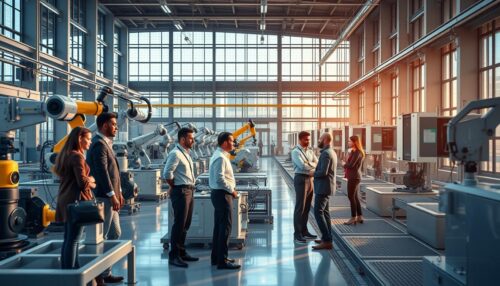
The car industry is seeing big changes with new automation. Electric vehicle (EV) manufacturing is getting better thanks to robots and AI. Companies like Tesla and General Motors are spending a lot on automation to cut costs and work faster.
Collaborative robots (cobots) are also becoming more common. They let humans and robots work together on assembly lines. This teamwork boosts productivity and makes workplaces safer.
Healthcare Automation Breakthroughs
Automation is making big strides in healthcare. Robotic-assisted surgery is more common, leading to more precise and less invasive surgeries. AI tools are also helping doctors make better diagnoses and tailor treatments.
Automation is also making hospital work easier. Automated guided vehicles (AGVs) are moving patients, supplies, and equipment. This frees up hospital staff to focus on caring for patients.
Agricultural Technology Advancements
The farming industry is also seeing big changes thanks to automation. Precision farming uses drones, satellite images, and IoT sensors to improve crop yields and cut waste. Automated farming tools are making tasks like planting and harvesting easier.
Autonomous tractors and harvesters are becoming more common, too. They reduce the need for manual labor and make farming more efficient. These advancements help farmers work smarter and address labor shortages.
In summary, the US automation industry is changing many sectors, including cars, healthcare, and farming. As these technologies keep improving, we’ll see even more innovative uses and better productivity and efficiency.
Economic Impact of Automation on US Manufacturing
Automation in US manufacturing has many effects on the economy. As these technologies get better, it’s key to know how they impact the industry. This knowledge helps everyone involved in manufacturing.
Productivity and Efficiency Gains
Automation has greatly improved productivity in US manufacturing. By using AI and robotics, factories can work better, stop less, and make products of higher quality. For example, a McKinsey study says automation could make production 20% better by 2030.
This boost in productivity helps not just factories but the whole economy grow.
Key benefits of automation include:
- Increased production speed
- Improved product consistency
- Reduced labor costs
- Enhanced workplace safety
To show how automation affects productivity, look at this data:
| Industry | Productivity Gain (%) | Average Annual Growth Rate (%) |
|---|---|---|
| Automotive | 15 | 3.5 |
| Aerospace | 12 | 2.8 |
| Electronics | 18 | 4.2 |
Reshoring and Domestic Production Trends
Automation is also changing how companies make things in the US. With better automation, making things in the US is getting cheaper. This is making some companies bring their production back from other countries.
This trend of bringing production back to the US is likely to keep growing. As automation gets smarter and more common, it could help the US economy. It could create new jobs and boost local economies.
The Changing Labor Market in an Automated Economy
AI-driven automation is changing the US workforce. It brings both chances and challenges. As these technologies grow, the job market is changing in many ways.
Job Displacement and Creation
Automation’s effect on jobs is complex. It can replace some jobs but also create new ones in tech and innovation.
A report by McKinsey Global Institute says up to 800 million jobs could be lost worldwide by 2030. But it also notes that automation will create new jobs, adding up to 140 million globally.
New Skill Requirements and Training Initiatives
Automation is making workers need new skills. These include data analysis, programming, and critical thinking.
Government-Sponsored Reskilling Programs
Governments are starting programs to help workers learn new skills. The US Department of Labor has programs for training in new technologies. These are key for workers to keep up with job changes.
Industry-Academia Partnerships
Collaboration between companies and schools is also important. Companies like Google and Microsoft are working with schools. They offer courses and certifications in AI and automation.
| Training Initiative | Description | Partners |
|---|---|---|
| Reskilling Programs | Training workers in emerging technologies | US Department of Labor, Tech Companies |
| Industry-Academia Courses | Offering certifications in AI and automation | Google, Microsoft, and Universities |
Regulatory Framework and Policy Considerations
AI and robotics are changing the US automation industry. This change makes it crucial to look at the rules and future policies. We need to understand the current laws and what might come next.
Current US Regulations on AI and Robotics
In the US, AI and robotics have many rules. These rules come from both federal and state agencies. Some important ones include:
- Guidelines for the safe use of AI systems
- Standards for robotic safety and how well they work
- Laws about protecting data when AI is used
These rules help make sure AI and robotics are developed and used safely. They also consider public safety and ethics.
Proposed Legislation and Future Policy Direction
As AI and robotics get better, new laws are being suggested. These laws aim to tackle the challenges and opportunities these technologies bring. Some key areas include:
- Improving training for workers who might lose their jobs
- Setting clear rules for how AI makes decisions
- Working with other countries on AI and robotics standards
These new laws aim to support innovation. They also want to protect the interests of workers, businesses, and consumers.
Ethical Considerations in Automated Systems
Robotic innovations in US manufacturing are growing fast. We must look closely at the ethics of these technologies. As AI and robots enter more industries, we need to tackle ethical issues head-on.
Algorithmic Bias and Decision-Making
Algorithmic bias in AI is a big ethical worry. Biases in algorithms can cause unfair decisions, hurting some groups. It’s key to make AI systems fair and clear.
Companies like Microsoft and Google are working on this. They aim to make AI systems more open and unbiased.
Privacy and Data Security Concerns
Privacy and data security are also major concerns. Automated systems use a lot of data, raising questions about their use. We must protect this data well to keep people trusting these technologies.
Rules like the General Data Protection Regulation (GDPR) in Europe are a good example. They could shape data privacy in the US, too.
It’s crucial to handle these ethical issues well. By focusing on ethical design, we can avoid risks. This way, these technologies can truly help society.
Challenges Facing the US Automation Industry
The US automation industry is making progress, but faces big challenges. It deals with technical issues, global competition, and the need for new ideas.
Technical Limitations and Hurdles
Adding AI and robotics to US automation comes with technical problems. Complex software development and hardware compatibility are major obstacles. Also, making sure automated systems are reliable and safe is key.
A recent report says, “The development of more sophisticated AI algorithms is crucial for overcoming these technical limitations.”
Competition from Global Markets
The US automation industry is not the only one innovating. China and Europe are also making big moves in automation technology.
China’s Automation Strategy
China is becoming a big player in automation. It has government support and invests a lot in AI research. As Forbes notes, “China’s ‘Made in China 2025’ initiative has been a driving force behind its automation strategy.”
European Innovation Hubs
Europe is also a strong competitor, with many innovation hubs. Countries like Germany are leading with their “Industry 4.0” initiative. The European Commission reports, “European innovation hubs are fostering collaboration between industry, academia, and government to drive automation forward.”
The US automation industry must tackle these challenges and keep innovating. By solving technical issues and competing with global markets, it can ensure a bright future for robotics in the US.
Conclusion: The Transformed Landscape of US Automation
The US automation industry is changing fast, thanks to AI and robots. This change brings better productivity, efficiency, and new ideas to many fields. These include manufacturing, supply chain management, and healthcare.
AI is making a big difference in US automation. It helps with predictive maintenance, smart production systems, and top-notch quality control. Robots that work with humans, called cobots, are also changing the game. They make work safer and cut down costs.
But the industry faces big challenges. These include technical limits, global competition, and jobs being replaced. To overcome these, we need the right rules and training for workers. This way, the industry can grow and find new opportunities.
The future of US automation is bright. It will use AI and robots to bring new ideas, boost productivity, and create jobs. As it keeps changing, it will be key to the US economy and keeping it ahead globally.