Building upgrades usually get messy the moment someone says, “We need new wiring.” Walls, ceilings, shut-down windows, and missing drawings can turn a simple network update into a long project.
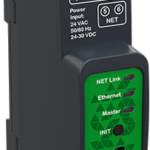
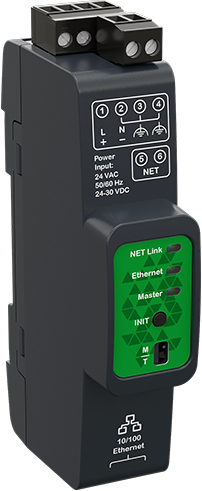
The SpaceLogic Twisted Pair Adapter is built for a different kind of upgrade. It connects SpaceLogic controllers and automation servers to IP networks by using cabling that’s already in place, so the move to Ethernet communication can happen without the usual disruption.
That changes the tone of a modernization project from teardown to connection, and that’s where this device stands out.
What the SpaceLogic Twisted Pair Adapter actually does
At its core, the SpaceLogic Twisted Pair Adapter is a bridge. It lets you connect IP field controllers and automation servers using existing twisted-pair wiring, then enables immediate Ethernet communication. Schneider Electric also describes it as a way to run BACnet/IP over free topology wiring, which matters in buildings where the original cabling doesn’t follow a neat, documented pattern.
In plain terms, it helps older building automation infrastructure speak the language modern systems expect, without forcing a full re-cable first. That’s the main promise behind the product, and it’s why the device is positioned as a fast modernization tool rather than a large retrofit project.
Schneider Electric’s SpaceLogic adapters product page and the official SpaceLogic Twisted Pair Adapter documentation both frame it around the same idea: connect existing building automation infrastructure to IP networks with far less friction than a traditional upgrade.
Why BACnet/IP over existing twisted pair matters
For many buildings, the challenge isn’t a lack of controls. It’s that the controls are stuck behind older physical infrastructure. Controllers may still work well, yet the network around them slows down integration, visibility, and future expansion.
That’s where the adapter earns attention. Instead of treating old cabling like dead weight, it treats that wiring as an asset. Existing twisted-pair runs stay in service while the network gains IP communication. As a result, the path to modernization gets shorter.
Keep the wiring that’s already in the building, then add IP communication on top.
This is especially relevant in sites where modernization needs to happen in phases. A full rip-and-replace can be expensive, slow, and hard to justify when the existing field layer still has life left in it. The adapter creates a middle path, one that connects yesterday’s infrastructure to today’s network expectations.
That same idea shows up across connected power and automation projects. For example, many facilities also face similar integration work when configuring Schneider ACB for BMS integration, where the goal is to bring established equipment into a more visible, networked environment.
Why does reusing existing wiring change the whole modernization project
The most important line in the product message may be the simplest one: no rewiring. That single detail affects cost, labor, schedule, and disruption all at once.
Reusing installed cabling means the project doesn’t have to start with demolition or cable pulls. It also means the job is less exposed to the usual surprises that slow retrofit work down, such as hidden cable paths, incomplete records, or legacy infrastructure that nobody has touched in years. In older buildings, those unknowns are often what make a straightforward upgrade feel like trying to renovate a house with no floor plan.
The adapter is also compatible with all free topology wiring, according to Schneider Electric’s description. That matters because many buildings were not wired in one perfect textbook layout. Cable runs may branch, loop through spaces, or reflect years of changes. A product that works with that reality is easier to apply in the field.
Here’s a quick view of what those changes:
| Modernization challenge | What the adapter changes | | | | | Existing twisted-pair cabling is already in the walls | Reuses that wiring for Ethernet communication | | Original wiring layout is irregular | Supports free topology wiring | | Legacy drawings are missing or incomplete | Reduces dependence on old documentation | | Re-cabling would disrupt occupants or operations | Avoids rewiring and helps limit downtime | | Sustainability goals matter | Saves up to 100 m of new wiring per room | | Troubleshooting can slow projects down | Adds access to a network health engineering tool |
The biggest takeaway is simple: less new wire means less disturbance. Schneider Electric says the upgrade can save up to 100 meters of new wiring per room, which is a meaningful number in both cost and material use. In US terms, that’s about 328 feet per room. Across a large building, that adds up fast.
There’s also a sustainability angle here that feels practical rather than symbolic. Keeping usable cabling in place avoids waste and cuts the amount of new material needed for the upgrade. The project gets lighter, both physically and operationally.
Install in tight spaces without shutting the building down
Many retrofit products sound easy until they reach the panel. Then space disappears, access gets awkward, and every extra component feels one size too large. Schneider Electric calls out the SpaceLogic Twisted Pair Adapter’s ultra-slim design for exactly that reason.
The device is meant to fit into tight enclosures and crowded control spaces where every inch matters. That matters because modernization rarely happens in a clean, empty cabinet. It happens in real buildings, next to existing wiring, inside panels that were packed years ago, often with little room left to work.
The other half of the story is downtime, or more accurately, the lack of it. Schneider Electric presents the adapter as a way to install with no interruption to building operations. That’s a strong message for schools, offices, healthcare facilities, and other occupied sites where shutdown windows are short or nonexistent.
Because the cabling stays where it is, installation doesn’t get tangled up in the usual retrofit obstacles. Hidden cable routes stop being a major risk. Missing legacy documentation stops being a project killer. Even when the original infrastructure isn’t fully known, the adapter is positioned as a way to move forward with more confidence.
The official SpaceLogic TPA-E hardware installation details expand on the physical installation side, while the product message stays focused on what readers care about first: the upgrade doesn’t need to hijack the building’s day.
This is where the product feels most grounded. It doesn’t promise some abstract future. It promises a smaller footprint, less interference, and a faster path from old wiring to IP communication.
Network health monitoring gives the upgrade more staying power
Fast installation is valuable, but it only solves half the problem. Once a building is connected, the network still needs to be visible and maintainable. That’s why the adapter’s engineering tool matters.
Schneider Electric says the SpaceLogic Twisted Pair Adapter gives access to a tool that monitors network health, helping teams identify and resolve connection issues quickly. That may sound like a small add-on feature, yet it changes the day-to-day experience after installation. When a network issue appears, time is often lost not in fixing the fault, but in finding it.
A health-monitoring tool brings that hidden layer into view. Instead of guessing whether the problem lies in the cabling, the connection path, or the device side of the network, the system gives engineers a clearer place to start. In a building with many rooms, controllers, and legacy segments, that can save far more time than the initial install alone.
The adapter is also described as scalable and plug-and-play, which places it in a wider modernization strategy rather than a one-off fix. Buildings rarely stand still. New controllers are added, spaces change use, and systems that once felt isolated become part of larger IP-based operations. A device that supports that growth without demanding a fresh wiring project each time has lasting value.
That larger trend toward connected infrastructure also shows up in products like the EcoStruxure Panel Server PAS800 features, where the focus is on bringing more field data into one manageable view. The Twisted Pair Adapter fits that same direction, but it starts with a very specific pain point: how to get modern Ethernet communication without rebuilding the wiring path first.
A modernization project moves faster when the network becomes easier to see, not only easier to install.
In that sense, the SpaceLogic Twisted Pair Adapter does two jobs at once. It shortens the path to IP, and it gives the resulting network a better way to stay readable over time.
The stronger takeaway for building modernization
The value of the SpaceLogic Twisted Pair Adapter is that it adds Ethernet communication. Its real strength is that it does so while respecting the building that already exists.
Existing twisted-pair wiring stays in place, disruption stays low, and the move toward BACnet/IP becomes far more practical in occupied buildings with tight spaces and incomplete records. Add in network health monitoring and room to scale, and the product lands in a smart spot between legacy infrastructure and future-ready control.
For readers comparing options, the official SpaceLogic Twisted Pair Adapter reference offers the clearest product-level details. The simple message behind it remains the same: connect yesterday’s wiring to tomorrow’s IP network, without turning the upgrade into a construction project.