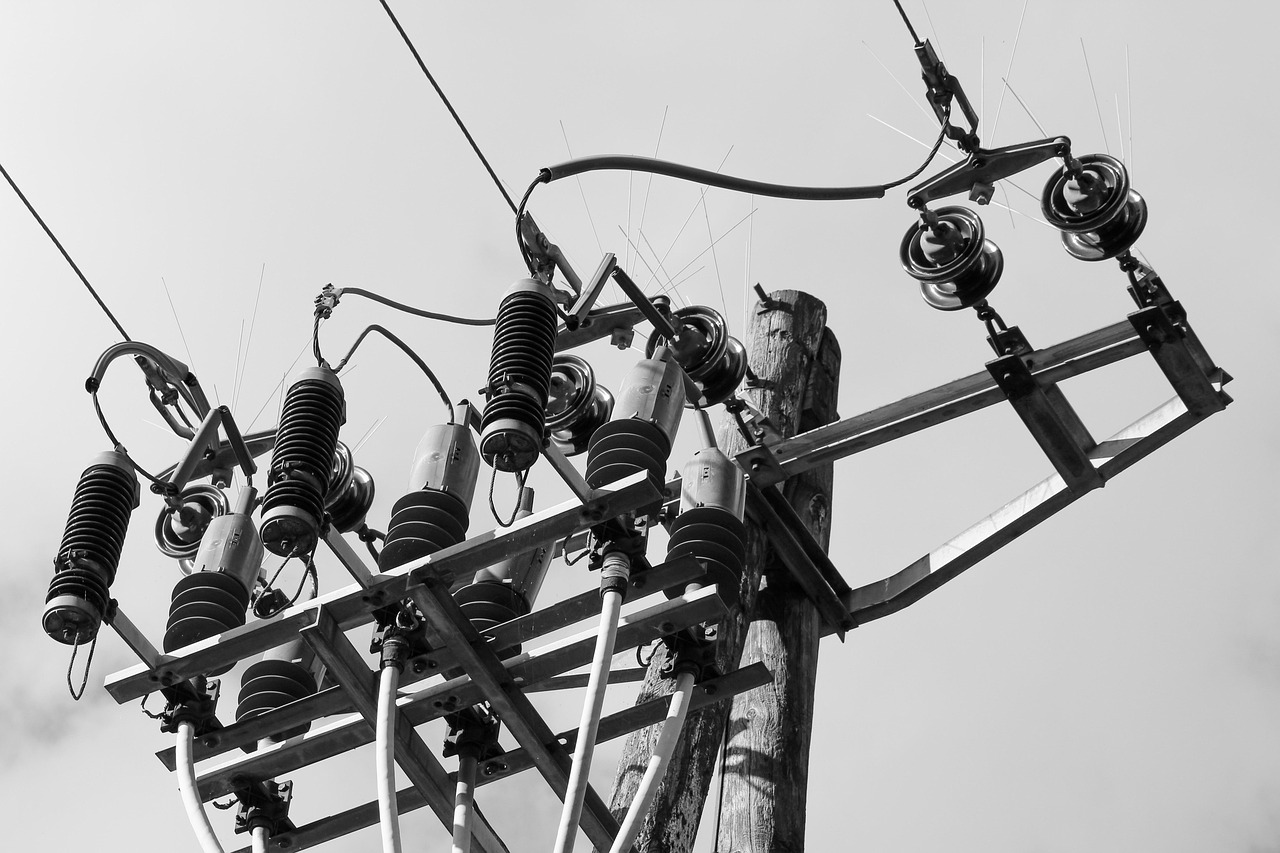
Medium Voltage (MV) plays a critical role in global power distribution systems, bridging the gap between low-voltage consumer networks and high-voltage transmission grids. Whether it is industrial plants, commercial facilities, renewable energy farms, or utility substations, medium-voltage systems ensure efficient, reliable, and safe delivery of electrical power.
In this comprehensive guide, we explore everything you need to know about medium voltage — from definitions and classification to equipment types, design practices, protection methods, safety requirements, and future innovations. This article is crafted to help engineers, students, technicians, EPC contractors, and facility managers understand the core concepts of MV systems deeply and clearly.
Table of Contents
- What Is Medium Voltage?
- Medium Voltage Classification & Voltage Levels
- Applications of Medium Voltage Systems
- Key Components of MV Networks
- Medium Voltage Cables & Installation Methods
- MV Switchgear: Types, Design & Functionality
- Protection, Relays & Fault Management
- MV Transformers & Their Role
- Earthing and Grounding Systems
- Safety Procedures for MV Equipment
- International Standards for Medium Voltage
- Testing, Commissioning & Maintenance
- Digitalization & Smart Grid Integration
- Medium Voltage in Renewable Energy
- Future Trends in Medium Voltage Technology
- Frequently Asked Questions (FAQ)
- Final Conclusion
1. What Is Medium Voltage?
Medium Voltage (MV) refers to the electrical voltage range between 1 kV and 52 kV, depending on regional standards. It is primarily used for power distribution across industries, commercial complexes, infrastructure projects, and utility networks.
Why Medium Voltage Matters
- Reduces power loss during transmission
- Allows long-distance power distribution
- Supports high electrical load demands
- Ensures safer and more stable networks
- Used in industrial automation, transport systems, and renewable sectors
Medium Voltage is the backbone of modern distribution grids, feeding LV systems that supply homes, buildings, and small industries.
2. Medium Voltage Classification & Voltage Levels
Different organizations define MV voltage ranges differently.
Standard Voltage Ranges
| Standard Body | Voltage Range |
|---|---|
| IEC (International Electrotechnical Commission) | 1 kV to 52 kV |
| IEEE / ANSI (USA) | 1 kV to 35 kV |
| Utility Classification (Common) | 3.3 kV, 6.6 kV, 11 kV, 22 kV, 33 kV, 66 kV |
Typical MV Distribution Voltage Levels
- 3.3 kV – Small industries
- 6.6 kV – Pump stations, mining
- 11 kV – Industrial distribution & utilities
- 22 kV – Urban distribution
- 33 kV – Renewable energy & inter-city distribution
These levels vary depending on local grid architecture and load demand.
3. Applications of Medium Voltage Systems
Medium Voltage systems are used across a vast range of industries.
Major Applications
- Utility Distribution Networks
MV distributes power from substations to towns, industrial zones, and commercial areas. - Industrial Plants
Steel, cement, automotive, textiles, chemical plants rely on 6.6 kV / 11 kV systems. - Commercial & Infrastructure
Airports, data centers, hospitals, shopping complexes use MV for reliability. - Renewable Energy
Wind and solar farms typically output power at 33 kV or 22 kV. - Oil & Gas
Offshore rigs, refineries, and petrochemical plants use MV for heavy machinery. - Transportation
Metro rail, electric locomotives, and large pumping stations depend on MV networks.
4. Key Components of MV Networks
Medium Voltage systems include a range of electrical components designed for safety and reliability.
Main Components
- MV Switchgear (AIS/GIS)
- MV Circuit Breakers
- Transformers
- Ring Main Units (RMU)
- Surge Arresters
- CTs & VTs (Instrument Transformers)
- Protection Relays
- Disconnect Switches
- MV Cables & Terminations
- Earthing Switches
Every component ensures safe switching, fault isolation, and uninterrupted power delivery.
5. Medium Voltage Cables & Installation Methods
MV power cables are engineered to withstand high stress, voltage fields, and environmental conditions.
Types of MV Cables
- XLPE (Cross-Linked Polyethylene) – Most common
- EPR (Ethylene Propylene Rubber) – Flexible, heat resistant
- Paper Insulated Lead Covered (PILC) – Older installations
Cable Construction
- Conductor (Copper/Aluminum)
- Conductor Screen
- XLPE Insulation
- Insulation Screen
- Metallic Screen
- Outer Sheath
Installation Methods
- Underground trenching
- Cable trays
- Direct burial
- Duct banks
- Subsea cable laying
Proper installation reduces partial discharge (PD) risk and improves system lifespan.
6. MV Switchgear: Types, Design & Functionality
Switchgear controls, protects, and isolates sections of an MV network.
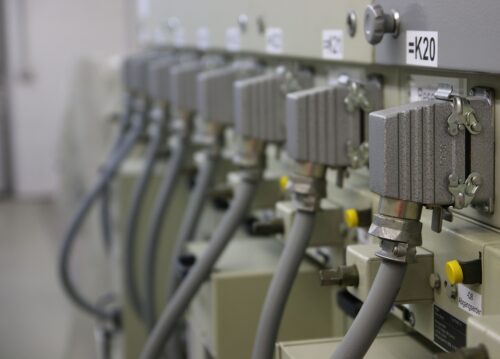
Types of MV Switchgear
1. Air Insulated Switchgear (AIS)
- Economical
- Easy maintenance
2. Gas Insulated Switchgear (GIS)
- Uses SF₆ or alternative gases
- Compact, ideal for urban spaces
3. Hybrid Switchgear
- Combines AIS + GIS features
4. RMU (Ring Main Unit)
- Used in 11 kV distribution
- Ensures network reliability
MV Circuit Breakers
- Vacuum Circuit Breaker (VCB) – Most used in 3.3–33 kV
- SF₆ Circuit Breaker – Used for high reliability
- Oil Circuit Breaker – Older systems
Functions of Switchgear
- Load switching
- Fault isolation
- System protection
- Voltage measurement
- Network automation
7. Protection, Relays & Fault Management
A reliable MV system must detect and clear faults immediately.
Types of Faults
- Phase-to-phase
- Phase-to-ground
- Three-phase
- Overload
- Short-circuit
- Insulation breakdown
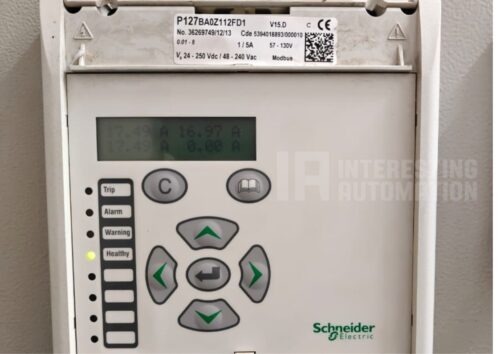
Protection Relays Used
- Overcurrent Relay (OCR)
- Earth Fault Relay (EFR)
- Differential Protection
- Distance Protection
- Under/Over-Voltage Protection
- Negative Sequence Relays
- Directional Relays
Digital relays (IEDs) allow remote monitoring, communication, and automation.
8. Medium Voltage Transformers & Their Role
Transformers step-up or step-down voltage levels in an MV network.
Types of MV Transformers
- Oil-immersed transformers
- Dry-type transformers
- Cast resin transformers
- Pole-mounted distribution transformers
Key Parameters
- Voltage rating
- Power rating (kVA/MVA)
- Vector group
- Cooling type (ONAN/ONAF/Dry)
Transformers ensure efficient energy transfer with minimal loss.
9. Earthing and Grounding Systems
Proper earthing ensures equipment protection and personnel safety.
Types of Grounding
- Solid grounding
- Resistance grounding
- Reactance grounding
Purpose of Earthing
- Limit touch and step voltages
- Provide a reference voltage
- Enable fault current return path
- Protect equipment insulation
Poor grounding is a major cause of MV system failures.
10. Safety Procedures for MV Equipment
Medium Voltage systems carry high risk; strict safety rules must be followed.
Essential Safety Rules
- Always apply LOTO (Lockout Tagout)
- Verify absence of voltage before touching equipment
- Use rated PPE (arc flash suit, gloves, insulated tools)
- Ensure proper earthing & short-circuiting before work
- Keep safe clearance distances
- Allow only certified personnel to operate MV gear
Common MV Hazards
- Arc flash
- Electrical shock
- Explosion due to SF₆ pressure
- Cable insulation failure
- Switching surges
Safety is the highest priority in MV operations.
11. International Standards for Medium Voltage
MV systems follow global standards for manufacturing, installation, and operation.
Major Standards
- IEC 62271 – High-voltage switchgear
- IEC 60076 – Transformers
- IEC 60502 – MV cables
- IEEE C37 – Switchgear & breakers
- IEEE 80 – Grounding
- ISO standards for quality & testing
Compliance ensures safety, efficiency, and reliability.
12. Testing, Commissioning & Maintenance
Before energizing any MV equipment, detailed testing is essential.
Pre-commissioning Tests
- Insulation resistance test
- High-voltage withstand test
- CT/VT polarity & ratio test
- Relay configuration test
- Partial discharge test (PD)
- Contact resistance test
- Cable sheath integrity test
Maintenance Types
- Preventive maintenance – Regular inspection
- Predictive maintenance – Condition monitoring
- Corrective maintenance – Fault repair
Digitized monitoring tools are now widely used for reliability-based maintenance.
13. Digitalization & Smart Grid Integration
The future of distribution power relies on advanced digital systems.
Modern Technologies
- SCADA systems
- IoT sensors
- Smart switchgear
- Digital substations
- Cloud-based monitoring
- Self-healing networks
These innovations improve operational efficiency and minimize outages.
14. Medium Voltage in Renewable Energy
Renewable energy generation heavily depends on MV systems.
Solar Power Plants
- Use MV switchgear, breakers, and RMUs
- Output from inverters typically stepped to 22 kV/33 kV
Wind Farms
- Turbines generate at 690 V
- Stepped up to 33 kV or 66 kV for distribution
Energy Storage Systems
- Require MV integration for grid synchronization
As renewable adoption grows, MV networks are expanding rapidly.
15. Future Trends in Medium Voltage Technology
1. SF₆-Free Switchgear
Eco-friendly gases like g³ or vacuum insulation are replacing SF₆.
2. Digital Relays & AI-Enabled Monitoring
Predict faults before they occur.
3. Advanced MV Cables
With higher thermal capacity and reduced dielectric losses.
4. Underground Smart Networks
Cities shifting to underground MV distribution.
5. Solid-State Circuit Breakers
Faster switching + improved grid stability.
The future of MV technology is greener, smarter, and more reliable.
16. Frequently Asked Questions (FAQ)
Q1. What defines medium voltage?
Medium Voltage typically ranges from 1 kV to 52 kV, depending on the regional standard.
Q2. What is the most common MV level used in industries?
The 11 kV level is widely used across industrial and commercial networks.
Q3. What is an RMU?
A Ring Main Unit is a compact switchgear used in 11 kV distribution networks for reliability and looped supply.
Q4. Which circuit breaker is preferred in MV systems?
Vacuum Circuit Breakers (VCBs) are the most commonly used due to reliability and low maintenance.
Q5. Why is grounding important in MV systems?
It ensures safety, controls fault currents, and protects equipment insulation.
17. Final Conclusion
Medium Voltage systems are the backbone of power distribution networks worldwide. Their ability to deliver electricity reliably, efficiently, and safely makes them indispensable for industrial plants, commercial buildings, public infrastructure, and renewable energy installations. As technology evolves, MV systems are moving toward digitalization, eco-friendly materials, smart automation, and predictive monitoring — transforming the way power is delivered and controlled.
Understanding MV equipment, standards, design principles, safety rules, and emerging trends helps engineers and facility managers build robust electrical networks that minimize downtime and maximize operational performance. With the global shift towards renewable energy and smart grids, Medium Voltage systems are more important now than ever before.